Since the commencement of the campaigns, the nation has witnessed violent attacks launched on campaign rallies, town hall meetings and other political events organised by parties in their quest for the mandate of the people.
On Thursday, 12 November, thugs attacked supporters of the opposition Nigeria Democratic Congress (NDC) during a town hall meeting in Oregun area of Ikeja, Lagos State, leaving several people injured and propertiesr destroyed, including vehicles belonging to party members.
The hoodlums, armed with cutlasses and stones, invaded the venue of the meeting, disrupted it and chased away the party’s supporters.
Before the attack, many of the supporters, dressed in the party’s colours, were dancing and singing at the gathering. But the disruption triggered panic as party supporters scampered for safety. Police officers later arrived at the scene to restore order and defuse the tension.
Although Peter Obi, the NDC presidential candidate, and his running mate, Rabiu Kwankwaso, a former governor of Kano State, were not at the venue when the incident occurred, some suggest they were the target of the attack, not necessarily to harm them but to frustrate their campaign efforts.
Mr Obi, a former governor of Anambra State, is seeking the presidency for the second time. He first ran for the nation’s highest political office in 2023 under the Labour Party, finishing third in the election. In that election, he won Lagos State, a stronghold of the All Progressives Congress (APC) and its candidate, Bola Tinubu, with 582,354 votes.
Earlier in 2019, the former governor had paired with former Vice President Atiku Abubakar on the ticket of the Peoples Democratic Party (PDP). Atiku has since defected to the African Democratic Congress (ADC), where he is running for president in the 2027 election, while Mr Obi left the LP for the ADC and subsequently for the NDC.
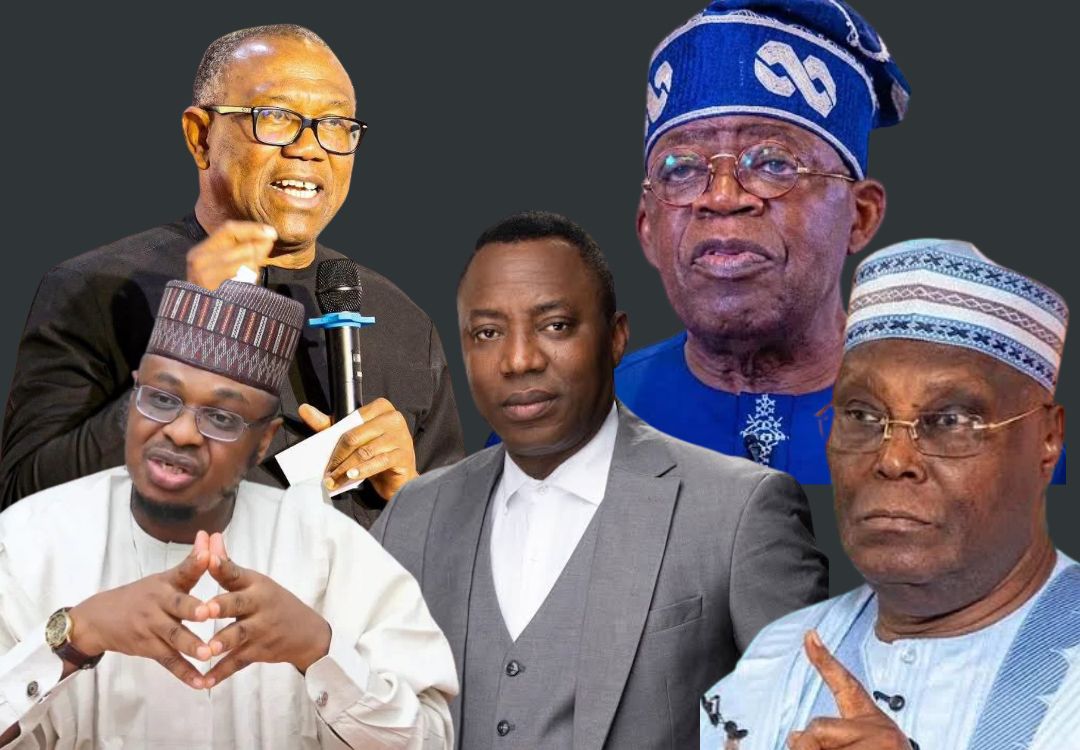
Both Messrs Atiku and Obi are among the 18 presidential candidates cleared by the Independent National Electoral Commission (INEC) for the 16 January 2027 election.
Some of the other presidential hopefuls include President Bola Tinubu of the All Progressives Congress (APC), who is seeking a second term, Oyo State Governor Seyi Makinde of the Allied Peoples Movement (APM), Sandy Onor (PDP), Omoyele Sowore (AAC), former Cross River Governor Donald Duke (PRP), and Adewole Adebayo (SDP).
The commission also cleared governorship candidates for 28 of the nation’s 36 states where governorship elections will be taking place on 6 February 2027. It also approved candidates for the National Assembly and State Houses of Assembly elections.
Consequently, in line with the election timetable and schedule of activities for the 2027 polls, it mandated the candidates for the elections to commence campaigns.
While the presidential and National Assembly candidates began their campaigns on 19 August, those of the governorship and State Houses of Assembly started a month later.
However, since the campaigns commenced, the nation has witnessed violent attacks launched on campaign rallies, town hall meetings and other political events organised by parties in their quest for the mandate of the people.
In the build-up to the polls, political activities across the country are increasingly being accompanied by reports of violence, intimidation and threats.
Campaign activities associated with presidential candidates and opposition parties have encountered security challenges in different parts of the country, including attacks on convoys, disruptions of political gatherings and confrontations involving party supporters.
In some instances, presidential candidates have alleged that their lives or those of their supporters were endangered. In others, political gatherings have been disrupted, vehicles damaged and participants injured or killed.
On 13 September, unknown gunmen attacked and disrupted a state-wide monthly ward meeting of the NDC in Ihuani Awkunanaw, Enugu State, the hometown of the party’s governorship candidate, Christian Ohaa. At least eight party members were injured, while several party materials, canopies and plastic chairs at the venue were destroyed.
Sampson Ukwu, media aide to the NDC governorship candidate, identified the victims as Onovo Donald Ekene, Ngene Godwin Madueke, Ogbodo Gloria, Onovo Victor, Maduabuchi Ugwu, Nnaemeka Nelson, Chinonso Nwagbara and Obinna Daniel Owo.
On 18 September, suspected political thugs disrupted a mobilisation rally involving supporters of Mr Obi and his running mate, Mr Kwankwaso, in Warri, Delta State.
Esther Umoh, a photographer associated with Mr Obi, alleged that the attackers opened fire on members of the campaign team, including the entourage of the party’s Delta State governorship candidate.
Although the circumstances surrounding the incident were not independently established, the police did not deny that an attack occurred.
The incident raised concerns about the security arrangements for opposition campaign activities and the ability of political candidates to move freely during electioneering.
In a similar incident on 10 October, gunmen invaded an NDC political gathering in Afa, Udi Local Government Area of Enugu State, killing a young man identified as Ifeanyi Nwolie.
After the incident, Mr Obi, the party’s presidential candidate, pledged financial support to the mother of the slain supporter.
On 30 October, the presidential candidate of the African Action Congress (AAC), Omoyele Sowore, alleged that he and members of his team were attacked in Ado-Ekiti, Ekiti State.
The incident occurred at Tawakalitu Restaurant in the Dalimore area of the capital city, after Mr Sowore had attended an interview at MIDAS FM.
The presidential hopeful alleged that armed men attacked him and members of his team with sticks and machetes. He also reported that communication devices were stolen, vehicle tyres were slashed and other property was damaged.
Mr Sowore further described the incident as an assassination attempt and demanded an independent investigation. But the police characterised the incident as an altercation and announced the arrest of 11 suspects.
The activist cum politician questioned the police’s account and demanded that relevant electronic evidence, including CCTV footage, be preserved.
Nevertheless, the suspects were arraigned on several charges, including conspiracy and assault occasioning harm.
They were granted bail, while the case was adjourned until 4 December.