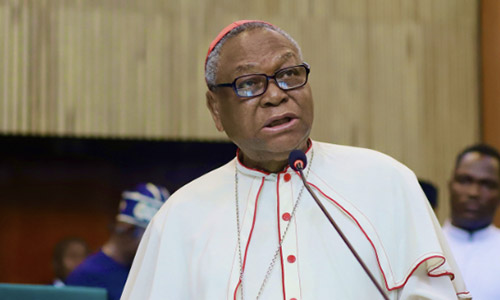
The Catholic Archbishop Emeritus of Abuja, Cardinal John Onaiyekan, has challenged the Chairman of the Independent National Electoral Commission (INEC), Professor Joash Amupitan, SAN, to demonstrate the commission’s independence by conducting free, fair and credible elections in 2027, insisting that Nigerians must be allowed to freely choose their leaders without interference or manipulation.
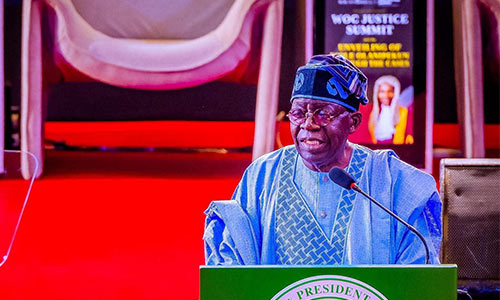
Onaiyekan, a member of the National Peace Committee, said President Bola Tinubu had assured Christian leaders that INEC was free to discharge its constitutional responsibilities, warning that the commission’s leadership must not compromise that independence or allow itself to be restrained by political considerations.
His remarks came amid concerns over political violence, the fairness of the electoral environment and the conduct of political actors ahead of the 2027 general elections.
The Cardinal maintained that the responsibility for delivering credible elections rested substantially with INEC and its leadership, particularly in ensuring a level playing field for all political parties and candidates.
Recalling discussions with President Tinubu on the need for a fair electoral environment, Onaiyekan said the President had assured religious leaders that the electoral commission would be allowed to operate independently.
“When we raised concerns about level-playing ground for political parties in the coming election, he said, No, INEC is free. And so we have been telling Professor Amupitan, ‘the President says you are free. Don’t tie your own hand. Do the right thing.
“The President says you are free. He’s not going to put undue pressure for you to do the wrong thing. So everybody must be responsible for what they do,” Onaiyekan stated.
The former Archbishop emphasised that electoral officials must take responsibility for their decisions and avoid using political pressure as an excuse for failing to comply with the law.
According to him, conducting credible elections should not be unnecessarily complicated because Nigeria already has established electoral rules and procedures that must be respected.
“Election is not rocket science. You don’t need Artificial Intelligence (AI). You don’t need the AI to have a free and fair election. We have rules that are practical. Let them do that,” he said.
Onaiyekan maintained that the credibility of the 2027 elections would depend on the commitment of electoral officials to obey the rules and protect the integrity of the voting process.
He stressed that Nigerians should not be denied the opportunity to determine who governs them, describing periodic elections as an important democratic right.
The Cardinal argued that citizens must be allowed to exercise their franchise without intimidation, manipulation or unnecessary restrictions capable of undermining their freedom of choice.
“Elections are once in four years. We forget that as Nigerians, after four years, we have another chance for us as individuals to talk and take our decision about who rules us. They should allow us to enjoy the right to choose who we want to rule us,” he stated.
His appeal placed particular emphasis on INEC’s constitutional responsibility to administer elections impartially and ensure that the choices made by voters are respected.
Onaiyekan’s comments also underscored the importance of creating an electoral environment in which political parties can campaign freely and compete under the same rules.
The Cardinal insisted that assurances of institutional independence must be reflected in the conduct of electoral officials rather than remaining mere statements of intention.
He maintained that INEC’s leadership had a responsibility to demonstrate its commitment to transparent electoral procedures and protect public confidence in the commission.
Meanwhile, the Chairman of the Northern Christian Association, Reverend John Hayab, warned political leaders against resorting to violence in their pursuit of public office, declaring that no political ambition was worth the destruction of lives or the destabilisation of Nigeria.
Hayab criticised politicians who treat elections as do-or-die contests, arguing that political leadership should be pursued through persuasion, programmes and policies rather than intimidation or attacks on opponents.
He questioned the value of securing political office through violence if the process destroys the people and communities that elected officials are expected to govern.
“If you destroy Nigeria to become its president, who will you govern? If you destroy a state to become its governor, who will you lead? If you destroy a people to make laws for them, who will those laws serve?” Hayab asked.
He maintained that political office should provide an opportunity to serve the people rather than become an excuse for violence.
The cleric condemned political actors who encourage attacks on opponents or use intimidation as a campaign strategy, insisting that such conduct was incompatible with democratic principles.
“Any politician who embraces violence is demonstrating that he has nothing to offer and is unfit for our democracy,” he declared.
Hayab specifically challenged President Tinubu to demonstrate leadership by making it clear to members and supporters of the ruling All Progressives Congress (APC) that political violence would not be tolerated.
He also called on former Vice-President Atiku Abubakar, Peter Obi and leaders of other political parties to publicly condemn electoral violence and caution their supporters against actions capable of destabilising the country.
According to him, political leaders have a responsibility to control their campaigns, discourage inflammatory conduct and ensure that competition for public office does not endanger citizens.
“Their responsibility is simply to campaign and canvass for votes. If Nigerians trust them, they should vote for them. Whoever eventually wins should receive the support of all Nigerians,” Hayab stated.
The cleric expressed particular concern about the involvement of young Nigerians in political violence, warning that politicians must not exploit youths or expose them to danger in pursuit of personal ambitions.
He maintained that the lives and futures of young people should not be sacrificed for the political interests of individuals seeking public office.
“Young people, in particular, must not be made expendable. Their lives are valuable and should not be treated cheaply or sacrificed by politicians who simply want to gain political power and occupy public office,” he warned.
Hayab insisted that peaceful political participation, mutual respect and acceptance of legitimate electoral outcomes were essential to preserving national stability.
He urged political leaders across party lines to demonstrate restraint and ensure that the forthcoming elections did not become a source of widespread violence.
Also speaking, Archbishop Chivir Chianson of the Charismatic Bishops Conference of Nigeria rejected the suggestion that the 2027 elections should be treated as a do-or-die contest.
Chianson argued that Nigeria had previously conducted presidential elections involving incumbent leaders without political competition necessarily resulting in widespread violence.
He recalled elections involving former Presidents Olusegun Obasanjo, Goodluck Jonathan and Muhammadu Buhari, insisting that political disagreements should not be allowed to endanger national peace.
“We did not adopt a do-or-die approach when former President Olusegun Obasanjo sought a second term. We did not take that approach when Goodluck Jonathan contested as an incumbent, and neither did we when Muhammadu Buhari contested as an incumbent,” he said.
The cleric maintained that electoral competition should be determined by the ability of candidates to convince Nigerians through their policies, programmes and political engagements.
According to him, voters would make their choices based on their perceptions of candidates, political interests and the issues affecting their lives.
Chianson, however, warned that politicians who believe they are losing electoral support might deliberately introduce controversial issues or raise alarms capable of generating public anxiety and tension.
He urged political actors to exercise restraint and avoid conduct that could create unnecessary unrest during the electioneering period.
Unlike Onaiyekan, whose remarks focused on the independence of INEC, and Hayab, who called on politicians across party lines to reject violence, Chianson also reaffirmed his organisation’s political support for the Tinubu administration.
“As far as the Charismatic Bishops Conference of Nigeria is concerned, our position remains unchanged. We will continue to stand with the government of President Bola Ahmed Tinubu in prayer, support and advocacy,” he declared.
The positions expressed by the religious leaders reflect different perspectives on the approaching elections, although they share concerns about the need to prevent political violence and maintain national stability.
While Onaiyekan insisted that the independence of INEC must be protected and that Nigerians should be allowed to elect their preferred leaders, Hayab emphasised the responsibility of politicians to reject violence and protect citizens from intimidation.
Chianson, on his part, urged peaceful political competition while reaffirming the Charismatic Bishops Conference’s support for the current administration.
Their remarks come as political parties intensify preparations for the January 16, 2027 presidential and National Assembly elections, followed by the governorship and State Houses of Assembly elections scheduled for February 6, 2027.
The approaching elections have placed renewed attention on INEC’s preparedness, the neutrality of electoral officials, the conduct of security agencies and the responsibility of political parties to maintain peaceful campaigns.
For Onaiyekan, the central question remains whether INEC will translate the assurance of independence attributed to President Tinubu into a credible electoral process that protects the rights of Nigerians.
He insisted that electoral officials must accept responsibility for performing their duties in accordance with the law and should not allow political considerations to prevent them from doing what is right.
“The President says you are free. Don’t tie your own hand. Do the right thing,” the Cardinal declared.
The post “Tinubu Says You Are Free, Don’t Tie Your Own Hand” — Onaiyekan Charges INEC Chairman Amupitan To Ensure Credible 2027 Elections appeared first on TheNigeriaLawyer.