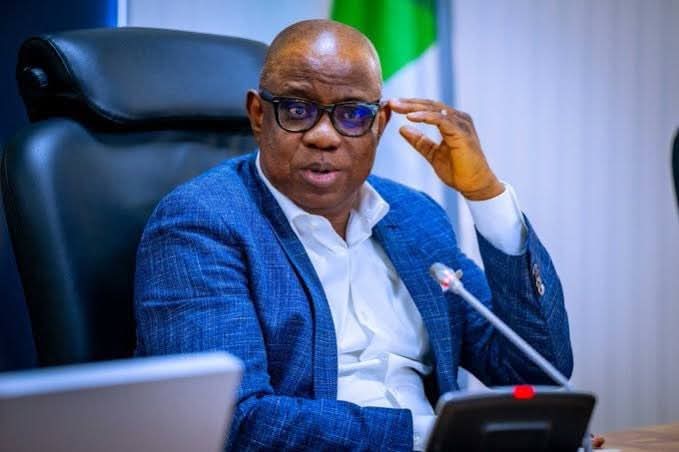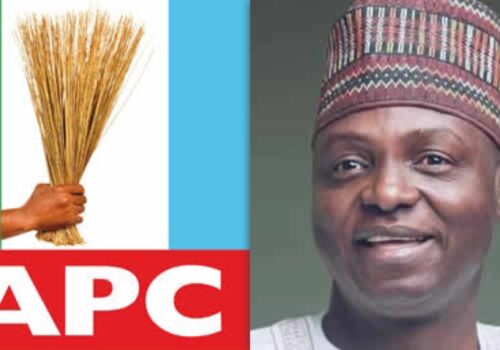

Prof. Nentawe Yilwatda is the National Chairman of the All Progressives Congress (APC). He, alongside the National Secretary of the APC, Senator Ajibola Basiru, in this interactive session with media executives recently, speaks on the activities of the party, ongoing congresses, issues of internal democracy and why APC is not jittery ahead of the 2027 general elections. BODE OLAGOKE, monitored the interview.
Having returned to your position through consensus, what are the next steps for your party, what should Nigerians and your members expect from your leadership?
Let me thank Nigerians and particularly our party for the trust and belief in us. Specifically, we want to thank Nigerians for the general support they have given the party across the country in the by-elections conducted, the support we are gaining across the country in our registration ramping up and from all sectors. I will start by looking at the party registration that we have done. We have over 13 million and heading to 14 million registered members of the party, out of the number, people between the age of 18 and 35, formed roughly about 50 percent of our members, which means that we are the most youthful party in Nigeria.
The youth are in our party. They are the driving force of our party. People between the age of 18 and 50, formed roughly about 82 per cent of our members. People within my age category upward are just 18 percent of the membership of the party. It means it is a party of the future. It is a progressive party that the young people and Nigerians believe in it. That’s number one.
Secondly, in all the elections we have held recently, we have seen APC winning all of them. We had the FCT election, we won five out of six. We lost to PDP in one of them. We won over 80 percent of the councillorship. We got them and roughly about 18 percent was gotten by PDP. There was no any other party that got any position out of that. We have won elections across all the six geopolitical zones. We won elections in the South West in the bye-election, we won elections in the South South in the bye-election, and we won elections in the South East in the bye-election. We won elections also in the north – the North East, North West and North Central. We’re the only party that has that kind of distribution. The only party that opposed us in the South East is APGA. The only party that opposed us in Kano at that time was NNPP. They got one, we got one. But today, the governor is with us and most supporters are with us and even the PDP part of Kano they have all defected. So, the numbers we are having in Kano and most of the areas, show that we’re growing stronger every day. Our party is stronger, better, and more organised. As for what we are looking up to do. We want to deepen internal democracy within the party, increase transparency. And to do that, we brought technology in – membership registration, membership verification, even the auditing of our membership we have done that.
This week, INEC visited after our invitation to them. We submitted our audited accounts to INEC last month and we invited the electoral umpire to visit us, audit us and verify our activities. INEC was in our office Thursday this week. They came to verify what we were doing.
They went through our books, went through our accounts, our activities, our operations and we are waiting for them to give us our statement so that we can look for areas of weaknesses, areas of strength and work on them. This is what we are doing as a party to ensure that within us, we have good governance within the party.
On APC congresses?
Then, our own congress, we implemented the rule of law to the latter. Where we had crisis, we withheld. We withdrew and we set up internal conflict resolution mechanisms to resolve the issues. We have the presidential team for that, and the party’s team for that. So, the party normally goes in first. If they can’t resolve it, they throw it to the national, to the presidential team. And that has helped resolve all our internal issues to near zero. These are the things we want to work on, we want to improve on.
On delivery of good governance?
Most important is to link governance to the party. We are working with the governors on that. I met with the governors last month in Lagos. We reviewed what the governors are doing in their states, how we can improve governance at the states and local governments.
We have done the same thing with the president and the National Assembly. I met with the National Assembly members last month. I was there to address all the caucus members of APC on what they are doing about the budget. What they are doing about internal mechanisms to strengthen governance at the national level.
I met with the President on the same thing. I met with the ministers. It shows that we are not just running a party alone but also helping in improving governance while we run the party. So, these are things we are doing to ensure that we strengthen the party, prepare the party for the future. And that is what you do as a party.
APC is swelling in rank by the day, you see a lot of governors pouring in but the question is, how does the party manage the entrance vis-a-vis recent comments you made that your party members should mind the way they manage defectors?
You know, we are man-managers as party leaders. Myself and other NWC members our job is to manage the interests of all the members, building an inclusive system. And when I made that statement, I didn’t make it in isolation. I said, all states must ensure that the defectors and the legacy members must be included in the leadership of the party.
We said all tribes within the state must be included. If you have a state that has multiple tribes you must make sure that all tribes in the state are included in the leadership of the party. Thirdly, if you are multi-religious, you have Christians and Muslims and traditionalists you must make sure you include all the people in the party. Then we said our party has youth as a driving force of the party. So, accommodate youth, not just as youth leaders but as part of the leadership of the party and include women, not just as women leaders but as part of the leadership of the party across the country. What we are trying to say is, build a party that accommodates everybody. A pan-Nigerian party that all tribes, all religions, all genders, all age categories can look at the party and it can appeal to them.
You don’t fear implosion?
No. If you watch our congresses, the opposition said that our party will collapse after our congress, because of self-implosion. We have to manage the interests of everybody. We were able to manage the interests of the governors, the National Assembly, the other citizens that are the members of the party. We did that and we did it equitably. Now, if you watch our congresses, which we know were driven by consensus, people that bought multiple forms were all invited, they sat down and they agreed on a candidate. An agreement was written and they all signed to step down for a candidate of the group. So, that is what even helped us to arrive at the level of stability that you saw. If you look at the stability in the party now, it is driven by the internal conflict resolution mechanism that we adopted as a party. No political party in Nigeria has our own internal conflict resolution mechanism. Right down to the wards, at the states, at the local government, at the national level, we have conflict resolution mechanisms all through and we made it compulsory for all states to have conflict resolution mechanisms. We asked them to form a team of elders that are not politically aligned for now, they don’t have any political interest to be part of that team. We did that at the national level. We did that at the local level. So, if you talk about people like Bisi Akande, they are not contesting election. If you look at people like Pius Anyim, all those elders in the party, they form this conflict resolution team. They are not aligned to any interest. They have seen it all, they are part of leadership, part of conflicts. So, this team is formed not just at the national level but all fragments from the state, local government, ward level, and it has helped us in managing the interests of everybody in the party. Secondly, the issue of party supremacy. We have imposed our supremacy as a party, we have invited governors where we feel they are not doing well. We talk to them during the congresses. We have gone against the wish of a lot of people at the highest level, from National Assembly, to governors. The party has gone against their interest in many states where we feel the interest of the people are not protected. We have brought some level of stability by imposing this power that the party has over anybody who is within it. The constitution of the party has been followed in all our operations and the supremacy of the party especially has been imposed in all the states.
With the completion of the national convention of your party and election of members of the NWC, what are the structural changes members of party in the 36 states and FCT should expect?
Firstly, like I keep repeating, we want to deepen internal democracy within the party and because of that we are going to maintain and improve on areas of weaknesses in terms of conflict resolution that we had. There were areas of grievances and those states, we discovered that people went to court before we sat down with them, resolve issues and asked them to withdraw cases from court. We need to improve on those areas of weaknesses, that is the conflict resolution mechanisms.
Secondly, transparency, in terms of party primaries to elect House of Assembly, House of Representatives, the Senate, the governorship and the presidential candidates. We must make sure that we improve on transparency and having digital membership has helped us also because our members are verified. In terms of primaries now unlike before when people conduct direct primaries, anybody can just go and queue. We have our membership register containing passport, name and other details. People will appear with their membership cards and they will be verified. They will be screened first by the screening committee that will go to the community and screen all the members who will participate in the election. When they are verified, the election will commence and the primaries committee will now manage the process. The digital data we have will help improve transparency in terms of our primaries. Once people feel that there is justice, once justice prevails, then, conflict is near zero and that’s what we intend to have going forward. The most important thing is to improve governance because it is very important for us. I was in Delta and I asked the governor, what have you done? He took me around his projects. He took me to Warri, I saw the bridges he had built. I saw the hospital he is building and the equipment in that hospital alone is going to cost over N80 billion and it is nearly completed. I also visited some of the projects he is doing. I was also in Kano, I asked the governor, what have you done? He took me to some of the projects he is doing so I saw some the projects visibly – what he has done; infrastructure, schools, education, health sector what he is doing. I was in Borno and I asked the governor, show me what you are doing? I have visited many governors who have shown me what they are doing. So, connecting the party to governance for us in this second term is very important so that we can showcase to Nigerians that this Renewed Hope Agenda of Mr President is not just at the national level alone but at the state level, at the local government and all tiers of governance in Nigeria. It is very important for us going forward as a party.
On the issue of internal democracy in the party, what are the steps in terms of transparency in dealing with it in the party?
Very well. If you watch our congresses, we set up our guidelines, published our guidelines and everybody who was contesting had access to our guidelines. We published the names of all the people who were going to conduct congresses in newspapers so that everybody in Nigeria had access to people who are going to conduct congresses. It was not hidden.
We published the venues of conducting congresses nationwide and the time and date the congresses will take place nationwide and supplied the same information to INEC. INEC and security were also given the information so that the level of transparency is also engendered. We asked all the states to set up committees that covered all the interests of everybody in the states to manage internal processes and supervise the internal activities of the party at the state level, outside the team that are coming in.
We had a team coming from inside, from outside and we had members of the state that are supervising what they are doing and reporting to us at the national level, so that if they breach any of the provisions of the guidelines, they report to us and we call their attention to it. People from FCT having congress, visited me to inform me about the fact that they want to do this, and I have to tell the chairman of the team to avoid this, and that, stick to the guidelines. These are methods we have put in place to ensure that we have a level of transparency in our programmes. We are doing the same thing now. We are setting up our guidelines for the primaries to elect our candidates for the elective positions. The same thing we are doing, we will publish it, we will publish the guidelines, we will set up internal teams that can manage conflicts in each of the states, that will monitor activities in each of the states. These are things that we are doing to ensure that everybody’s interests are covered. In that interest, the governors’ interests are covered, the interests of people at the National Assembly are covered, former governors, former National Assembly leaders, former leaders of the party there, all stakeholders’ interests are covered by the selection of these members.
It allows for monitoring of the internal management and supervision, oversight function of even the members that we will send to conduct primaries in the states. It has helped us to engender transparency in the system also.
Now we have data driven party – all our members. We are the only party now that will provide even our membership data base since February. In February, we dropped the 12 million registered members of our party with INEC. We provided a soft and hard copy to them in February. What we are doing is just to update the membership and we provided it on our portal to allow you to verify your membership on our portal. We can verify whether you are a member or not. And before the primaries, people would know whether they are part of the primaries or not. We also allow our party members to have access to this data for mobilisation. The contact of all members at the ward level, so as a Councilor or as a House of Assembly member or as a Senator, you have access to all the members of the party in your ward. It will help them to organise and mobilise the members of the party for the purpose of election and also for the purpose of primaries. We are not just sitting down and watching because we know that this mobilisation will help us also in the general election. The mobilisation now is the foundation for our winning elections.
Despite the fact that APC has more than 30 governors now, are you truly jittery, especially about the possible outcome of the election in the North West of our country?
Are we jittery? I say no! Let me look at the swing states in the North West and do an analysis of each of them. Let me start with Kano. Kano has three major blocs. The Kwankwaso bloc, the Shekarau bloc and the Ganduje bloc. Where is the Ganduje bloc? Apart from one person, the former governorship candidate who moved out of the APC, nobody has moved out of the APC to another political party apart from the Gwawuna who moved from APC to ADC. So the entire structure that gave us the votes in 2023 under Ganduje are intact. The Kwankwaso structure, most people that moved from APC went in to strengthen Kwankwaso bloc, it wasn’t Kwankwaso alone that delivered those votes. It was mostly members, aggrieved members of APC who moved to Kwankwaso and strengthened him. The two senators are back to APC. The House of Reps members except one, they have all moved to APC and the one that was left is now late. He died about three days ago.
So, I can say he has no single House of Reps member. All the rest are now in APC. The entire House of Assembly, only one is remaining, all the remaining House of Assembly members have joined APC. All the local government chairmen, councillors, they all defected to APC. It leaves Kwankwaso vulnerable and weak. We are strengthened. At the same time, I was in Kano; I went to appeal to the bloc that’s held by Shekarau and you know, that bloc has two major blocs, the Shekarau bloc and the Gwarzo bloc. I spent two days in Kano, apart from meeting them several times, I spent two days in Kano. We were in the process of bringing them back to APC. I sat down with them, I engaged them, we met with them. It was on TV that all of them, from all the EXCO of PDP, the structure of PDP of both Gwarzo and Shekarau, they were all with me. I can assure you that Kano is in a kitty for us as APC. It is a swing state in the northwest.
Then Kaduna is the second largest swing state in the zone. Before now, we had major political issues in APC. The entire Southern Kaduna voters are not with us, they were all PDP. But today, they are with us. So, these were the swing states. Then the second place that we had problems was where the former governor of Kaduna, Makarfi, came from . It was also an area we had problems. So, out of the about, I think, 16, House of Reps members or thereabouts, we’re having only about eight. Today all the members except one of House of Reps, are all now in APC. They will return to APC. The entire southern Kaduna that used to vote against us, have all returned back to APC. And what was their grievance? The grievance was with El-rufai. El-rufai is now in ADC. So the entire structure of the southern Kaduna is with us. Now, have we lost Zaria where El-rufai came to disrupt? The answer is no. We had an election in Zaria. He campaigned. He was on top of vehicles. El-rufai was there campaigning everywhere but we should ask, how many people have moved out of APC from there? Numbers are very few. We still have them. So Zaria is intact. Kaduna is intact. So the major voting bloc of Kaduna are intact for us. We are going to have more votes in Kaduna than before. Then Sokoto, the third swing state in North West, all the major blocs are intact. The governor, the state House of Assembly, and the third structure is the former governor, Tambuwal and the fourth structure, the the 1999, 1997 governors. We have three out of four structures in Sokoto. Swing states are all intact. Now, the same thing in Katsina. All the major gladiators in Katsina are all in APC. All the former governors of Katsina are all in APC. All the former speakers in Katsina are all in APC. All the former deputy governors of Katsina except one, they are all in APC. So the major voting blocs of Kasina, they are all in APC. Even the small states are with us. Talk of Zamfara, it was having four blocs. All those four blocs have collapsed into APC. So, my brother, why is that? If you pay some people to make unguided statements about APC, if you also pay people that will make some skit on TV or on social media against APC, it doesn’t demarket us in any way because when the election comes, you will see the numbers. In August last year, when we had the election in Zaria, we won everything in Kaduna landslides, three positions -all three APC. So, we are good to go in the northwest when it comes to numbers. This is what I keep on saying every day. People keep on talking about the north but look at the numbers also. This government, the projects that are running through northwest are some of the most expensive projects in the history of Nigeria. The project that runs from Warri into Abuja, into Kaduna to Kano to power the industries in Kano and ensure that they revive the economy of Kano and bring it back. It’s the biggest project, biggest and most expensive project in Nigeria. It’s hitting and aligning with the northwest. The road from Sokoto to Badagry with over 300 dams for food production, electricity, all of these into Maradi in Niger which is the railway that will run up from the south into Kano, into Maradi in Niger and that port in Maradi will be the most viable port in Nigeria after Lagos.