There were serious violations of basic medical hygiene at the Tehsil Headquarters (THQ) Hospital in Taunsa, an undercover probe by the BBC found.
The outbreak first came to light when a local doctor, Gul Qaisrani, noticed an unusual spike in HIV cases among children in late 2024.
One of the cases included siblings, where eight-year-old Mohammed Amin died shortly after testing positive for HIV following severe illness. Soon after, his sister Asma was also diagnosed with the virus.
Their family believes both contracted HIV through contaminated injections during routine treatment at a government hospital. Many of the affected children had reportedly received treatment at the same hospital.
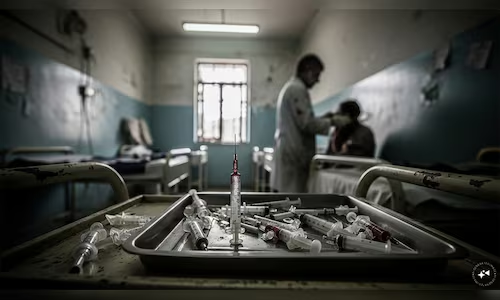
The hidden cameras were placed for over 32 hours inside the hospital. They captured multiple violations of basic hygiene such as using the same syringe on multi-dose medicine vials.
“Even if they have attached a new needle, the back part, which we call the syringe body, has the virus in it, so it will transfer even with a new needle,” said Dr Altaf Ahmed.
In addition to this, the BBC footage showed repeated violations. In one case, staff, including a doctor, were seen giving injections without sterile gloves over 66 times. In another instance, a nurse was filmed handling medical waste with their bare hands.
Other scenes from the investigation revealed poor sanitation inside the hospital, with open medicine vials, used needles left on countertops, and medical waste not being disposed of properly.
Parents also claimed they had seen unsafe practices firsthand, including syringes being reused on multiple patients.
However, the hospital authorities have denied any wrongdoing despite the BBC showing video evidence of unsafe practices.
Dr Qasim Buzdar, who is in charge of the hospital, said the footage cannot be trusted. He argued that it might be old, taken before he became the head, or even fake. He also defended the hospital by saying that it is safe for patients and that maintaining hygiene and infection control is still a top priority there.
A similar case happened in Karachi’s Kulsoom Bai Valika Government Hospital. “They filled the same syringe and gave it to one child, then filled it again and gave it to another,” said a family member of a 2-year-old girl who was also diagnosed with HIV.