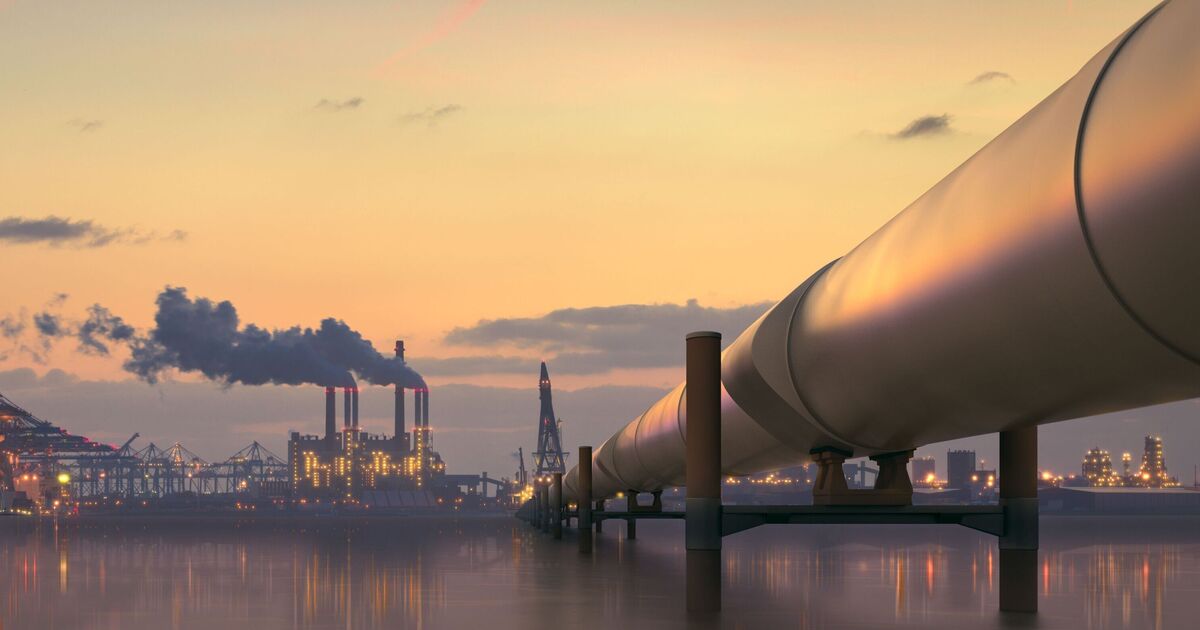
A new £20billion gas pipeline set to stretch across 13 African countries could transform the continent’s role in global energy markets, positioning Africa as a major new energy player. The Nigeria-Morocco Gas Pipeline (NMGP) promises not only to change the continent’s economic landscape but also to become a new strategic energy route, like the Strait of Hormuz, through which around 20% of the world’s oil passes, but which is currently closed to traffic by Iran.
The pipeline will run from Nigeria’s vast natural gas reserves all the way to Morocco’s northern coast, covering a distance of approximately 4,000 miles. The ambitious project, once completed, will pass through 13 countries: Nigeria, Benin, Togo, Ghana, Côte d’Ivoire, Liberia, Sierra Leone, Guinea, Guinea-Bissau, Gambia, Senegal and Mauritania, before ending in Morocco. It is intended to transport 30billion cubic meters per year. Requiring an estimated £26billion investment, around 50% of its gas is then expected to be exported to Europe.
The project could also play a vital role in improving energy access for millions of Africans and supporting economic growth across the continent.
As the conflict in Iran has shown, Europe is very dependent on oil and liquefied natural gas (LNG) that flows through the Strait of Hormuz. This new project could diversify Europe’s energy sources and reduce the continent’s dependence on unstable supplies.
It would also transform the Strait of Gibraltar into a global energy hub, positioning Morocco as a bridge between Africa’s and Europe’s energy supplies. Ahead of pipeline construction, Morocco is investing significantly in its port infrastructure, with over £5.2million earmarked for new infrastructure. Notably, the government has invested £1.1billion in the Nador West Med project – a port designed to bolster trade with Europe.
Spain could also be a major player in the new pipeline. With 30% of Europe’s regasification capacity – the process by which LNG is converted back into gas for transport via pipelines – Spain could become a key gateway for African gas entering Europe.
Nigeria’s government is eager to kick-start the project and tap into the country’s vast natural gas reserves. According to estimates from the US Energy Information Administration, the country has the world’s ninth-largest proven gas reserves.
However, a significant challenge remains. Much of the gas produced alongside crude oil is flared due to inadequate infrastructure to capture and utilise it. At present, Nigeria exports its natural gas primarily through the Bonny LNG plant, which has six processing trains, and the West African Gas Pipeline, operated by Chevron. But these exports are limited in capacity and the new pipeline project promises to dramatically expand Nigeria’s export capabilities.
Forecasts suggest that the first gas deliveries could begin in 2031.