3 min readUpdated: Apr 3, 2026 05:32 PM IST
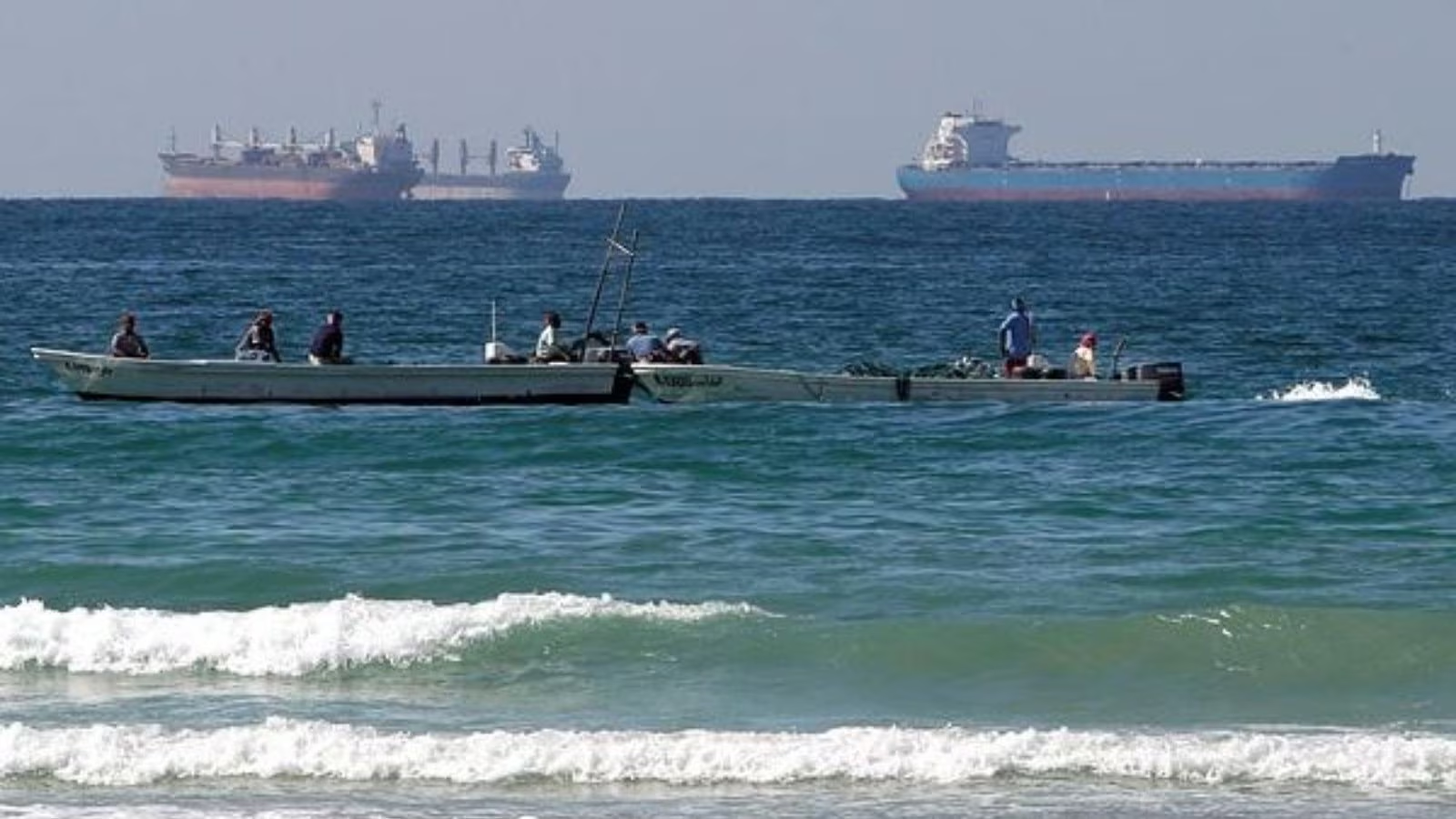
The war in West Asia has left nearly 20,000 seafarers stranded in the Persian Gulf, the first time since World War II that so many sailors remain stuck in a war zone, the Wall Street Journal reported, citing the United Nations. This comes as Iran has restricted passage through the Strait of Hormuz, a key oil route, disrupting vessel movement.
The maritime sector said it had designated the Strait of Hormuz, the Gulf of Oman and the Gulf as a “warlike operations area”, granting seafarers additional protections as the war engulfs the crucial energy transit route, news agency AFP reported.
A mental health crisis
“There is no precedent for the stranding of so many seafarers in the modern age,” said Damien Chevallier, the head of the International Maritime Organization’s Safety Division, at a UN maritime conference.
There have been more than 20 attacks on vessels in the strait, with 10 seafarers killed and eight injured, Chevallier said. “It is a very scary situation, and one can only imagine the psychological stress they are under,” WSJ quoted Chevallier as saying.
Sailors reaching out through its 24-hour helpline are afraid, distressed and anxious; some are even expressing thoughts of self-harm, Simon Grainge, the chief executive of the London-based International Seafarers’ Welfare and Assistance Network, told The New York Times.
The IMO is the UN’s global maritime regulator and is pushing for a safe maritime corridor in the Persian Gulf to evacuate the stranded vessels and seafarers. Iran has restricted passage through the Strait of Hormuz, making it hard for ships to exit the Persian Gulf and reach the Indian Ocean.
‘What happens to my family if something happens to me?’
THE CHOKEPOINT
Iran’s grip on the world’s most critical waterway
The Strait of Hormuz carries one-fifth of the world’s oil and natural gas in peacetime. Iran’s tight control of the strait has roiled stock markets, sent oil prices skyrocketing, and threatened to raise the cost of basic goods including food. World leaders have struggled to find a way to reopen the waterway.
1/5
of world’s oil & gas transits here in peacetime
5
weeks since Iran began restricting traffic
Sat
UN Security Council vote on Bahrain proposal
UN Security Council: What’s on the table
◆
Bahrain’s proposal
Would authorise defensive action to ensure safe vessel transit. Initial draft allowed countries to “use all necessary means” to secure the strait.
✕
Russia, China & France: Against
All three veto-holding members opposed approving the use of force, forcing a revision of the original draft language.
★
South Korea & France: Joint stance
Presidents Lee and Macron resolved to “cooperate to ensure safe passage” following Seoul meetings, but offered no specifics.
MARKET SHOCK
Brent crude has surged 50%+ since the war began
Iran’s attacks on Gulf energy infrastructure and its stranglehold on the Strait of Hormuz have sent oil prices to their highest levels in years. The price shock threatens to raise costs for basic goods worldwide, and global stock markets have been roiled since hostilities began on February 28.
$109
Brent crude spot price per barrel (Apr 4)
+50%
Price rise since war began on Feb 28
Why prices keep climbing
⚓
Hormuz still restricted
Iran continues to restrict tanker traffic through the strait, cutting off a fifth of global oil and gas supply from normal transit routes.
◆
Gulf infrastructure targeted
Iranian attacks on Kuwait’s refinery, UAE’s gas field, and Saudi infrastructure directly reduce regional production and supply confidence.
★
No ceasefire in sight
Despite Zarif’s peace proposal and US-Iran contacts, no progress on a deal has been announced, keeping risk premiums elevated.
INFRASTRUCTURE STRIKES
Iran targets water and energy across the Gulf
On Friday, Iran struck Kuwait’s major oil refinery and damaged a desalination plant — the water supply lifeline for Gulf states. Multiple countries reported incoming drones and missiles, revealing the wide geographic spread of Iran’s multi-front offensive.
Strikes reported — Apr 4
🔥
Kuwait — Mina al-Ahmadi refinery
State-run Kuwait Petroleum Corp said firefighters were working to control several blazes after an Iranian attack on the refinery.
◆
Kuwait — desalination plant
Iran caused “material damage” to a desalination plant — the primary source of drinking water for Gulf states, and now a major war target.
★
UAE — gas field shut down
Authorities shut a gas field after missile interception debris rained on it and started a fire.
✕
Saudi Arabia — drones destroyed; Bahrain on alert
Saudi Arabia said it destroyed several Iranian drones. Sirens also sounded in Bahrain, and Israel reported incoming missiles.
US ESCALATION WATCH
Marines and paratroopers ordered to region — ground offensive feared
Thousands of US Marines and paratroopers have been ordered to the Middle East, fuelling speculation of a ground offensive. President Trump has sent mixed signals — at times saying the US is negotiating an end to the war, at others threatening to expand it.
Trump’s two positions
SIGNAL: NEGOTIATE
US presented Iran a 15-point ceasefire plan; nuclear talks were underway when bombing began
SIGNAL: ESCALATE
Thousands of Marines & paratroopers ordered to region; Trump has threatened to expand the war
“Prolonged hostility will cause a greater loss of precious lives and irreplaceable resources without actually altering the existing stalemate.”
— Mohammad Javad Zarif, former Iranian Foreign Minister, Foreign Affairs magazine, Apr 4, 2026
Sources: Associated Press (Jon Gambrell & David Rising) · Kuwait Petroleum Corp · ACLED · Foreign Affairs magazine
“The first thing that came to my mind was my family, what would happen to them if something happened to me, since I am the breadwinner,” said KR, a sailor who saw the Ras Laffan strikes from the tanker’s deck and spoke to The New York Times on the Messenger app from his ship. He asked to be identified only by his initials and that his employer and vessel not be named.
Story continues below this ad
He is one of almost 20,000 seafarers stranded in the Persian Gulf, according to the IMO.
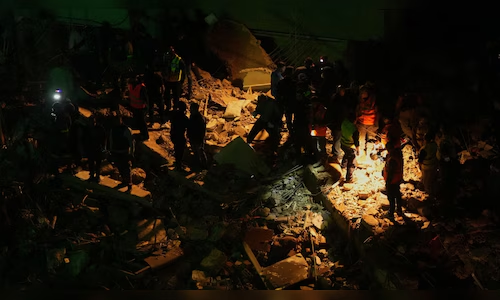
About 20 commercial vessels have been attacked in the region since the war began, according to the IMO. Ten seafarers and one shipyard worker were killed, at least 10 were injured and four remain missing.
Stay updated with the latest – Click here to follow us on Instagram
© IE Online Media Services Pvt Ltd