
In recent years, Nigerian youths have emerged as one of the most visible forces in the country’s democratic space. From social media activism to mass mobilization on the streets, their presence is undeniable. But a critical question remains: are Nigerian youths genuinely shaping democracy, or are they merely participating in a system still controlled by entrenched political elites?
The watershed moment often cited in this conversation is the EndSARS protests in 2020. What began as a movement against police brutality quickly evolved into a broader call for accountability, governance reform, and respect for citizens’ rights. For many observers, this marked a turning point—proof that young Nigerians could organize, influence public discourse, and challenge state authority. It was participation at its most vibrant. Yet, participation alone does not always translate into sustained political power as political development later showed.
On the surface, the evidence of participation is staggering. Demographically, Nigeria is one of the youngest countries in the world, with a median age of just over 18 years. The Not Too Young To Run Act, passed in 2018, was celebrated as a watershed moment—a legislative acknowledgment that the gerontocracy could no longer be the only architecture of power. We have seen young people flood the streets for mass protests, using digital savvy to outmanoeuvre state apparatuses in the battle for narrative. We have seen voter turnout driven by the “Obidient” movement, a wave of youthful energy that shattered the two-party stronghold in the presidential election in 2023.
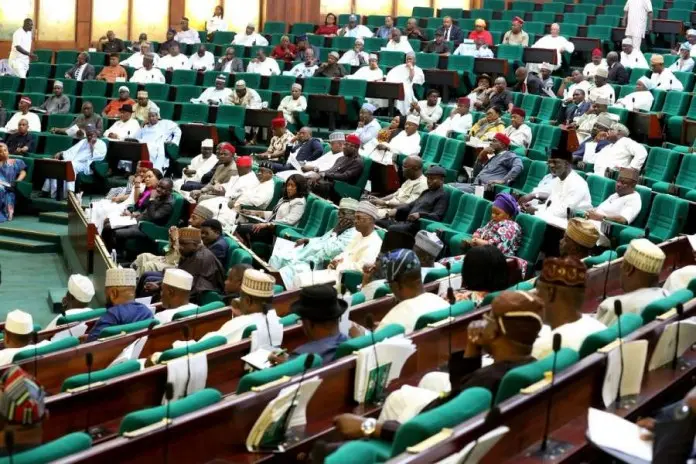
The great contradiction of the Nigerian youth demographic is that while they constitute the majority of the voters, they remain a minority in the decision-making structures. We have become excellent at the aesthetics of democracy: the PVCs, the Twitter storms, the protest hashtags. We have confused being “politically conscious” with being “politically powerful.” That is to say, are Nigerian youths shaping democracy? Not yet. We are still in the lobby, making noise, hoping to be let into the boardroom. The door is slightly ajar—kicked open by the courage of the #EndSARS generation and the voting blocs of 2023. But whether we will fully enter, sit at the head of the table, and change the furniture entirely, depends on whether we are willing to trade the euphoria of participation for the discipline of power.
There is also the uncomfortable issue of co-optation. The establishment has learned the language of the youth without adopting their interests. Today, every politician has a “youth mobilization” unit or adviser. They wear sneakers to campaign rallies and use Gen-Z slang in press releases. But when it comes to the allocation of resources, the distribution of appointments, or the crafting of policies that address unemployment and insecurity, the old playbook remains untouched. The youth are invited to the table, but only to serve the meal, not to decide the menu. the structures of power—political parties, electoral financing, and governance institutions—remain largely dominated by older, established actors. Only a very few youth experts are appointed into leadership positions.
To shape democracy means more than raising awareness or protesting injustice. It involves influencing policy, determining electoral outcomes, and ultimately occupying positions of decision-making. In other words, Nigerian youths must move from being the “conscience” of the nation to being the “architects.” Shaping democracy requires more than voting; it requires contesting and winning primaries. It requires buying the party structures, not just the party candidates. It requires moving from the street protests that fade after a few days to a sustained, boring, and unglamorous engagement with the machinery of governance—ward by ward, local government by local government.
It requires a shift in strategy. The energy that filled stadiums for rallies must fill the secretariats of the Independent National Electoral Commission (INEC) and the party headquarters during off-cycle seasons. We cannot afford to be seasonal democrats who only awaken every four years.
The good news is that the foundation has been laid. The participation of the last four years has proven that the youth are no longer content to be spectators. There are some civil society groups like Yiaga Africa, National Youth Council of Nigeria, and Nigeria Youth SDGs Network being driven by youth to promote democracy. Governance, and civic engagement. But the history of democracy is littered with participatory majorities who remained permanent minorities because they refused to do the tedious work of institution-building.
One key limitation is the nature of Nigeria’s political system itself. Party structures are often hierarchical and financially demanding, creating barriers for young aspirants. While the “Not Too Young To Run” Act was celebrated as a milestone, lowering the age requirement for political office, it has not fully dismantled the systemic obstacles that prevent young candidates from emerging competitively. Participation, therefore, becomes symbolic when it is not backed by institutional access.
Digital platforms such as X (former Twitter) and Facebook have amplified youth voices, enabling rapid mobilization and real-time political engagement. These tools have democratized information and created new spaces for accountability. Yet, they also risk fostering what some analysts call “performative activism”—where online engagement substitutes for deeper political involvement. Hashtags can trend globally, but without translation into policy influence or electoral victories, their impact remains limited.
Another dimension is the relationship between youth activism and formal institutions. Bodies like the INEC play a central role in shaping democratic outcomes. While young people actively participate as voters, observers, and even ad-hoc staff, their influence within such institutions is still marginal. The question then becomes: how can youth engagement move from the periphery to the core of democratic governance?
There are, however, signs of evolution. A new generation of politically conscious youths is beginning to challenge traditional narratives. Independent candidacies, issue-based campaigns, and grassroots organizing are slowly gaining traction. The participation of the last four years has proven that the youth are no longer content to be spectators. But the history of democracy is littered with participatory majorities who remained permanent minorities because they refused to do the tedious work of institution-building. Moreover, the increasing intersection between youth activism and policy advocacy suggests a shift from reactive participation to proactive engagement.
Still, the gap between participation and influence remains significant. For Nigerian youths to truly shape democracy, three critical transitions must occur. First, there must be a move from protest to policy—transforming demands into actionable legislative and institutional reforms. Second, youths must penetrate political party structures, not just as supporters but as agenda-setters. That is the more reason why Nigerian youth should take advantage of registration window for new members of political parties. Third, there needs to be a sustained civic education that emphasises long-term engagement over episodic activism.
Ultimately, the story of Nigerian youth in democracy is one of potential in transition. They have proven their capacity to participate—loudly, creatively, and courageously. The next challenge is to convert that energy into enduring political power. Democracy is not only shaped in moments of protest or elections but in the quiet, persistent work of governance.
Until Nigerian youths can consistently influence decisions, control political narratives, and occupy leadership spaces, their role will remain caught between participation and transformation. The future of Nigeria’s democracy may well depend on how quickly—and how effectively—that transition is made.