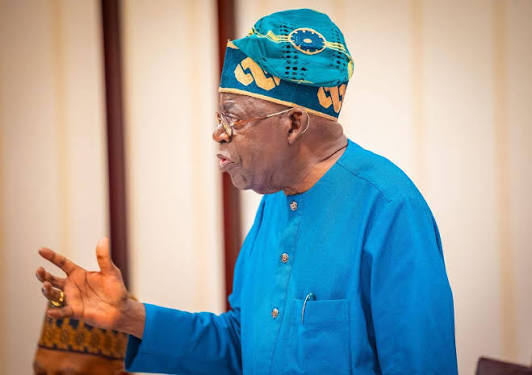

President Bola Ahmed Tinubu’s brand was not manufactured in 2023; it was made in over two decades of political engineering and administrative record-keeping. From 1999 to 2007, his tenure as Lagos governor became the reference point for sub-national governance in Nigeria. His administration is credited with raising internally generated revenue from less than N600 million monthly to over N7 billion, reforming the judiciary, establishing LAWMA, LASTMA, LAMATA, and laying the foundation for the Lekki Free Trade Zone and Eko Atlantic. That Lagos model became his political currency, cited by allies and opponents alike as proof of executive capacity.
Beyond performance, Tinubu cultivated the brand of a kingmaker. As National Leader of the APC, he brokered the 2015 merger, bankrolled structures, and delivered the South-west bloc that made the late President Muhammadu Buhari’s victory possible. The brand promise is therefore threefold: proven administrator, strategic bridge-builder, and a leader willing to take unpopular but structural decisions. Since May 2023, subsidy removal, exchange rate unification, the coastal highway project, and the student loan scheme have been framed by his camp as extensions of that brand – a reformer who chooses long-term repositioning over short-term applause.
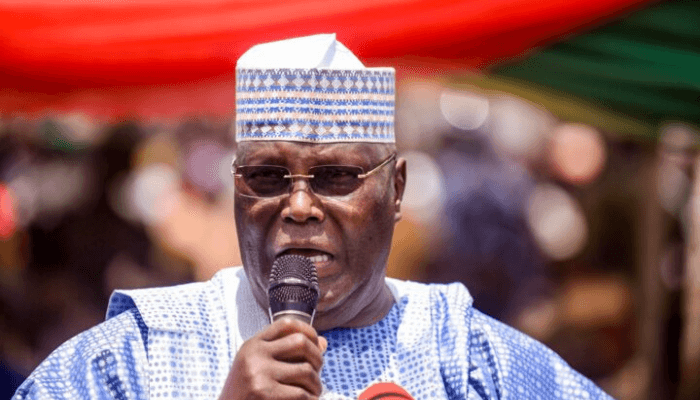
The ADC coalition, by contrast, is populated by political actors whose faces have been on ballot papers and cabinet lists since 1999. The most prominent is former Vice President Atiku Abubakar, who served from 1999 to 2007 and has contested the presidency in 2007, 2011, 2019, and 2023. Alongside him are former governors, ex-ministers, and party chairmen who held power under PDP and APC governments and were central to the same establishment the coalition now criticises.
Many were active players in the 2015 merger that ousted the then President Goodluck Jonathan, only to splinter when interests diverged. Their resumes are public record: tenures marked by oil boom spending, unresolved power sector reforms, and the early growth of public debt. The label “recycled” sticks because these are not fresh entrants offering new ideas, but veteran power brokers regrouping under a different party logo. Their political careers have seen them migrate from PDP to APC, to nPDP, to ADC, often within a single electoral cycle.
This creates the central contrast driving the 2027 conversation. Tinubu’s brand, whether one agrees with it or not, is defined by a specific track record and a reputation for building lasting political machines. The ADC’s recycled elites carry name recognition, but not a distinct brand voters haven’t already assessed. In 2015, the APC had Buhari’s ascetic image and mass northern following paired with Tinubu’s southern structure.
The ADC today lacks an equivalent duo, no singular moral symbol and no undisputed strategist whose personal record changes the electoral map. Voters can point to what Tinubu built in Lagos and what he is attempting nationally. For the ADC’s key figures, the question becomes: what new governance brand are they selling in 2027 that Nigerians did not already see from 1999 to 2023? That is the brand deficit the coalition must overcome if it wants to be trusted again.
The ADC-led coalition is currently anchored by prominent political veterans, with former vice president and two-term PDP presidential candidate Atiku Abubakar, former LP presidential candidate Peter Obi, former Senate President David Mark, Abdulra’uf Aregbesola, former Governor of Osun state, Sen. Rabiu Musa Kwankwaso, former Kano governor and NNPP presidential candidate; Malam Nasir El-Rufai, former Kaduna governor and ex-FCT Minister, Chief John Odigie-Oyegun, APC’s first national chairman; and Senator Aminu Tambuwal, former Governor of Sokoto state.
While these are weighty political actors with structures and experience, their sudden pivot against the Tinubu administration less than two years into his first term raises trust questions. Many Nigerians remember that several of these leaders were key drivers of the same APC platform they now criticise. For voters who lived through 2015–2023, the optics look less like ideology and more like realignment of personal interests. That perception alone weakens the “alternative” label, because coalitions win trust when they feel like a departure, not a replay.
Beyond personalities, coalitions need a unifying idea that voters can hold onto—think “change” in 2015 or “restructuring” in 2019. Right now, the ADC conversation is dominated by opposition to the sitting government, not by a clear, costed alternative on the economy, insecurity, or restructuring. What is the coalition’s position on subsidy removal, forex unification, VAT sharing, or state police? Without that, Nigerians can’t measure it against APC’s record. And when heavyweights with conflicting histories of Kwankwaso’s Kwankwasiyya movement, Atiku’s PDP legacy, El-Rufai’s reformist but hardline style converge, policy coherence becomes the first casualty.
Nigerian voters are more informed today so cannot be deceived twice. They want substance before slogans. Perhaps the biggest gap in the ADC-led talks is the youth question. The coalition has not yet projected a formidable young candidate or a pipeline of new breeds willing to take the front seat. The same faces that shaped PDP and APC for 24 years are still leading the conversations. Where are the 35–45-year-old governors, tech leaders, or civic organisers with national appeal being deliberately positioned?
Until the coalition shows it’s ready to cede space not just appoint youths as spokespersons millions of under-40 voters who swung elections in 2023 will see it as “old wine in a new bottle.” An alternative that looks like the establishment cannot credibly promise to dismantle the establishment’s failures. Less than two years into a four-year term, most Nigerians are still judging the current administration on delivery, not campaigning for 2027.
A coalition that appears motivated by early defeat or loss of patronage struggles to build moral authority. Structure is another issue: ADC as a platform has limited national spread, weak state-level financing, and no recent electoral test-run. Merging big names without grassroots wards, funding architecture, and INEC-compliant party machinery just creates headlines, not a government-in-waiting.
Voters have seen coalitions collapse after primaries because the only shared goal was “remove the incumbent.” For Nigerians to buy in, they need to see sacrifice, discipline, and a candidate pipeline that outlives ego. Until then, the “alternative” remains a conversation, not a choice. This positions President Tinubu on an advantage platform to return convincingly in 2027. It is clear, and from the echoe of the ADC coalition’s members, it is Atiku, Peter Obi, Kwankwaso or nothing. It means, if they cannot sacrifice for one another, Nigerians should expect no sacrifice then.
President Tinubu is the most mentioned in Nigeria’s politics as critics keep attributing everything that behold them to him. That is why my friend jokingly said, even if your wife refused to cook for you it is President Tinubu that asked her not to. This is the Nigeria of today where failed political elites are regrouping without a single plan. The joke reflects a wider mood: the presidency is blamed for every setback, while other levels of government face little scrutiny. In this climate, recycled elites regroup without presenting Nigerians a clear, workable alternative.
We should summon courage to demand accountability from our state governors whose monthly allocations have increased drastically. Federal transfers to states have risen significantly, yet citizens still ask where the impact is on roads, hospitals, schools, and security. If every demand goes to Abuja while governors manage larger budgets with minimal pressure, poor service delivery will persist. Real accountability means tracking state spending, not only blaming the centre for problems that sit closer to home.
President Tinubu is not born to receive worship and we should not demand perfection. No single office can fix decades of structural gaps in less than two years, and treating the presidency as the sole cause of every outcome removes pressure from other elected officials. Citizens can demand results, but democracy functions when that demand covers federal, state, and local levels. When we demand perfection from one man and silence from others, we weaken governance and give politicians room to underperform.
The next election will be decided by the Nigerian voters not by the group of political and recycled elites. A coalition without a plan, without youth, and without a clear policy contrast cannot claim to be an alternative. Nigerians who lived through 2015–2023 are more informed today and will judge by delivery they can see, not by elite realignments they have seen before. Until sacrifice, discipline, and a candidate pipeline that outlives ego appear, the “alternative” remains a conversation. The ballot, not backroom meetings, will decide who leads next.