By Segun Adewale in Bauchi
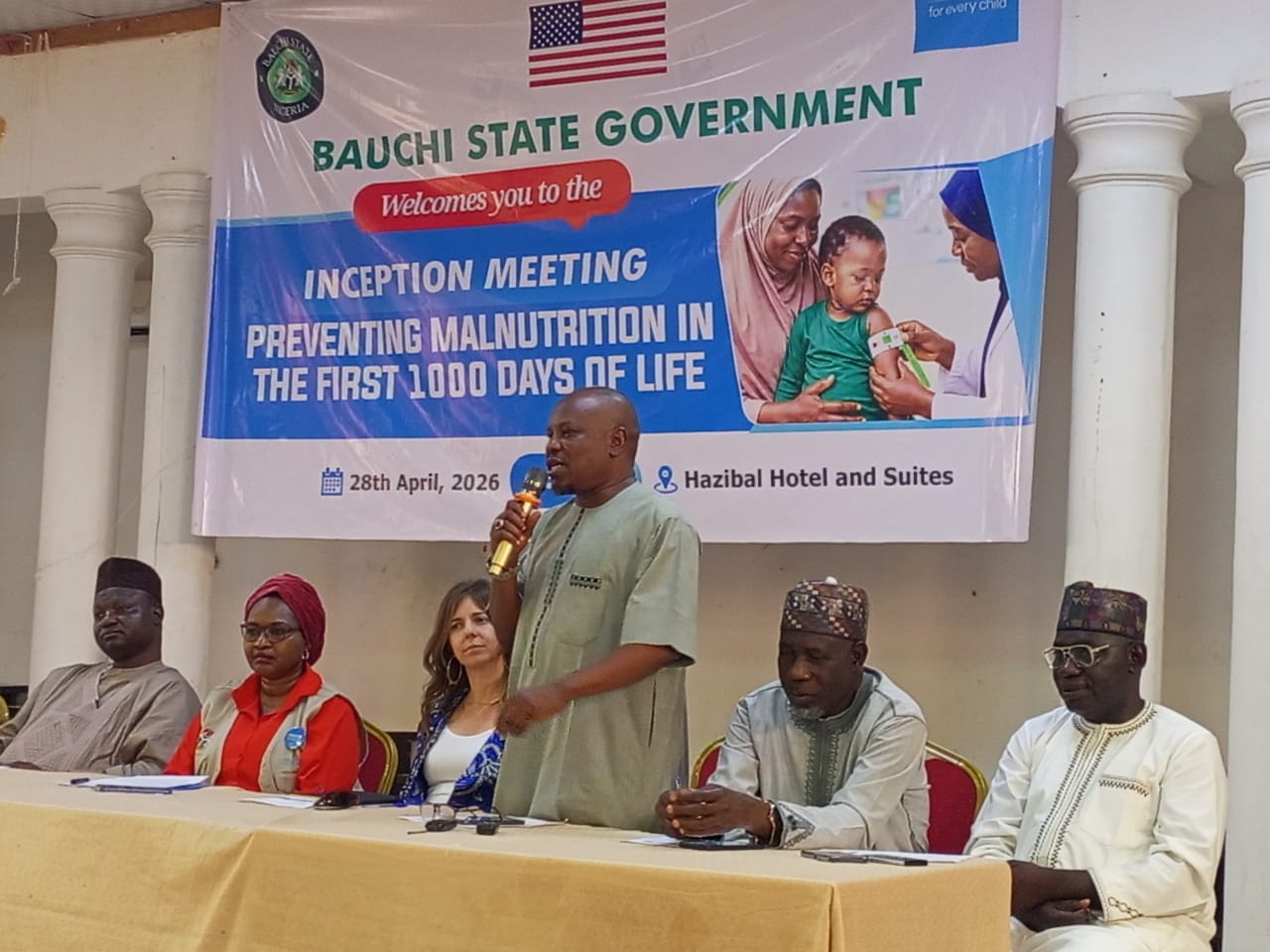
The Bauchi State Government, in partnership with the United Nations Children’s Fund (UNICEF) have commenced strategic plan to stop malnutrition in first 1,000 days of child’s life,spanning conception to a child’s second birthday.
The state and the international Agency are being supported by the United States Government with $3.5million support to seven states to develop a robust action to end stunting and wasting which is caused by child malnutrition.
Bauchi, according to national data, records 153 deaths per 1,000 live births. Also, more than 75 percent of women suffer from anaemia while stunting is over 60 percent.
According to UNICEF’s Chief of Bauchi Field Office, Dr. Nuzhat Rafique, represented by a nutrition specialist, Philomena Irene, the US government has supported the initiative to ensure that from conception till whe a child is 2 years, malnutrition is prevented.
“These statistics are not what we are proud of, even as UNICEF. We are thankful that the government has provided an enabling environment for us to tackle these challenges,” she added.
The programme focuses mothers and infants across the state to nuture children with sharp and healthy brains, saying it is vital for physical growth, brain development, and long-term health.
The state Commissioner for Health and Social Welfare, Dr. Sani Mohammed Dambam, described the drive as critical to safeguarding child survival and development.
He urged the local government officials who are champions of nutrition in their councils. “You are strong stakeholders for everything that affects your local government, and you have the full backing of your chairmen,” he said.
Executive Chairman of the Bauchi State Primary Health Care Development Board, Dr. Rilwanu Mohammed, said that maternal health and infant care during the first 1,000 days determine whether a child would thrive or face lifelong setbacks.
Mohammed urged pregnant women to attend antenatal care, warning that missing pregnancy care raise risks of complications, preterm births, low birth weight, and maternal death.
“We want mothers to deliver in a healthcare facility. Delivery at home without skilled care puts both mother and baby at risk,” he said.
He also emphasised exclusive breastfeeding for the first six months, noting that breast milk provides sufficient water, nutrients, and antibodies.
“Some people say babies need water. No. Breastmilk alone is enough. Giving water exposes children to infections,” he stated. Mohammed added that children must complete routine immunization within the first year to protect against preventable diseases.