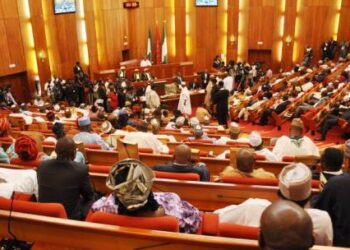
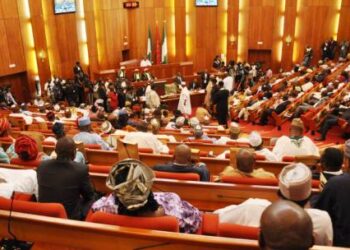
The Senate Tuesday called for heightened surveillance, testing and contact tracing across the country, following renewed concerns over a COVID-19 case, as lawmakers warned of gaps in the country’s public health emergency response system.
The Senate resolution followed a motion sponsored by Senator Ipalibo Banigo (Rivers West), who raised the alarm over the urgent need to address weaknesses in preparedness and response mechanisms.
Leading debate on the motion, Banigo cited constitutional provisions mandating government at all levels to prioritise citizens’ welfare, including public health.
“The Senate notes that Section 14 of the Constitution of the Federal Republic, as amended, imposes a duty on all tiers of government to ensure the security and welfare of the people, including protection of public health,” she said.
She disclosed that a confirmed COVID-19 case involved a 53-year-old foreign national who entered Nigeria on March 17, 2026, and later developed symptoms before testing positive on April 16 after PCR confirmation at the National Reference Laboratory.
Banigo warned that the infection timeline appeared to exceed the expected incubation period, raising fears of possible local transmission.
“It also notes that epidemiological investigation of the confirmed case indicates a timeline beyond the expected incubation period, thereby raising public health concerns of possible local transmission within the Federation,” she added.
According to her, additional suspected cases have been identified and are currently under investigation, while contact tracing is ongoing.
The Senate expressed concern over persistent challenges affecting the Nigeria Centre for Disease Control and Prevention (NCDC), including procurement bottlenecks and inadequate funding since 2025, which lawmakers said have weakened response capacity.
Lawmakers noted that effective outbreak control depends on the steady availability of critical supplies such as testing kits, reagents and personal protective equipment, warning that shortages could endanger frontline health workers and undermine containment efforts.
Following deliberations, the Senate urged the Federal Ministry of Health and Social Welfare and the NCDC to scale up surveillance, testing and contact tracing in line with national outbreak response protocols.
It also called on the Federal Ministry of Finance, Budget and National Planning to fast-track funding and activate emergency financing mechanisms to support response efforts.
In addition, the Senate mandated the NCDC to submit a detailed report on the country’s preparedness status, including stock levels, laboratory capacity and surveillance gaps.
Lawmakers further emphasised the need for intensified nationwide risk communication to curb misinformation, reduce public anxiety and promote adherence to preventive measures, while urging state governments to strengthen their outbreak preparedness systems.
Last Thursday, the Senate had directed its Committee on Health, chaired by Senator Ipalibo Banigo, to investigate reports of a suspected COVID-19 outbreak, following a confirmed case in Cross River state.
Senator Akpabio, who gave the directive during plenary, tasked the committee to verify the development and report back to the chamber, stressing the need for swift action to prevent any potential spread.
The Cross River state Ministry of Health had confirmed that the case involved a Chinese national who tested positive and was admitted for treatment, prompting contact tracing efforts.