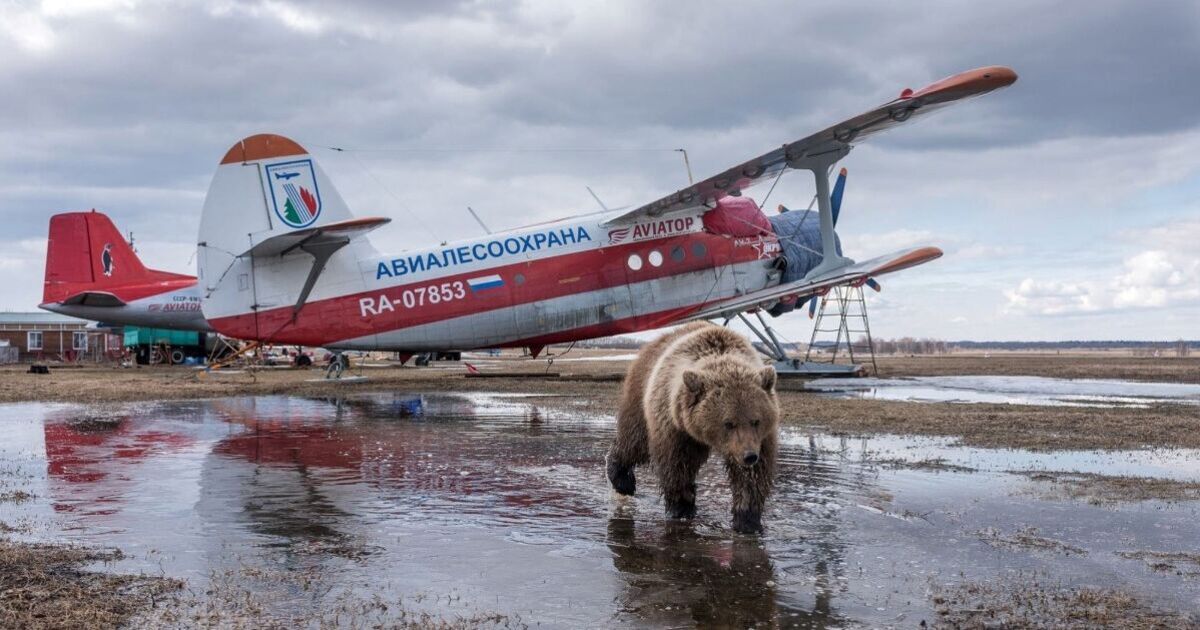
Vladimir Putin is being forced to call up biplanes dating from the 1940s amid an aviation crisis in Russia. Hundreds of turboprop An-2 aircraft in private storage are poised to be restored to fly again.
The desperate move to reprise a “WW2-era plane” that first flew in 1947 follows the grounding of aircraft hit by Western sanctions on spare parts and servicing linked to Putin’s debilitating war against Ukraine. It also comes after the jinxed Baikal, Russia’s long-delayed An-2 replacement, is again stymied by redesign and engine problems, with certification now at risk of slipping into 2027 or later. One Kremlin official Yuri Trutnev stated that the Baikal’s development had “reached a dead end.”
State-controlled Chaplygin Siberian Scientific Research Institute – developer of the An-2 – has “proposed restoring the airworthiness of approximately 700 aircraft currently in private storage,” revealed Kommersant newspaper.
The “refurbishing, restoring, and modernising the remaining aircraft in Russia could resolve the shortage of capacity on local routes in the next five to seven years.”
This could involve obtaining modern Western engines – which could be subject to sanctions – like the Pratt & Whitney PT6A-67B or the Honeywell TPE331-12.
But the Russian TVD-10B could also be used to bring the “dormant fleet” back to life.
Such rugged aircraft are vital to reach remote communities across Russia, including in the wilds of Siberia.
The biplanes started flying five years before Putin, 73, was born.
In fact, a total of 249 An-2 aircraft remain in operation across 62 operators on short-range flights often in remote localities.
The scheme has been mocked by Ukraine.
“Russia Goes Back to WW2-Era Planes After Failing to Build a New One,” read one headline.
The An-2 is often cited as having the longest production run of any aircraft in history – more than 50 years.
It was the largest and most-produced single-engine biplane, used for passenger transport, cargo, military uses and agriculture.