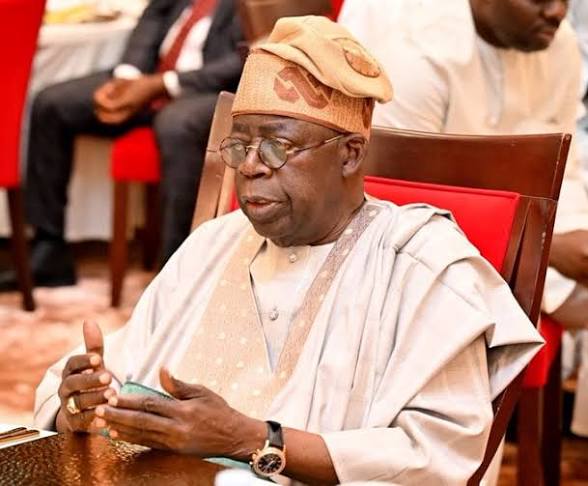

The National Assembly last week approved the sum of N68.3 trillion for the 2026 budget.
President Bola Ahmed Tinubu had requested the National Assembly to increase the budget by N9.3 trillion or 17 per cent from the N58.47 trillion he sent in December 2025 to the new figure. The increase will enable the federal government to address emerging national priorities and funding gaps in critical sectors.
A major component of the budget adjustment is the inclusion of N5.71 trillion in legacy capital obligations carried over from 2025 budget. The federal government said that the step was taken to prevent delays in project execution and ensure continuity in government programmes.The federal government proposed several infrastructure interventions under the budget.
Government plans to spend N478.6 billion in equity contributions for light rail projects in Lagos, Kano, Kaduna and Ogun states.
A breakdown of the increased budget shows that N32.29 trillion would be spent on capital projects, N15.43 trillion for recurrent expenditures, N15.8 trillion for debt service and N4.8 trillion on statutory transfers.
The prominence given to capital expenditures reflects government emphasis on infrastructure development. Nigeria has an intimidating infrastructure deficit that compelled the World Bank to warn that if Nigeria invests $100 billion annually on infrastructure development it will take it 10 years to take the infrastructure to acceptable limits. That explains government’s emphasis on infrastructure development.The relatively low allocation to recurrent expenditure is a departure from the past when 80 per cent of the budget would be allocated to recurrent expenditures, leaving pittance for capital projects.
The N4.8 trillion allocated to statutory transfers will fund the operations of the National Assembly, judiciary, the Independent National Electoral Commission (INEC) and other similar institutions.
The allocation of N15.8 trillion to debt service portrays the high pressure that debts exert on Nigeria’s public finances. However, despite the huge allocation to debt service, Nigeria’s debts remain sustainable by international standards.
With a debt-to-gross domestic product (GDP) ratio of 36 per cent, Nigeria remains one of the least indebted counties in Africa and indeed the world.
In the Economic Community of West African States (ECOWAS), Ghana with a relatively efficient economy is the highest debtor with debt-to-GDP ratio of 71 per cent.
The United States of America (USA), the world’s largest economy is groaning under a debt burden of 125 per cent of GDP. America’s debt now stands menacingly at $39 trillion.
The 2026 budget was approved by the National Assembly more than three months after President Tinubu forwarded it to the legislature.Consequently, if the president appends his signature to the Appropriation Bill as soon as it gets to his desk and implementation of the budget starts immediately, it would have succeeded in shifting the budget cycle to April to March rather than the traditional January to December.
Implementation of the capital expenditures in the 2025 budget commenced in September. Consequently, 70 per cent of the capital budget was carried over to 2026. This prompted the National Assembly to tasked the federal government with prudent implementation of the 2026 budget. That is a tall order given the fact that the budget was passed almost four months behind schedule. Besides, this is an election year where politicians will be under pressure to please the electorate.The presidency will be under intense pressure to deliver on its promises to the electorate in an election year.
Besides, it will be difficult for government to exhibit strict budget discipline in a year where politicians would be inclined to spend more.
Pundits contend that the 2026 budget might suffer the plight of its predecessors by missing revenue target. Government had repeatedly missed revenue targets by an average of 30 per cent annually leading to heavy borrowing to balance the budgets.
However, the federal government believes that it has taken appropriate steps to curb massive deficit in revenue. The oil reference price for the budget is to be raised by $10 per barrel. That will raise revenue by well over N2 trillion.
Besides, the reform in the telecommunications industry is expected to boost tax revenue tremendously. For instance, MTN and Airtel, the two leaders in the industry are expected to pay tax to the tune of N874 billion in 2026.
Government also plans to raise the sum of N6.163 trillion from external borrowings to balance the budget. The federal government is sure of a diligent implementation of the 2026 budget.In fact government assures economy watchers that prudent implementation of the budget will ensure the development of infrastructures, strengthen the judiciary and other institutions and support economic growth.
Blueprint.ng is impressed by the federal government’s plans to develop light rail structures in Lagos, Kano, Kaduna and Ogun states under the budget.
This newspaper enjoins government to ensure prudent implementation of the budget and to facilitate a return to the traditional budget cycle of January to December.


