3 min readApr 15, 2026 12:07 PM IST
European countries are working on a plan to form a broad coalition to help secure shipping through the Strait of Hormuz after the war. The plan includes deploying mine-clearing and other naval vessels, with the proposal potentially excluding the United States, according to a Wall Street Journal report.
French President Emmanuel Macron, on Tuesday (Apr 15), said that the proposed post-war international defensive mission for the Strait of Hormuz will exclude “belligerent” parties, including the United States, Israel and Iran, with European naval forces operating without US command, said the WSJ report.
The proposed plan aims to restore confidence among global shipping companies so they can resume using the shipping route once fighting ends, which officials said could be some time away.
Germany is also expected to be part of a European plan, marking a shift from its earlier reluctance to consider overseas military involvement, the WSJ report cited a German official as saying.
US imposes Iran port blockade, declares ‘maritime superiority’ in Middle East
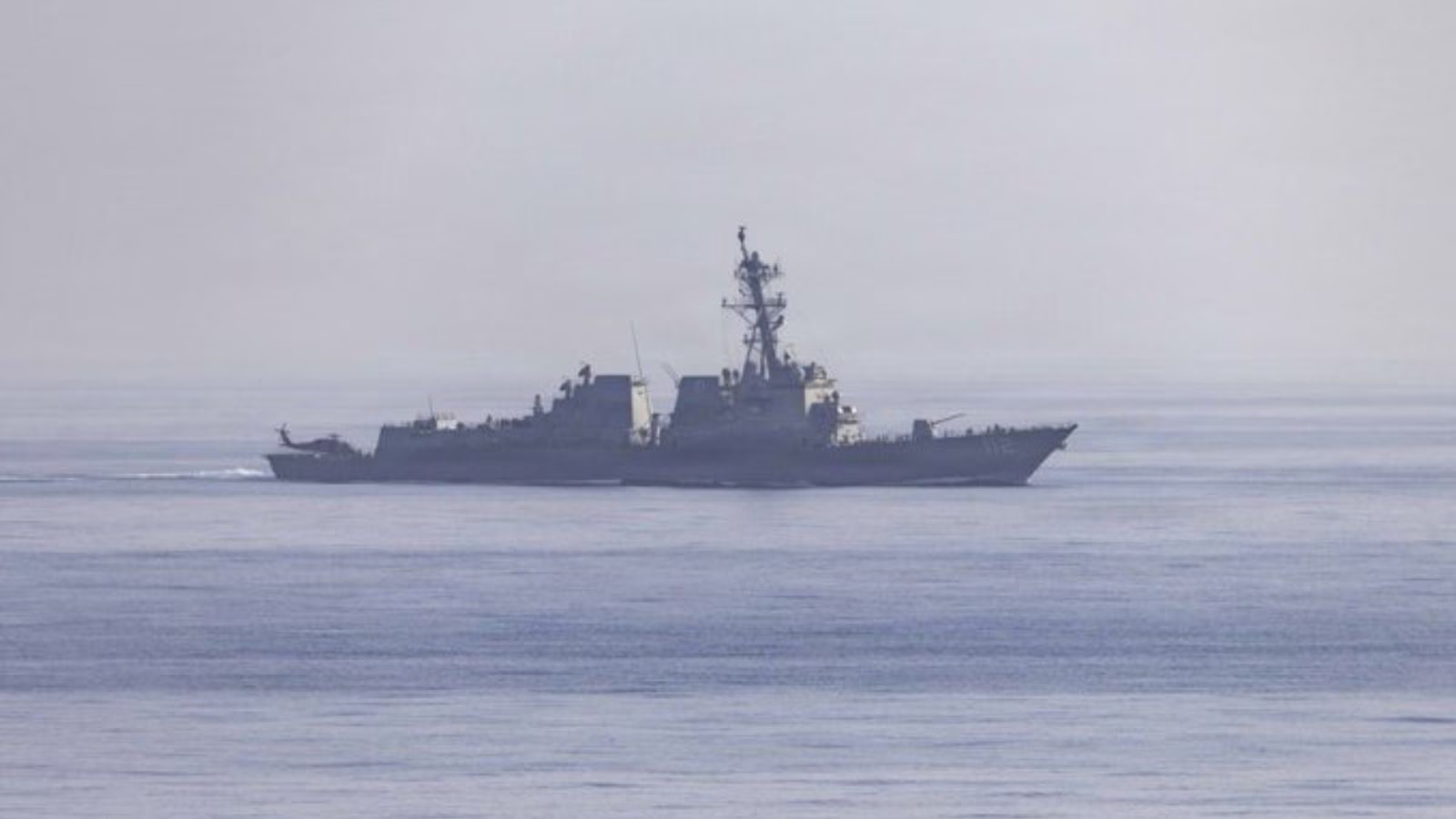
Meanwhile, US Central Command said that it has enforced a blockade on Iranian ports, halting maritime trade within 36 hours and asserting control over key Middle East sea routes.
“A blockade of Iranian ports has been fully implemented as U.S. forces maintain maritime superiority in the Middle East. An estimated 90% of Iran’s economy is fueled by international trade by sea. In less than 36 hours since the blockade was implemented, U.S. forces have completely halted economic trade going into and out of Iran by sea,” said Adm. Brad Cooper, CENTCOM Commander.
Story continues below this ad
Earlier, CENTCOM said that in the first 24 hours of the US’s naval restrictions in the Strait of Hormuz, no ships made it past the blockade and six merchant vessels were sent back to an Iranian port.
“More than 10,000 U.S. Sailors, Marines, and Airmen along with over a dozen warships and dozens of aircraft are executing the mission to blockade ships entering and departing Iranian ports. During the first 24 hours, no ships made it past the U.S. blockade and 6 merchant vessels complied with direction from U.S. forces to turn around to re-enter an Iranian port on the Gulf of Oman,” it said.
“The blockade is being enforced impartially against vessels of all nations entering or departing Iranian ports and coastal areas, including all Iranian ports on the Arabian Gulf and Gulf of Oman. U.S. forces are supporting freedom of navigation for vessels transiting the Strait of Hormuz to and from non-Iranian ports,” CENTCOM added.
The blockade, which came into effect on Monday 7.30 pm (IST), applies to all ships transiting the crucial maritime route to access Iranian ports and shores.
Story continues below this ad
Tehran had reportedly been charging a toll of $2 million for each vessel transiting the Strait as maritime traffic was being diverted to its Larak Island owing to Iranian mines being placed in the original transit routes, a map shared by IRGC shared by Lloyd’s List showed.
Stay updated with the latest – Click here to follow us on Instagram
© IE Online Media Services Pvt Ltd