4 min readNew DelhiApr 29, 2026 06:23 AM IST
Divisions within Iran’s top leadership have broken into the open once again, and at the heart of the dispute is the opposition of Iran’s most hardline politicians to the Islamic republic negotiating with the US over its nuclear programme, The Financial Times has reported.
ARTICLE CONTINUES BELOW VIDEO
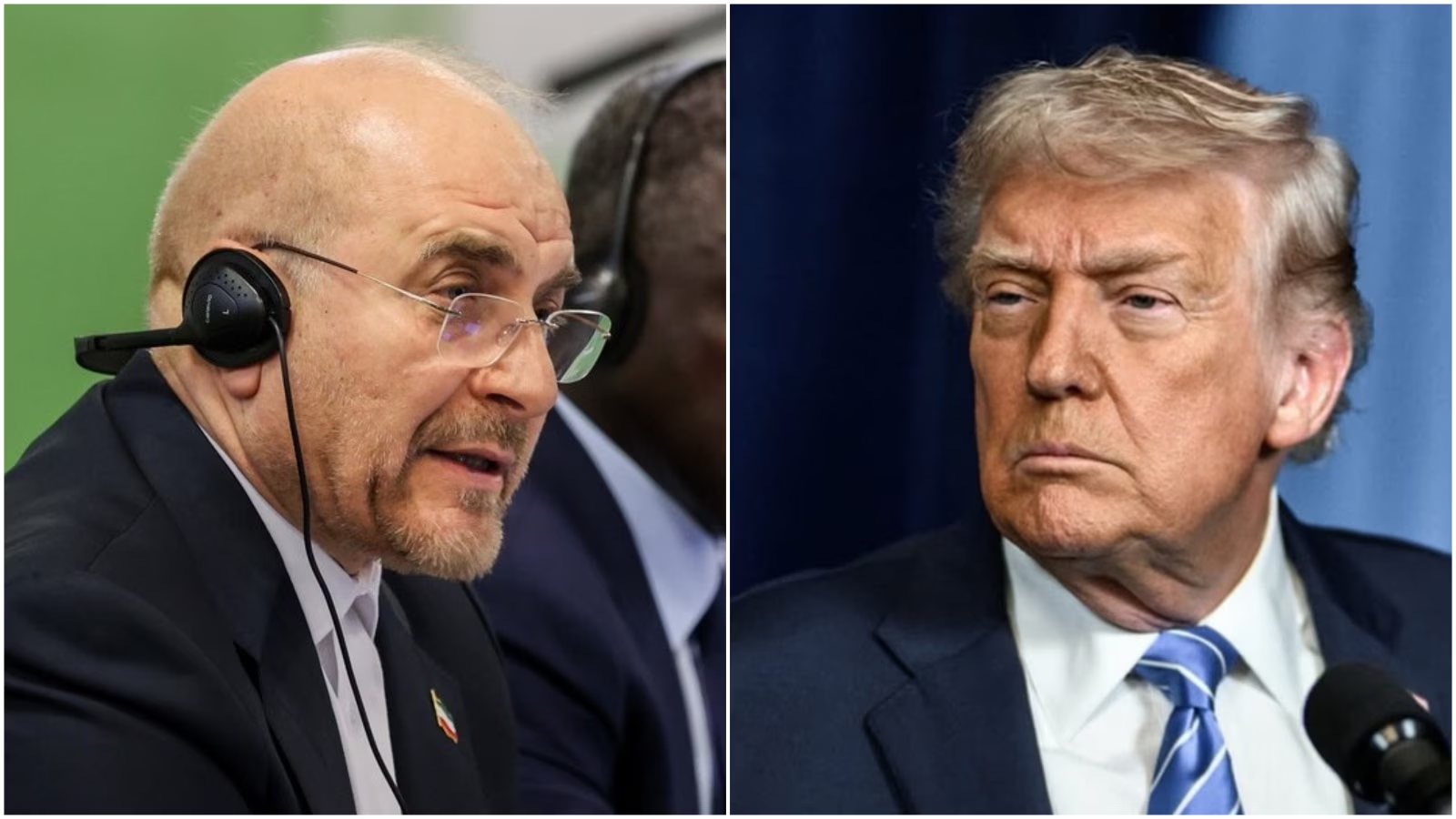
“Their primary target is Mohammad Bagher Ghalibaf, the veteran parliamentary speaker who led talks with US Vice-President JD Vance in Pakistan earlier this month. Politicians linked to Paydari, an influential ultra-hardline faction, suggested negotiators have not fully followed directives set by the new supreme leader Ayatollah Mojtaba Khamenei,” FT reported.
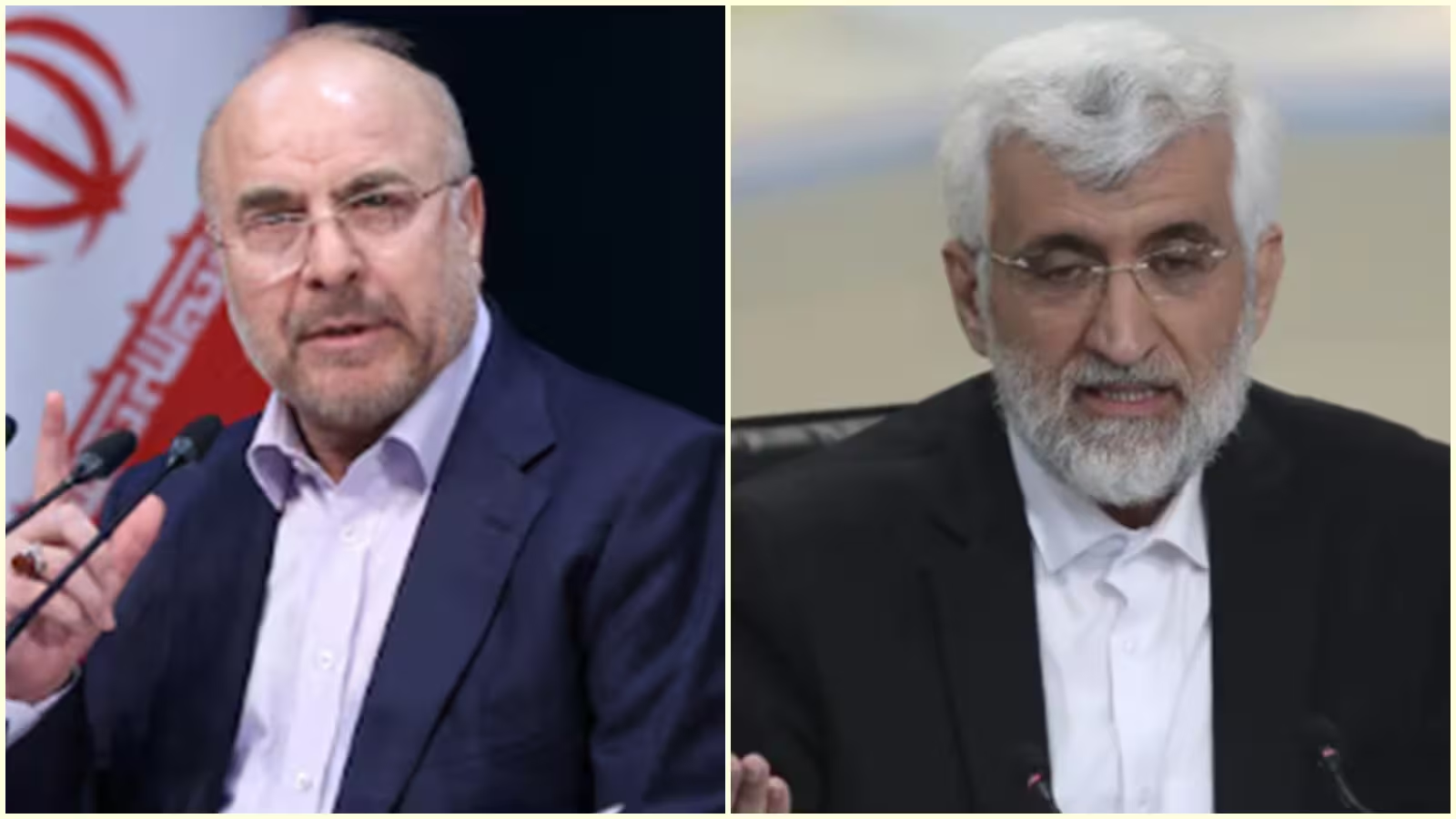
FT said that Iran’s ruling system has long been made up of competing factions, who often attack each other in public. Hardliners are ideologically opposed to negotiations with the US — which has twice in the past year attacked Iran in the midst of nuclear talks — while reformists have pushed for greater engagement with the West as a means to secure sanctions relief and bolster the regime. The latest round of bickering also centres on personal rivalries. Ghalibaf, who is considered pragmatic and less ideological, competed against Saeed Jalili — a prominent hardliner supported by Paydari — in the 2024 presidential election. Both ultimately lost out to Pezeshkian. So far, Iranian officials have remained firm on their demand that the US lift its blockade on the Strait of Hormuz before negotiations with Washington can resume. They also insist that Iran should be able to charge fees on shipping in the Strait, retain its right to enrich uranium and not allow its stockpile of highly enriched uranium to be transferred to the US.
“Negotiations are now pure damage and nobody should go for negotiations,” Mahmoud Nabavian, a member of parliament close to the Paydari who accompanied Iran’s negotiating team to Pakistan, told local media, according to FT.
According to the report, he “criticised inclusion of Iran’s nuclear programme in talks as a strategic mistake” and implied this is not what the top leader sought. Another hardline politician, Ali Khezrian, claimed on state television that the supreme leader opposed continuing the talks. Officials “should know that at this sensitive time their obligation is to thoroughly obey and carry out the guidelines of the supreme leader”, Nabavian said.
On Monday, 261 out of 290 MPs issued a statement supporting Ghalibaf and the other negotiators. However, prominent members of Paydari were absent from the list of signatories.
Iran’s top leaders insist that the republic’s different power centres — including the Islamic Revolutionary Guard Corps, whose influence has only grown as it assumed operational management of the war — are coordinating. Ghalibaf, himself a hardliner who is considered close to Khamenei, Iran’s reformist President Masoud Pezeshkian and the country’s judiciary chief have pushed back against Trump with similar messages on X, stating that “in our Iran, there are no hardliners or moderates.”
Story continues below this ad
It said that the large size of the delegation at the first round of talks — some 70 attendees, including senior defence officials — also pointed to the broad coordination, analysts said. One foreign diplomat warned against over-interpreting the tensions. “There’s divisions on points of view, yes, I don’t think there’s divisions that are major fractures,” they said. “The government has a view, Ghalibaf has a view, the [Guards] have a view, but that’s always been the case.”