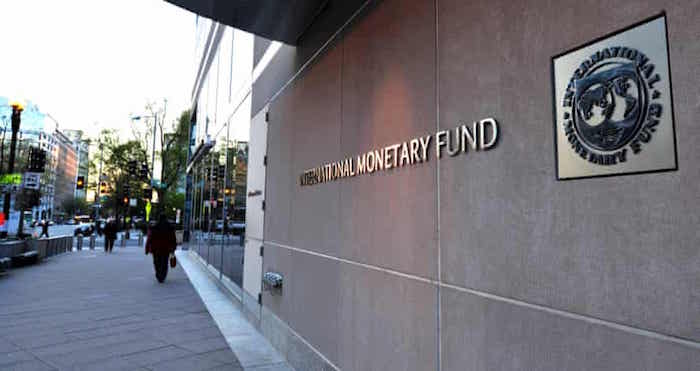
The International Monetary Fund (IMF) has warned that food insecurity could worsen sharply across Nigeria and other African countries in the wake of economic disruptions triggered by the Gulf War, casting a shadow over the region’s recent recovery gains.
This comes as the 2026 Global Report on Food Crises predicted that conflict, drought and shrinking aid would keep global hunger at critical levels this year, with food insecurity expected to worsen in some of the world’s most fragile countries.
In a blog post, the IMF’s Director of the African Department, Abebe Aemro Selassie, said Sub-Saharan Africa entered 2026 on a relatively strong footing, but was now facing mounting risks that could derail its fragile progress.
He noted that the region recorded its fastest growth in a decade in 2025, expanding by 4.5 per cent, supported by easing macroeconomic imbalances, improved investment flows, and a broadly favourable global backdrop.
Several economies, including Benin, Côte d’Ivoire, Ethiopia, and Rwanda, grew above six per cent, while inflation moderated to about 3.5 per cent and public debt levels began to edge lower, reflecting sustained reform efforts.
However, that momentum was now under threat, he stated: “A prolonged conflict could further inflate commodity prices, trigger a risk-off episode in global markets, and force abrupt fiscal adjustments in countries with large refinancing needs. In a severe downside scenario, as detailed in the IMF’s latest, regional output this year could fall 0.6 percent below pre-war forecasts, with oil importers suffering the most, and inflation could surge by an additional 2.4 percentage points.
“The human costs are equally stark. Food insecurity looms large: the region remains acutely vulnerable to food-price shocks, and the war has already driven up fertiliser and shipping costs.
“A 20 percent rise in international food prices could push more than 20 million people into food insecurity and leave 2 million children under age 5 acutely malnourished. Climate shocks intensify the strain the recent floods in Mozambique and Madagascar serve as a reminder of the region’s deep vulnerability to weather disruptions.”
The IMF official stressed that, beyond immediate policy responses, structural reforms remained critical to cushioning the shock and strengthening resilience over the medium term. Central to this, it stated, was the need to deepen intra-African trade and accelerate regional integration.
He added: “Even as policymakers grapple with the immediate shock, the medium-term reform agenda cannot wait. The premium on accelerating structural reforms—to boost growth and resilience—is now even higher. Improving the business climate, strengthening governance, and reforming state-owned enterprises, especially in energy, transport, and telecommunications, can help attract investment and lift productivity.
“Deepening regional integration through the African Continental Free Trade Area could bolster supply-chain resilience and expand markets for local producers.”
The Fund also warned that declining foreign aid was stripping away a critical buffer for many vulnerable economies. It noted that 2025 marked a sharp structural break in aid flows, with cuts falling most heavily on fragile states and threatening essential services particularly healthcare in countries with limited alternative financing options.
On debt in the region, he stated: “Debt vulnerabilities are also rising. More than one-third of countries are at high risk of, or already in, debt distress. In 21 countries, fiscal deficits exceed the levels that are needed to stabilise debt.
“Rising interest bills and dwindling concessional finance are inflating debt-service burdens and crowding out essential development spending.
“In some cases, growing reliance on domestic borrowing has deepened ties between government debt and bank balance sheets, raising the specter of financial instability.”
Meanwhile, the 10th edition of the Global Report on Food Crises, published by a coalition of development and humanitarian organisations, has stated that acute hunger had doubled over the past decade, with two famines declared last year for the first time in the report’s history – in Gaza and Sudan.
In total, 266 million people in 47 countries and territories faced high levels of acute food insecurity in 2025, while 1.4 million people faced catastrophic conditions in parts of Haiti, Mali, Gaza, South Sudan, Sudan and Yemen, Reuters quoted the report to have revealed.
In 2025 alone, 35.5 million children worldwide were acutely malnourished, including nearly 10 million suffering from severe acute malnutrition.
Looking at this year, the report stated that severity levels remained critical, with only Haiti expected to escape from the worst “catastrophic” band thanks to a slight improvement in security and increased humanitarian aid.
“We are no longer seeing just temporary shocks, but persistent shocks over time,” said Alvaro Lario, head of the U.N. International Fund for Agricultural Development, which helps draw up the annual report.
“The main message is that food insecurity is not an isolated issue anymore, but is putting pressure on global stability,” he told Reuters.
The U.S.-Israeli war on Iran has added to the alarm, Lario said, warning that prolonged disruption to energy and fertiliser trade could spill over into global food markets and worsen hunger in import-dependent countries already in crisis.
“Even if the conflict in the Middle East were to end right now, we know that a lot of the food price shocks and inflation will happen in the next six months,” he said.
Even before the added stress of this latest war, West Africa and the Sahel looked likely to remain under heavy pressure this year from conflict and persistent inflation, particularly in Nigeria, Mali, Niger and Burkina Faso.
Nigeria alone is projected to see one of the largest increases in food insecurity in 2026, with 4.1 million more people expected to face acute hunger.
In East Africa, failed rains across much of the Horn of Africa are expected to deepen suffering in Somalia and Kenya, where drought, insecurity, high food prices and reduced humanitarian aid are likely to drive worsening conditions.
The report also warned that humanitarian and development financing for food sectors in crisis fell sharply in 2025 and is projected to decline further.
Humanitarian food-sector funding is estimated to have dropped by some 39% last year from 2024 levels, while development assistance contracted by at least 15 percent.
Nume Ekeghe
Follow us on: