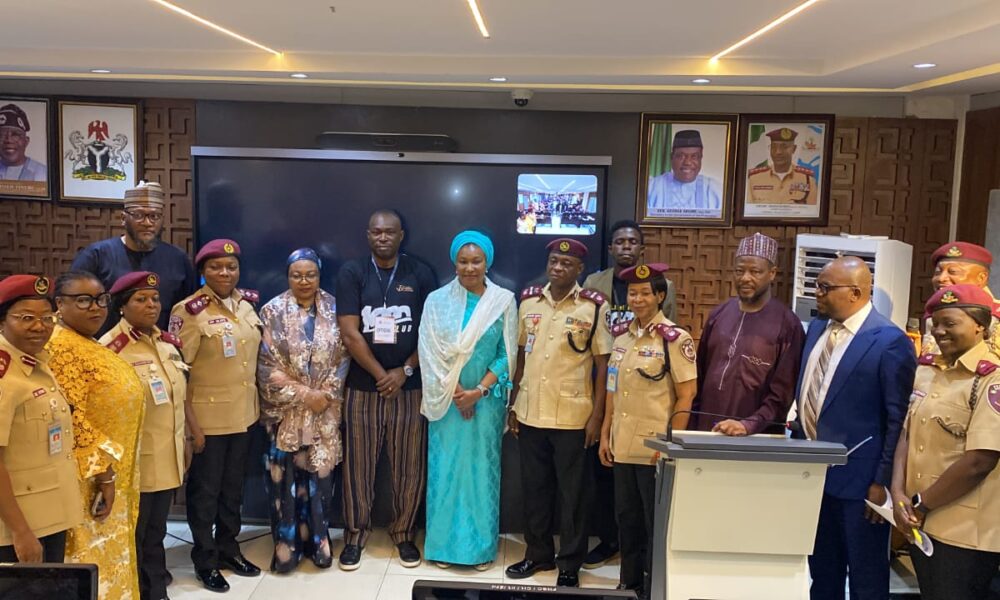
Worreid by gender imbalance in the emergency, rescue and security sector a nonprofit organisation, Lifeline Care Association, the Senator representing the FCT, Senator Ireti Kingibe, and Federal Road Safety Corps (FRSC), Thursday, advocated for more women in emergency, rescue and security space.
They made the call at the 9th Road Safety and Emergency Response Stakeholders, ROSERS, Meeting to mark the 2026 International Women’s Day organised by Lifeline Care Association in Abuja.
Speaking at the event, the Founder, Lifeline Care Association, Dr Nkem Momah, who shared his experience after a near fatal road accident, explained that it was imperative for more women to be actively involved in rendering emergency services, and not just to mark the IWD but to ensure they are playing a leading role in their communities and organisations, therefore.
Dr Momah stressed that they should be supported with basic trainings, equipment and alertness based on their numbers.
He also urged the public and private sectors to employ more women in driving, and other safety areas to reduce accidents because they are more conscious of safety.
On her part, Senator Kingibe, who was the keynote speaker on the theme: ‘Women in Emergency Services in Nigeria: Positives, Barriers, and the Way Forward’, pointed out that more investment is needed for women safety officers to effectively render their services.
Senator Kingibe also referred to the impact women are making globally in the emergency services, “The inclusion of women in emergency services is not simply a matter of fairness, it is a matter of effectiveness.
“Global research, including findings from organizations such as UN Women and the World Bank, consistently shows that
gender-diverse teams perform better in crisis response,
demonstrating improved decision-making, higher accountability, and stronger community trust.”
According to Senator Kingibe, who is also the Chairman, Senate Committee on Women Affairs, “Women bring unique strengths to emergency response: Improved community engagement: Communities, particularly vulnerable groups, often feel safer and more willing to communicate with female responders.
“Enhanced operational effectiveness: Gender-balanced
teams have been shown to reduce excessive use of force
and improve conflict de-escalation”, while in her call to action, she said Nigerians must understand that building a safer Nigeria is a shared responsibility.
“Government must create enabling policies. Institutions must reform their systems. Communities must challenge harmful stereotypes.
Families must support the ambitions of their daughters,” she added.
Earlier, in a welcome address, the Corps Marshal, Federal Road Safety Corps (FRSC), Shehu Mohammed while acknowledging the achievements by women safety officers, however, said, “We must confront the persistent challenges. Women in emergency services continue to encounter barriers such as limited access to top leadership positions, inadequate institutional support systems, and the complex task of balancing professional responsibilities with family obligations. These challenges are real and require deliberate, sustained, and collective action to overcome.”
Represented by the Deputy Corps Marshal, FRSC, Patience Olaye, urged government to institutionalise inclusive policies, expand opportunities for capacity building, and create safe, supportive, and enabling work environments where women can thrive and realise their full potential.
Also, in a goodwill message, the President, Road Safety Officers’ Wives Association (ROSOWA) ), Dr. Nafisa Mohammed, while commending Lifeline Care Association for initiating the event, said women should be supported to do more in emergencies and ensure lives are saved.
Meanwhile, the Programme Manager, Lifeline Care Association, Omasan Imogu, while giving an over view of the programme said there was nothing wrong with women being in the safety space for emergencies and to save lives.
“Someone said, if you have more women in this sector, you have to have less fatality. Women also come with some compassion and very important, because you notice that women as they get involved in fatal accidents because they try to do a lot of care, whereas the men, most of the accidents they have, come from the place of overconfidence,” he stated.
The event featured a discussion session on the theme with panelists drawn from the different emergency, rescue and security space.