Lawmakers and top government officials say improved coordination is key to achieving sustainable economic growth.
The National Assembly and the executive arm of government have renewed commitments to close longstanding gaps between Nigeria’s budgeting process and national development plans, in a push to improve coordination and deliver sustainable economic growth.
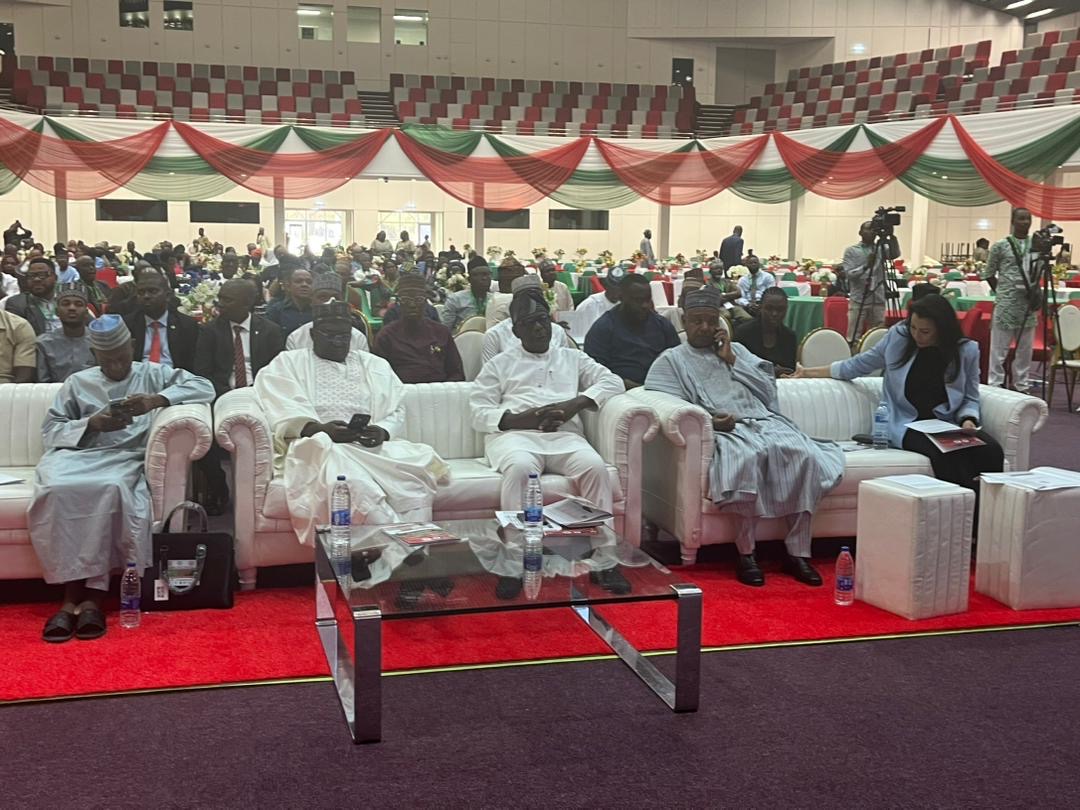
The pledge was made on Wednesday in Abuja by the Minister of Budget and Economic Planning, Atiku Bagudu, alongside the Chairman of the House Committee on National Planning and Economic Development, Gboyega Isiaka (APC, Ogun), and his Senate counterpart, Musa Mustapha (APC, Yobe), during the second day of a two-day National Policy Dialogue.
The renewed stance follows similar concerns raised on the opening day of the dialogue, where Vice President Kashim Shettima and former Director-General of the Budget Office, Ben Akabueze, called for urgent reforms to Nigeria’s budgeting framework.
They warned that weak alignment between budgets and development plans continues to undermine growth and service delivery.
The dialogue, themed “The Imperatives of National Development Plan and Effective Budgeting System for Sustainable Growth of the Nigerian Economy,” is organised by the National Assembly Joint Committee on National Planning and Economic Affairs/Development in collaboration with key government institutions, including the Office of the Vice President, the Ministry of Budget and Economic Planning, the Ministry of Finance, and the Budget Office of the Federation.
Speaking at the event, Mr Bagudu, a former senator, credited the National Assembly for supporting key economic reforms undertaken by the administration over the past three years, describing them as difficult but necessary decisions.
He stressed that national planning is not optional but a constitutional obligation binding on all tiers and arms of government.
According to him, provisions of Chapter Two of the Constitution mandate public office holders to pursue the fundamental objectives and directive principles of state policy, requiring coordinated action among the executive, legislature and judiciary.
“The constitution clearly stated that all those in authority, including legislative, judicial, and executive, have to work together. Equally, the president, vice president, National Assembly members, the governors, state assembly members, the office they swore to, and the wording are dictated by the constitution,” he said.
He said effective national planning and budgeting must align with these constitutional responsibilities to achieve meaningful development outcomes.
Mr Bagudu added that Nigeria’s constitutional framework outlines core economic, social, environmental and security objectives that can only be realised through collaboration among federal, state and local governments.
Also speaking, Mr Isiaka said that addressing the disconnect between planning and budgeting requires collective action by the executive, the legislature, and other stakeholders. He noted that the 10th National Assembly is committed to strengthening collaboration with the executive beyond routine oversight.
“The Senate and the House Committee on Economic Planning have been following, and some of the ministers have said, the beautiful work being done by the ministry, the coordination and all of that. We feel that we need to collaborate more beyond oversight and working sessions,” he said.
He pointed to ongoing work on the 2026–2030 national development plan and the federal government’s $1 trillion economy target, stressing the need for practical input from lawmakers at the planning stage.
He also referenced concerns about fiscal and monetary reforms, as well as the project funding framework, noting that deeper engagement would improve outcomes.
On his part, Mr Mustapha described the alignment of development plans with the budgeting system as central to Nigeria’s economic progress. He said the persistent gap between ambitious plans and actual budgetary allocations has historically slowed growth.
He said, “Our National Development Plan requires meticulous, aligned, and disciplined budgetary support to achieve its set objectives. However, the persistent disconnect between ambitious development plans and actual annual budgetary allocations has historically hindered our growth trajectory.”
He argued that budgets should no longer be treated as mere expenditure documents but as instruments for implementing national development priorities. According to him, weak coordination in the past has led to inefficient resource allocation and limited impact on citizens.
Mr Mustapha said the current administration is pushing a performance-driven budgeting system anchored on fiscal discipline, structural reforms and a long-term economic roadmap aimed at building a $1 trillion economy by 2030.
He added that recent policy measures, including subsidy reforms, foreign exchange unification and efforts to expand non-oil revenue, are intended to free up resources for critical sectors such as infrastructure, food security, education and security.
He maintained that aligning planning with budgeting would ensure that government spending translates into tangible improvements in citizens’ lives and supports inclusive, sustainable growth.