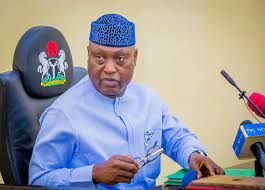
Public affairs commentator Mahdi Shehu has attributed the growing wave of killings across Nigeria to what he describes as the government’s continued engagement with, and concessions to, criminal groups.
In a post shared on X on Friday, Shehu expressed concern over what he sees as a sharp rise in violent incidents nationwide, noting that the trend has become more pronounced in recent months.
“Since November 2025, and more significantly from February 2026 to date, there appears to be a geometric increase in the number of Nigerians killed daily across the country,” he said.
He noted that the attacks cut across both civilian and security populations, warning that the situation shows no clear signs of easing.
“These killings are deliberate and systematic, affecting both civilians and security personnel, with no end in sight,” he added.
According to him, the country’s security architecture is currently under immense pressure and lacks the capacity to respond effectively.
“All security agencies are overstretched, insufficient in number, and poorly equipped compared to the weaponry in the hands of criminal gangs,” he stated.
Shehu argued that the persistence of violence is being fuelled by policies that, in his view, reward criminality, particularly through negotiations and amnesty programmes.
“These senseless and orchestrated killings will only be curtailed when governments at all levels stop engaging in what amounts to appeasement and begin to treat criminal elements as such,” he said.
He also called for an end to granting amnesty and official recognition to individuals involved in criminal activities.
“When authorities stop offering amnesty to vandals, bandits, and murderers, and when traditional institutions and governments cease conferring titles and public roles on known criminals, both locally and internationally, meaningful progress can begin,” he added.
The commentator further criticised what he described as a broader culture of rewarding wrongdoing through honours and appointments.
“When governments stop bestowing national honours, political appointments, and recognition on individuals with records of criminality, including arson, drug abuse, and financial misconduct, the system can begin to correct itself,” he said.
Shehu also linked the worsening insecurity to structural weaknesses within the political system, including electoral malpractice and institutional failures.
“When political actors stop deploying thugs to manipulate elections, when votes truly count in real time, and when the judiciary refrains from legitimising outcomes that do not reflect the will of the people, we can begin to address the root causes,” he stated.
He emphasised the need for justice, fairness and equality before the law, warning against selective enforcement.
“When governments abandon selective prosecution and ensure visible, measurable justice, equity, and fairness for all regardless of status, gender, ethnicity, or belief, then real progress can be achieved,” he said.
Shehu also urged citizens to become more engaged and accountable in governance.
“When Nigerians move beyond apathy, fear, and complacency, and take an active role in shaping governance, meaningful change will follow,” he noted.
He concluded by stressing that genuine progress depends on a functioning democratic system grounded in clear rules and accountability.
“True progress will only come when democracy operates as it should, not as a private enterprise, authoritarian structure, or transactional system, but as one rooted in justice, equity, and fairness for all. Anything short of this will remain a futile exercise,” he said.
“Anything less will amount to a wild goose chase.”