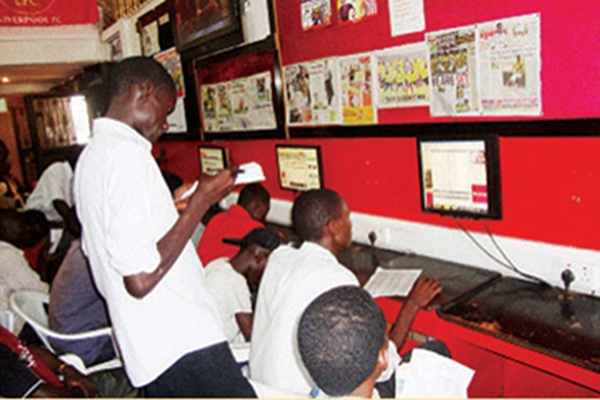
Nigeria has emerged as Africa’s largest gambling market, with industry estimates putting its value at a staggering ₦5.6 trillion, driven largely by a surge in online betting and growing participation among young people.
Findings released on Monday show that the rapid expansion of the sector is being fuelled by increased smartphone penetration, the rise of digital payment systems, and easy access to betting applications, which have transformed gambling into a mainstream activity across the country.
The report noted that Nigeria now ranks ahead of South Africa and Kenya in terms of market size and participation, consolidating its position as the continent’s leading gambling hub.
Analysts attribute the boom primarily to Nigeria’s youthful population, many of whom engage in betting as both entertainment and a perceived alternative source of income amid worsening economic conditions.
A significant proportion of wagers are now placed via mobile devices, marking a shift away from traditional betting shops and reinforcing the dominance of online platforms in the industry.
“The accessibility of mobile betting has fundamentally reshaped the market, making it easier for millions to participate daily,” the report stated.
The data further revealed that football accounts for nearly 75 per cent of all sports bets in Nigeria, underscoring the sport’s overwhelming popularity and influence on gambling trends.
Experts say this concentration channels vast sums into a single segment, creating what they describe as a “high-volume betting culture” centred on football fixtures.
Despite its impressive size, stakeholders warn that Nigeria’s gambling industry remains largely under-regulated compared to more advanced markets such as the United States and the United Kingdom.
They pointed out that fragmented oversight, weak enforcement mechanisms, and limited transparency in financial flows continue to pose risks to both players and government revenue.
Unlike in developed jurisdictions where strict compliance and reporting systems ensure accountability, Nigeria’s regulatory framework is yet to fully keep pace with the sector’s rapid growth.
The report highlighted a key difference between Nigeria and developed markets, noting that many local bettors are motivated by economic survival rather than leisure.
This has led to a preference for low-stake, high-frequency betting options that offer the possibility of quick returns, even as experts caution against the risks associated with such habits.
Industry watchers have called for urgent reforms, including the harmonisation of regulatory frameworks across states, improved licensing systems, and stronger consumer protection measures.
They also emphasised the need for transparent revenue tracking to ensure that the government captures appropriate taxes from the fast-growing industry.
With continued growth expected, analysts say Nigeria’s gambling market could expand even further in the coming years if supported by coherent policies and effective oversight.
However, they warned that failure to address regulatory weaknesses could undermine long-term sustainability and expose millions of participants to financial and social risks.
FOLLOW US
FOR MORE HERE