
As parts of efforts to stem the rising security challenges across the country, Nigeria has partnered Türkiye on a wide-range of strategic defence initiatives, including training, technology transfer, maritime cooperation, and operational support.
This was the outcome of a high-level bilateral talks at the Antalya Diplomacy Forum 2026.
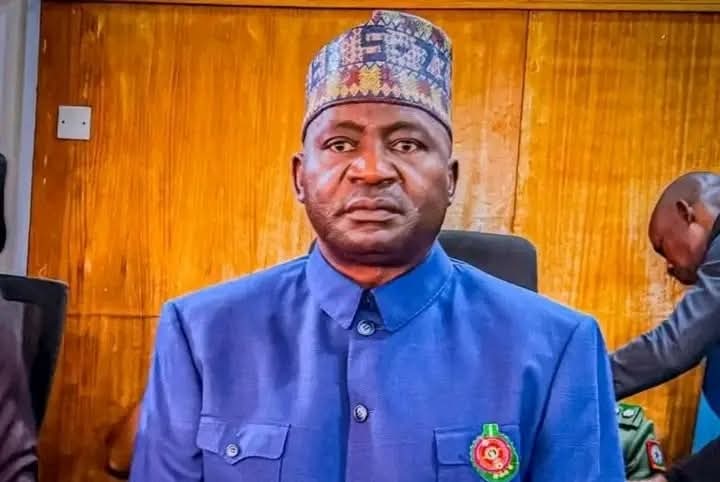
Minister of Defence, General Christopher Gwabin Musa (rtd.), who led the Nigerian delegation, met with his Turkish counterpart, alongside senior military and diplomatic officials, including the Chief of the Air Staff, the Chargé d’Affaires of the Nigerian Embassy, the Defence Adviser and other top officials from the Ministry of Defence and Nigeria’s mission in Türkiye.
A statement issued Sunday by the Ministry of Defence, said the meeting reaffirmed the longstanding relationship between both countries that produced practical, outcome-driven agreements aimed at strengthening Nigeria’s defence capabilities in line with President Bola Ahmed Tinubu’s Renewed Hope Agenda.
Signed by the Chief Information Officer, Queeneth Iheoma-Hart, the statement said: “Central to the agreement is a comprehensive training and capacity development programme.
“Türkiye proposed structured and scalable training for Nigerian armed forces in Special Forces operations, counterterrorism, intelligence integration, counter-drone and counter-IED operations, as well as United Nations pre-deployment training.”
The statement further said the two countries also agreed on the immediate deployment of an initial cohort of Nigerian personnel to Türkiye, alongside Turkish language instruction and participation in field exercises.
As part of the long-term plans, it said both sides agreed to establish a major military training facility in Nigeria, with the country expected to provide a temporary site while a coastal location has already been identified for permanent infrastructure.
On defence industry collaboration, the minister was quoted as saying “the two countries committed to partnerships involving technology transfer, maintenance training, and co-development initiatives. Platforms such as IDEF 2026 will be leveraged to deepen institutional links and boost Nigeria’s indigenous defence capabilities.”
Musa also said Türkiye expressed readiness to support Nigeria “with advanced surveillance systems, unmanned aerial platforms, satellite-enabled monitoring, counter-drone and counter-IED technologies, as well as specialised air and ground platforms, including infantry fighting vehicles tailored to Nigeria’s operational environment.”
While addressing border and internal security challenges, the federal government said both nations agreed to commence immediate technical engagements to develop integrated border management systems, enhance intelligence sharing, and coordinate responses to evolving threats from non-state actors.
“The agreement further covered disarmament and rehabilitation, with Türkiye offering to share best practices in reintegration programmes for surrendered combatants to support Nigeria’s long-term community stabilisation efforts,” it added
In the aviation sector, the two countries “are committed to strengthening maintenance systems, supply chains, and lifecycle support to improve operational readiness. This includes expanding flight hours and potential acquisition and support for helicopters and unmanned systems.”
“Naval cooperation also featured prominently, with Nigerian naval representatives set to engage their Turkish counterparts to inspect and evaluate suitable naval platforms, as well as pursue specialised maritime training to improve maritime domain awareness and operational effectiveness.
” Both sides agreed on a phased implementation strategy, with Nigeria expected to provide land—preferably in coastal areas—for training and operational facilities tied to the partnership,” the statement said.
Speaking at the end of the meeting, the minister said that “the outcomes of this engagement mark a significant step forward in Nigeria–Türkiye defence relations. We are committed to delivering tangible, measurable results that strengthen our national security and advance the Renewed Hope Agenda. Nigeria looks forward to timely implementation of the initiatives agreed in Antalya.”
It said that proposals and agreements from the meeting will be formally documented and processed through appropriate channels to ensure timely execution.
“Immediate next steps include the commencement of initial training deployments, technical exchanges on border surveillance, and planning for both temporary and permanent training facilities in Nigeria,” it said.
…Nigeria, Côte d’Ivoire deepen ties
In a related development, President of the Senate, Godswill Akpabio, reaffirmed Nigeria’s commitment to strengthening bilateral and regional cooperation with the Republic of Côte d’Ivoire.
This followed a high-level meeting with the Speaker of the Ivorian National Assembly, Patrick Jérôme Achi, on the sidelines of the 152nd Assembly of the Inter-Parliamentary Union (IPU) in Istanbul, Turkey.
Welcoming the Ivorian delegation, Senator Akpabio described Côte d’Ivoire as a “historic partner and brother nation,” emphasising that the enduring relationship between both countries remains central to the future of West Africa.
“If we unite as a bloc, we will be stronger in trade, economic cooperation, political collaboration, and cultural exchange. Otherwise, we risk a return to new forms of neocolonialism,” he warned.
Both leaders underscored the urgent need for deeper regional integration, calling for a strengthening of the Economic Community of West African States (ECOWAS) and the reintegration of countries in the Sahel region.
The President of the Senate stressed that, in a rapidly fragmenting global order, West Africa must act collectively to safeguard its economic and political future.
A major highlight of the discussions was the Abidjan–Accra–Lagos Coastal Highway, a flagship regional infrastructure project designed to connect over 300 million people across West Africa.
The project, once completed, is expected to: reduce travel time between Lagos and Abidjan from three days to about eight hours, operate as a modern, double-carriage superhighway, be governed under a supranational legal and operational framework, and eliminate excessive border delays through harmonized regional laws
Five ECOWAS countries have already enacted legislation to ensure seamless cross-border movement, modeled after open-border systems.
“This project is not just a road; it is an economic artery that will redefine mobility, trade, and integration across West Africa,” Akpabio noted while commending President Ahmed Bola Tinubu for his commitment to the project.
In his response, Speaker Achi emphasized that Africa’s development must be driven by private sector-led growth, supported by strong governance and legislative oversight.
“Governments do not grow economies — the private sector does,” he stated, calling for policies that unlock investment, expand markets, and create jobs for Africa’s rapidly growing youth population.
He identified peace, stability, education, and economic opportunity as the pillars for sustainable development, warning that without these, the region risks falling behind despite its vast resources.
Both leaders acknowledged persistent challenges, including, language barriers, fragmented markets, weak infrastructure, and brain drain.
They agreed that Africa must harness its human capital and natural resources more effectively, noting that the continent is “walking on wealth it does not fully recognize.”
Concerns around security and open-border systems were discussed, with emphasis on: technology-driven surveillance systems, smart border management, and regional intelligence cooperation.
The leaders also warned of emerging risks, including the potential for digital and economic recolonisation and urged for proactive investment in technology and innovation.
Both parties committed to deepening parliamentary collaboration, enhancing oversight of regional projects, and coordinating legislative frameworks to support integration.
In closing, both leaders described Nigeria and Côte d’Ivoire as “strategic pillars of West Africa,” capable of driving the region’s transformation if they act in concert. “If we work together, nothing is impossible,” Achi affirmed.