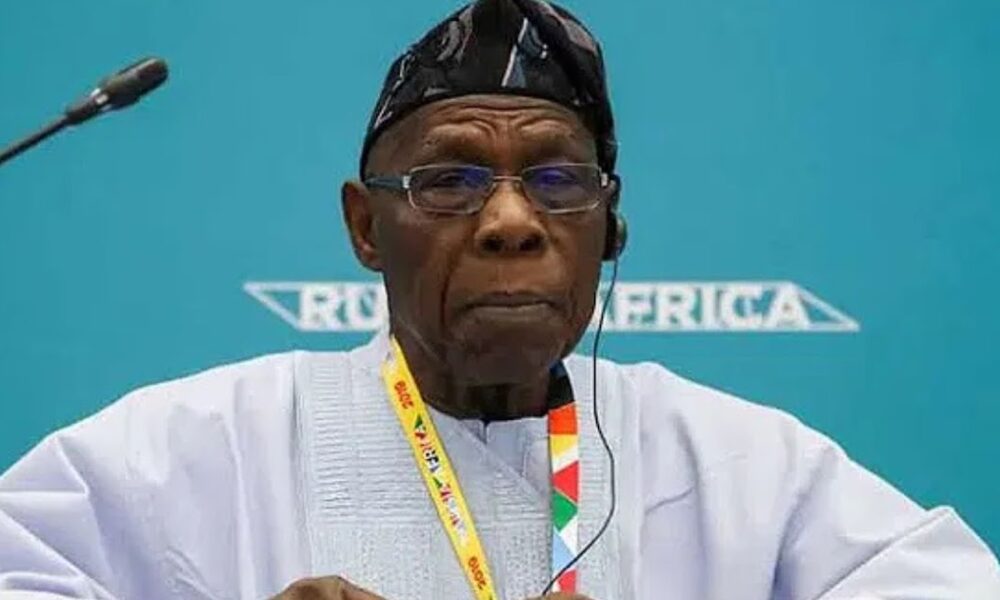
In a recent television interview on Sony Irabor Live, former President Olusegun Obasanjo has reiterated his long-held view that Nigeria’s state-owned refineries in Port Harcourt, Warri, and Kaduna are unlikely to operate successfully under government control.
Obasanjo emphasized the value of public-private partnerships (PPP), citing successful examples like the Nigeria Liquefied Natural Gas (NLNG) project where the private sector holds 51% and the government 49% as well as reforms in railways, shipping, and even aspects of the NNPC itself.
He contrasted these with the refineries, stating bluntly: “The NNPC has refineries, and I said to people that it will never work.” He recalled someone challenging him by asking if he was a chemical engineer.
The former president detailed his unsuccessful attempts during his tenure to involve international oil major Shell in running the facilities.
He first offered them a 10% equity stake, then proposed they manage the refineries without equity. Both offers were declined.
When he pressed a top Shell executive for honest reasons, the response highlighted several issues:Shell’s primary profits come from upstream operations, not downstream refining, which they view more as a service.
Nigeria’s refineries were too small (one at 60,000 barrels per day and another at 100,000), compared to the global standard of 250,000–300,000 barrels at the time.
Poor maintenance, often handled by unqualified personnel.
Excessive corruption surrounding the facilities, which Shell did not want to be associated with.
Obasanjo also recounted a near-miss privatization effort. Businessman Aliko Dangote offered $750 million for a 51% stake in two of the refineries.
The payment was made, but the deal was reversed by his successor, the late President Umaru Yar’Adua, reportedly under pressure from the NNPC.
He confronted Yar’Adua, warning that the NNPC could not effectively run the plants and that future sale attempts would yield little value, potentially only as scrap for under $200 million.
Obasanjo noted that substantial funds (reportedly around $16 billion in rehabilitation costs over time) have since been spent on the facilities nearly matching what Dangote invested in building Africa’s largest private refinery yet challenges persist.
He singled out the current NNPC Group Chief Executive Officer, Bayo Ojulari, for being candid about the refineries’ subpar performance compared to international standards, especially versus the Dangote Refinery.
The NNPC has been seeking technical partners, with a target to finalize selections by June 2026, following the rehabilitation and brief reopening of Port Harcourt and Warri refineries in 2024 (which were later reclosed due to competitiveness issues).
The NNPC has not yet issued an official response to Obasanjo’s latest remarks.
Obasanjo’s comments echo his earlier statements over the years, where he has consistently argued that government ownership and management hinder the refineries’ viability, drawing from both his presidential experience and feedback from industry players.
This latest intervention comes amid ongoing national discussions about Nigeria’s energy security, fuel imports, and the role of private sector participation in the downstream petroleum sector.
Click to signup for FREE news updates, latest information and hottest gists everyday
Advertise on NOP NIGERIA to reach thousands of our daily users