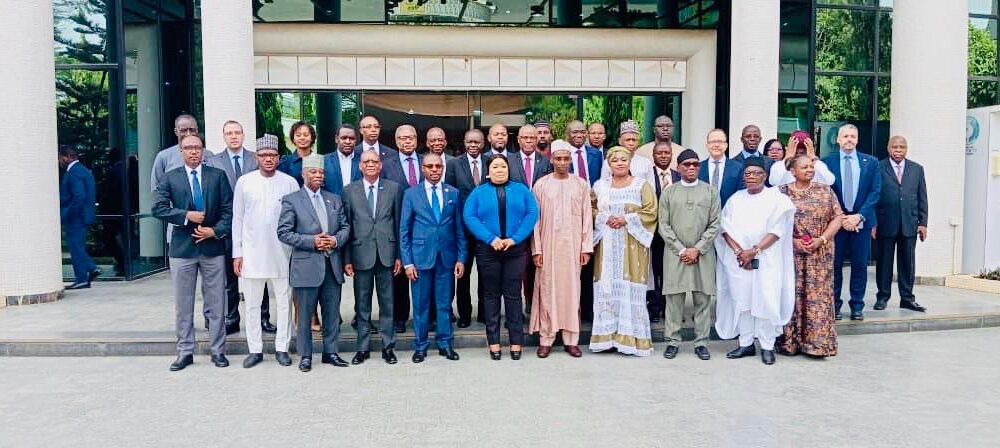
The Political Science Association of Nigeria (NPSA) has again decried the deplorable state of Nigeria’s diplomatic missions abroad calling on the the nation’s 65 newly appointed ambassadors to brace up the challenges ahead.
The association advised the new ambassadors to develop effective strategies to penetrate official and unofficial structures in their countries of accreditation for the benefit of the country.
It also urged the ambassadors to pursue economic diplomacy, encapsulated in the doctrine of 4Ds of the Nigerian state.
The association in a statement signed by its president, Prof. Hassan Saliu, added, “The institutional and systemic decay is the primary concern of this intervention.
“The NPSA desires to speak primarily to the ambassadors who may be basking in the euphoria of the opportunity and ignore the weight of challenges that await them at their duty posts.
“It is instructive to note that the ambassadors are going into office at a time when things are not looking bright for Nigeria. External dependence is manifested, informed by the character of the Nigerian state.
“For instance, controversial agreements have been reached with other entities in the international system, which Nigerians have not ceased to complain about due to the subjugation of Nigeria’s interests, the latest being the agreement signed between the UK and Nigeria over port development.
“It will be the lot of these ambassadors-designate to inject life into such agreements. At one level, and judging by commentaries being run by Nigerians, one can question the role of public opinion in the conduct of Nigeria’s foreign policy.
“It is the view of some citizens that public opinion has played a less significant role in contemporary Nigeria’s foreign policy, leading citizens to care little about its well-being. Specifically, the ambassadors will soon be despatched to other parts of the world with little to work with.
“The entrenched envelope regime has worsened the insufficient budget, necessitating anti-diplomatic behaviours such as incurring debts for municipal services provided abroad and the reprisal steps of cutting the country’s missions off from the main services rendered by some host nations when failure to pay rents is not the issue.
From experience, Nigeria spends far less on foreign policy than some other African countries, and this has led other nations to mete out undiplomatic treatment to Nigeria’s diplomatic missions.
“The implication is that the ambassadors need to be aware of the challenges ahead. It may not be as rosy at diplomatic posts as they are assuming.
“As a result, the era of luxurious living for Nigeria’s ambassadors seems long gone. For over two years, the missions have been without appropriate leaders, creating stress that requires urgent attention.
“Political ambassadors may soon discover that they will earn less than some career officers working under them, which may lead to frosty relationships. This reality compels them to rethink to avoid the frictions of the past.”
The NPSA reminded the ambassadors that defending the country’s interests and those of its citizens abroad was a cardinal responsibility of diplomacy.
It warned them serving as cheerleaders in giving legitimacy to controversial charges levelled against Nigerians in languages they least understand.
“They ( ambassadors)must instead be ready at all times to defend Nigerians until all fair processes have been followed and even after.”