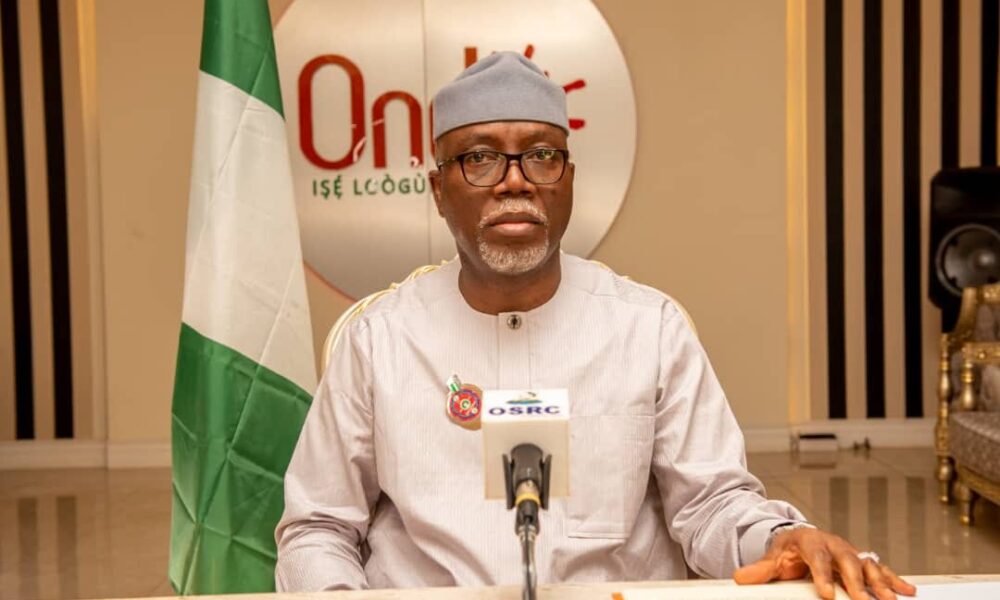
Kogi State Governor, Ahmed Usman Ododo, has flagged off the renovation of 728 government-owned public secondary schools across the state under the Adolescent Girls Initiative for Learning and Empowerment (AGILE) project, aimed at revitalising the education sector.
Speaking at the ceremony held at the Government House in Lokoja on Thursday, the Governor, represented by his deputy, Comrade Salifu Oyibo Joel, described the initiative as a major milestone in his administration’s efforts to reposition education as a cornerstone for sustainable development.
He noted that the project goes beyond a ceremonial exercise, stressing that it reflects a deliberate and strategic investment in the future of the state through improved learning infrastructure.
According to him, a functional education system remains critical to meaningful development and must be supported by safe, inclusive, and conducive learning environments.
Governor Ododo acknowledged that many public schools in the state have served communities for decades but now require urgent upgrading to meet modern educational standards.
“The renovation of 728 schools is not just an intervention; it is a bold statement of intent that every child deserves a decent place to learn and every teacher deserves an environment that supports excellence,” he said.
The Governor appreciated the support of development partners, particularly the World Bank, for their technical and financial contributions, noting that such collaborations are vital to achieving sustainable outcomes.
He also urged contractors and technical service providers to uphold high standards, warning that his administration would not compromise on quality, transparency, or timely delivery.
He further charged traditional rulers and religious leaders to support and safeguard the projects within their communities to ensure sustainability.
Earlier, the State Project Coordinator of AGILE, Alhaji Tijani Oricha, said the initiative represents a bold commitment by the Ododo administration to invest strategically in the future of children and the overall development of the state.
He described the exercise as a deliberate effort to improve both access to and the quality of education, commending the Governor’s leadership and prioritisation of the sector.
Oricha explained that the intervention followed a comprehensive needs assessment of public secondary schools.
He noted that the renovation of 728 schools would significantly enhance learning environments, improve safety, boost teacher morale, and increase student enrolment and attendance, particularly among girls.
He disclosed that 30 technical service providers have been engaged to commence the first phase of the project in 150 selected schools, with a strong emphasis on quality, accountability, and timely delivery.
He also urged School-Based Management Committees and community stakeholders to take ownership of the projects to ensure proper monitoring and sustainability.
In his address, the State Commissioner for Education, Wemi Jones, described the intervention as unprecedented, noting that it would give a facelift to secondary schools across the state.
He lauded the Governor’s commitment to education, revealing that over N1.4 billion has been released this year for the payment of examination fees for students in public schools.
Jones added that the state government has also approved the training of secondary school students on Computer-Based Testing (CBT) for examinations such as JAMB and WAEC, to enhance their computer literacy.
In his remarks, the Obaro of Kabba, Oba Solomon Owoniyi, who spoke on behalf of other traditional rulers, advised the state government to establish a monitoring mechanism to ensure contractors deliver quality work.