The Ondo State Government has expressed readiness to partner with the Federal Government Power Company under the Presidential Power Initiative (PPI) on commercial electricity transmission arrangements.
The proposed collaboration between the federal and state governments aims to enhance grid reliability and ensure a more stable and efficient power supply across the state’s communities.
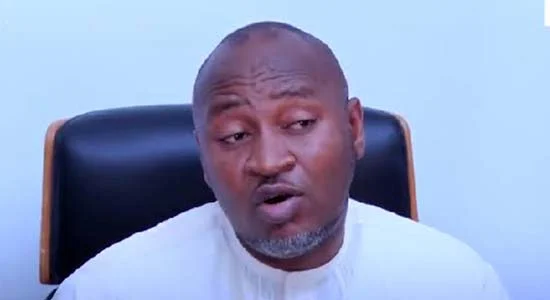
The Commissioner for Energy and Mineral Resources, Dr Johnson Alabi, who spoke while receiving a delegation from the Federal Government Power Company in his office, emphasised that the Aiyedatiwa administration recognises electricity as a critical driver of economic growth, noting that sustainable development cannot be achieved without reliable power.
He disclosed that the state has commenced efforts to procure electricity directly from Generation Companies (GenCos) as part of broader power sector reforms.
He also noted that the amended Electricity Act, signed into law in 2023, has created new opportunities for sub-national governments to participate actively in the electricity value chain.
According to him, the state is well-positioned to leverage these opportunities to improve power supply in different communities in the state.
Highlighting existing challenges, Alabi explained that inadequate and obsolete transmission infrastructure has significantly constrained electricity supply in the state.
Hw added, “To optimally drive the economy of Ondo State, we require about 700MW of electricity; however, we currently have less than 100MW available.”
Alabi revealed that the state is expanding its involvement beyond generation and distribution to include transmission, leveraging the decentralisation enabled by recent reforms.
He cited the Omotoso Power Plant, which generates about 1,000MW without directly benefiting the state, as a key example of untapped potential.
He also disclosed that plans for a state-owned grid are underway, citing the unreliability of the national grid and the limited capacity of the Osogbo–Akure transmission line, which can barely accommodate 50MW, far below the state’s requirements.
According to him, the state has made significant progress in establishing its electricity market framework.
These he said, included the creation of the Ondo State Power Company (OSPC) for electricity distribution and the Ondo State Electricity Regulatory Bureau (OSERB) to ensure compliance, protect consumers, and boost investor confidence.
He said the state has pioneered sub-national metering initiatives and established a Special Offences Court to prosecute electricity-related infractions, thereby safeguarding investments in the sector.
On the proposed transmission project by the FGN Power Company, Alabi stressed the importance of state ownership of the infrastructure upon completion to ensure optimal control and alignment with the state’s independent grid ambitions.
He reaffirmed the state’s commitment to the partnership and urged that the transmission project be extended beyond Ondo town to Owo, Akoko, Ose, and other underserved areas currently lacking access to the national grid.
In his response, the Chief Commercial Officer of the FGN Power Company, Mr. Babatunde Daramola-Oniru, stated that the Presidential mandate is to increase electricity supply by 4,000MW nationwide within the next three years, with Ondo State identified as a key beneficiary.
He commended the state government’s proactive approach, describing the engagement as the foundation of a strong and mutually beneficial partnership.
The Co-Coordinator of the Transmission, Engr. Leonard Ogwu, outlined the project scope, noting that the proposed transmission line will originate from Ondo town and extend to adjoining communities.
Upon completion, he said the project is expected to deliver approximately 240MW, significantly boosting socio-economic activities across the state.
This development came as Governor Lucky Aiyedatiwa approved the procurement of new transformers in a renewed effort to improve electricity distribution in underserved communities.
Alabi said “We are deploying transformers in phases to ensure fairness and transparency. These are not just for distribution; we are also ensuring proper installation and energisation so that communities can truly benefit.
Alabi further revealed that the State Power Company has taken over key electricity feeders previously managed by legacy operators, describing the move as “a major step towards energy independence.”
According to him, “With the takeover of these feeders, we can now extend power supply to more communities and exercise better control over distribution within the state.”
On transmission, the Commissioner disclosed plans by the state to construct its own power grid to reduce dependence on the national grid.
➜ See The Video Now