Coalition of women groups has urged the National Assembly to pass the Special Seats Bill, saying over 800 women seek elective offices nationwide, but female representation remains low.
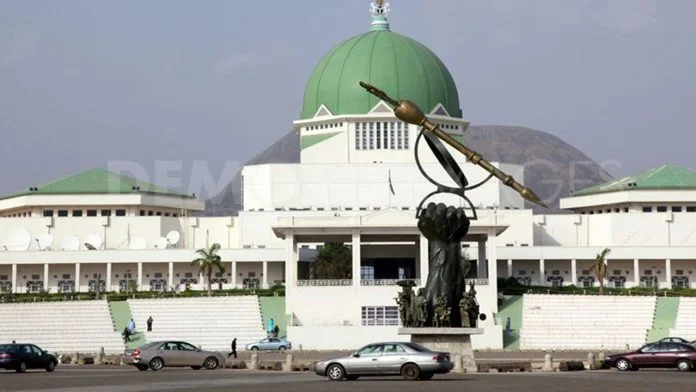
National President of the National Council of Women Societies, NCWS, Princess Edna Azura, made the call during a peaceful rally at the National Assembly entrance in Abuja, on Wednesday.
While noting that about 300 female aspirants are contesting under the All Progressives Congress, APC, the coalition pushed for an end to low representation.
Azura, who said female representation remained at a dismal four per cent, lamented Nigeria’s poor implementation of international agreements on gender inclusion, including the 35 per cent affirmative action.
”Other countries have passed that stage. Rwanda is about 67 per cent now.
“In Nigeria, we are just about four per cent representation and it is not healthy for the nation,” she said.
Azura said women across the country had become united in their demand for reform, hence the need for the passage of the special seat bill.
“We are speaking with one voice. We are calling for this critical step. Please pass this bill because it is time,” she said.
President of the League of Women Voters of Nigeria, NILOWV, Irene Awunah-Ikyegh, disclosed that petitions had been submitted to the National Assembly, demanding urgent passage of the Special Seats Bill for Women.
Awunah-Ikyegh said petitions were collated nationwide over three weeks and delivered to members of the House of Representatives.
According to her, lawmakers received the petitions either personally or through official submission in their absence.
“Three weeks ago, we went to every constituency office and the houses of members of the House of Representatives to submit a petition demanding an immediate passage of the Special Seats Bill.
“We are here today to formally submit all the petitions that we have collated across Nigeria,” she said.
Awunah-Ikyegh said the petition titled “Urgent demand for the passage of the Special Seats for Women Bill” would enhance inclusive governance in Nigeria.
She said Nigerian women, who constitute about half of the population, remain severely underrepresented in governance which is unsatisfactory.
According to her, representation often hovers around less than five per cent in elected positions in Nigeria which is one of the lowest in Africa.
“The Special Seats Bill for Women seeks to create additional legislative seats for women at the federal and state levels to improve inclusion,” she said
Awunah-Ikyegh said the proposal for the bill would align Nigeria with countries such as Rwanda, Kenya, South Africa and Uganda that have advanced women’s political representation.
She noted that similar bills in previous assemblies failed due to lack of political will, urging lawmakers to mobilise support for the bill.
She appealed to lawmakers to vote in its favour during plenary and consider an emergency sitting for its passage. NAN