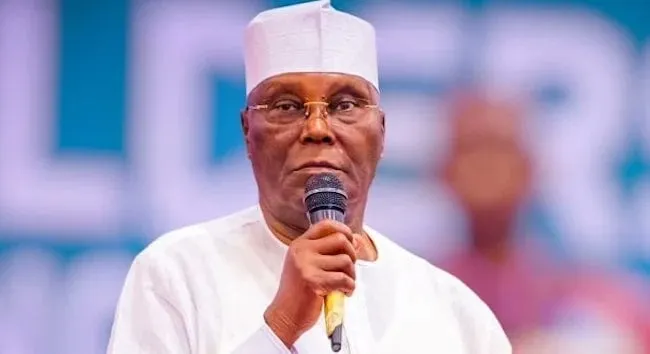
A fresh political row has erupted between allies of President Bola Tinubu and supporters of former Vice-President Atiku Abubakar over the contentious issue of power rotation ahead of the 2027 general election.
The clash was sparked by comments from presidential spokesman Bayo Onanuga, who argued that President Tinubu should complete two terms in office in line with Nigeria’s informal North-South power-sharing arrangement.
Mr Onanuga’s remarks came in response to a recent interview granted by Mr Atiku on Arise Television, where the former presidential candidate signalled continued political relevance ahead of 2027.
Defending the zoning principle, Mr Onanuga maintained that since Tinubu succeeded a northern president who served eight years, it was only fair for the South to retain power until 2031. However, the position has drawn sharp criticism from opposition figures who insist that such arguments undermine democratic choice.
In a strongly worded statement posted on X, Mr Atiku’s Senior Special Assistant on Public Communication, Phrank Shaibu, accused the presidency of attempting to “rewrite” democratic rules and silence opposition voices.
“Power rotation is a political convention, not a constitutional decree—and certainly not a tool to silence credible opposition,” Mr Shaibu wrote.
He described the claim that President Tinubu “must complete eight years” as “anti-democratic,” stressing that leadership in a constitutional republic is determined by voters, not informal agreements.
“Presidents are not crowned for eight years—they are elected, and they can be voted out. That is the essence of democracy,” he stated.
Mr Shaibu further alleged that the ruling camp was resorting to zoning arguments to deflect from governance challenges, including economic hardship and rising inflation, claiming that performance—not regional arrangements—should determine electoral outcomes.
He also dismissed references to the death of former President Umaru Musa Yar’Adua in defending zoning, describing such arguments as “morally bankrupt” and politically opportunistic.
The Atiku aide additionally pushed back against suggestions about opposition disunity, particularly comments concerning Peter Obi, insisting that coalition dynamics cannot be dictated by the ruling camp.
“You don’t attack a man repeatedly unless he remains your biggest threat,” he added, referring to criticisms of Mr Atiku by pro-government voices.
The presidency has yet to issue a formal response to Mr Shaibu’s latest remarks.
The exchange reflects growing political tension as Nigeria gradually moves toward the 2027 elections, with debates over zoning, coalition-building, and incumbency expected to shape the emerging contest.
Political observers say the intensifying rhetoric highlights a widening divide between the ruling establishment and opposition forces seeking to challenge the status quo, setting the stage for a potentially fierce electoral battle.