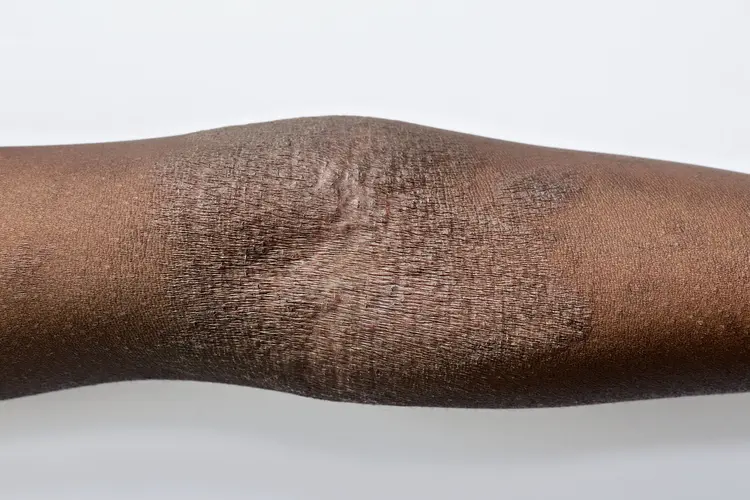
Speaking with PT Health Watch, Halimat Jimoh, a nurse and a professional midwife, said eczema, medically known as atopic dermatitis, is far more complex than commonly assumed.
Often dismissed as a minor skin irritation, eczema typically begins as a dry patch but can develop into a chronic condition marked by intense itching, scaly or darkened skin, and social discomfort.
In many parts of Nigeria, however, the condition is still wrongly linked to poor hygiene or spiritual causes, and is sometimes confused with contagious fungal infections, misconceptions that experts say fuel stigma, social isolation, and reliance on unproven treatments.
Speaking with PT Health Watch, Halimat Jimoh, a nurse and a professional midwife, said eczema, medically known as atopic dermatitis, is far more complex than commonly assumed.
Mrs Jimoh who is also a maternal and child health advocate, described it as a chronic inflammatory skin condition characterised by intense itching, dryness, and recurrent skin irritation. She noted that, unlike common conditions such as heat rash or fungal infections, eczema is not just a surface issue.
She explained that the condition is driven by a combination of genetic, immune, and environmental factors, and typically follows a pattern of flare-ups and remission.
Globally, eczema affects about 10 to 20 per cent of children and a smaller proportion of adults.
Among children, particularly those under five, the burden is significantly higher, with some studies reporting rates between 15 and 25 per cent, making it one of the most common skin conditions in paediatric practice.
Adding to this context, Mrs Jimoh noted that there are regional differences, with higher hospital-based prevalence reported in Northern Nigeria, about 13 to 15 per cent, compared to eight to nine per cent in the South.
According to her, several factors drive the condition, including genetic predisposition, immune system dysfunction, and environmental triggers such as dust, pollution, and skin irritants.
“Climate also plays an important role, particularly low humidity and dry seasons, which are more common in Northern Nigeria and can worsen flare-ups by damaging the skin barrier,” she said.
Mrs Jimoh said early signs of eczema are often overlooked, especially in children.
“Persistent itching, often worse at night, dry or rough skin, and red or dark patches that may appear and disappear are common early symptoms,” she explained.
In infants, she said, eczema typically appears on the cheeks, scalp, and outer parts of the arms and legs. In older children and adults, it is more likely to affect skin folds such as the elbows, behind the knees, neck, and wrists.
She added that repeated scratching can lead to skin thickening and further irritation.
Speaking on diagnosis, Mrs Jimoh said it is mainly clinical and based on the pattern and appearance of symptoms, as well as a history of recurrence.
“There is no single definitive laboratory test for eczema,” she said, noting that allergy testing may sometimes be used to identify triggers in severe or persistent cases.
Children are the most vulnerable, particularly those with a family history of allergic conditions such as eczema, asthma, or allergic rhinitis.
“It often begins early in life, with many cases appearing within the first year,”she said.
She added that the condition has a strong hereditary component.
“If one parent has an allergic condition, a child’s risk is increased, and the risk is higher when both parents are affected,” Mrs Jimoh noted, adding that environmental factors such as allergens and climate often trigger symptoms in those already predisposed.
While eczema cannot be permanently cured in most cases, Mrs Jimoh said it can be effectively managed.
“Some children may outgrow the condition, while others may continue to experience it into adulthood,” she explained.
Management, she said, focuses on protecting and restoring the skin barrier through regular use of moisturisers, avoiding triggers, and using prescribed topical steroid medications during flare-ups.
In more severe cases, non-steroidal anti-inflammatory creams, antihistamines, or specialist treatments may be required.
Mrs Jimoh warned that common daily habits can worsen the condition, particularly in tropical climates.
“Frequent use of harsh soaps, overbathing with hot water, and not moisturising the skin regularly can trigger flare-ups,” she said.
She also identified tight or rough clothing, excessive heat, sweating, dust, and pollution as major environmental triggers.
While some individuals may notice flare-ups after consuming foods such as eggs, dairy, peanuts, or seafood, she cautioned that food triggers are not universal and should be identified individually.
Beyond physical symptoms, eczema can significantly affect mental health and quality of life, especially among children and adolescents.
“The constant itching can disrupt sleep, while visible skin changes may affect self-esteem and confidence,” Mrs Jimoh said, noting that this can lead to embarrassment, social withdrawal, or even bullying.