Speaking to CNBC-TV18, Locker said the move—while not necessarily aimed directly at Beijing—would have inevitable geopolitical consequences. “The Chinese are not going to look favourably upon a US warship trying to stop a Chinese tanker,” he said, adding that the decision would likely create “a problem… with China and with any country that owns a ship trying to navigate that strait”.
The warning comes as the US military prepares to enforce the blockade following a breakdown in talks with Iran, raising the risk of disruption in one of the world’s most critical energy chokepoints. Crude prices have already surged above $100 per barrel, reflecting fears of supply constraints and escalating conflict.
Locker also flagged the potential for widespread shipping disruption beyond state actors, pointing to the role of insurers in determining whether vessels can safely transit the region. “If you can’t get insurance for your ship, you’re not going to send it through a dangerous waterway,” he said, underscoring the commercial risks facing global trade.
Alongside geopolitical tensions, the risk of direct confrontation remains elevated. Locker noted that the key question would be how the US responds if vessels refuse to comply with the blockade, warning that “there will be some kind of confrontation”.
Strategic risks in the region are compounded by Iran’s ability to challenge the blockade despite US naval dominance, according to Anahita Hosseini Lewis, Research Fellow at ICPR. She said that while the US and its allies have significantly degraded Iran’s conventional military capabilities, Tehran retains asymmetric strengths, including drones, missiles, small boats and an estimated thousands of marine mines.
“The most important factor here is not just the balance of military power… but also willpower,” Lewis said, adding that Iran views the Strait of Hormuz as a key source of leverage and may be willing to take risks to prevent full US control.
She also warned that the likelihood of miscalculation remains high given the concentration of military assets in a narrow waterway. “The continuation of hostilities at this point is a real danger,” she said, noting that both sides appear unwilling to concede ground.
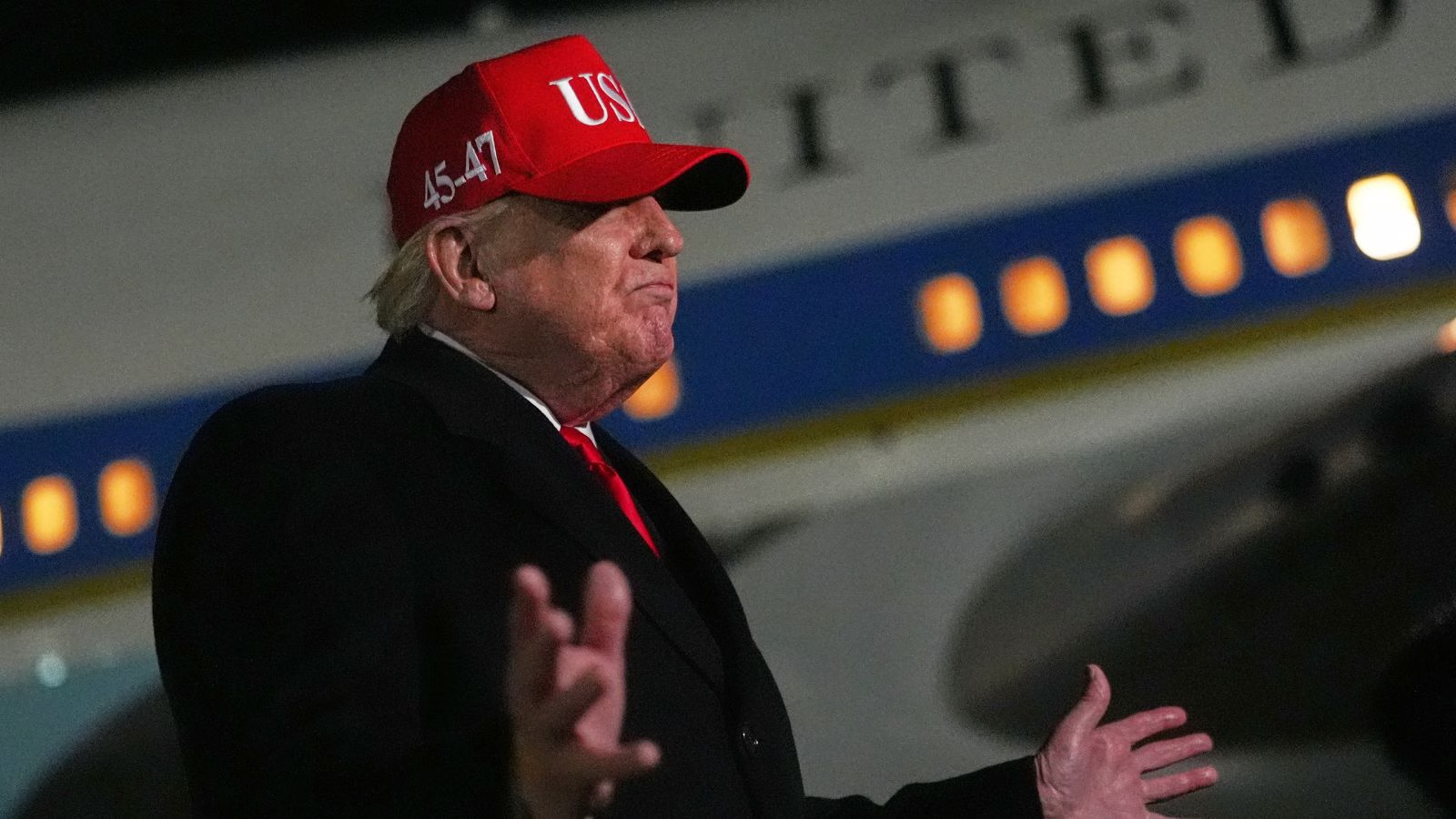
The blockade follows stalled negotiations in Islamabad, with US President Donald Trump insisting that either Iran allows all ships to pass or none will be permitted through the strait. Iran’s Islamic Revolutionary Guard Corps has termed the move “piracy”, while Foreign Minister Abbas Araghchi blamed Washington’s “maximalism” for the collapse of talks.
Also Read | Military threats to blockade: How Trump’s stance on Strait of Hormuz kept shifting
Iranian officials have also cautioned that any disruption to Hormuz could trigger a sharp spike in global oil prices, amplifying concerns already reflected in current market levels. Two oil tankers were reported to have exited the strait just before the US announcement, signalling early signs of supply adjustments.
While diplomatic efforts continue, with the UK declining to join the blockade and instead supporting minesweeping operations, and European leaders pushing for freedom of navigation, uncertainty remains high. Experts say the recent talks may still pave the way for further negotiations, but warn that the risk of renewed hostilities continues to loom over global energy markets and trade routes.