4 min readUpdated: Apr 28, 2026 07:26 PM IST
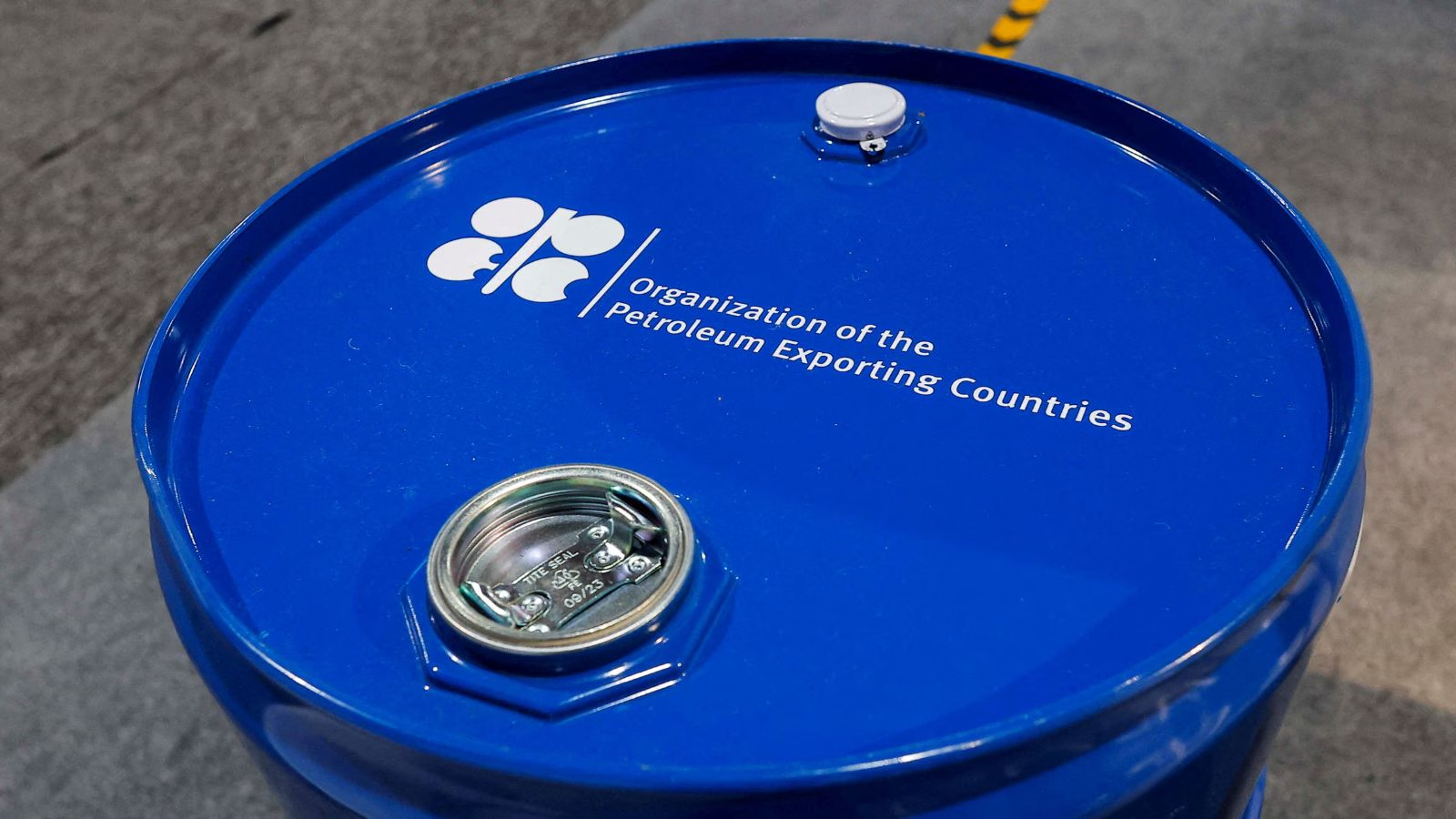
The United Arab Emirates or UAE announced on Tuesday that it was quitting OPEC and OPEC+, dealing a heavy blow to the oil-exporting groups and their de facto leader, Saudi Arabia, at a time when the Iran, US, Israel war has already caused a massive jolt and unsettled the global economy.
Despite the announcement, oil prices surged over 3 per cent as the primary driver remained supply disruption caused by the largely closed Strait of Hormuz, a key route for global energy flows.
However, prices pared some gains after the UAE move, suggesting traders viewed the exit as a factor that could influence future supply management. The UAE’s decision sparks uncertainty over how oil production will be coordinated globally, at a time when markets are already under stress from geopolitical tensions and disrupted shipping.
The market is effectively balancing two competing forces – immediate supply tightness due to the Iran conflict and longer-term uncertainty stemming from cracks within the producer alliance.
What does the UAE move mean? What experts said
JORGE LEON, ANALYST AT RYSTAD:
“The UAE withdrawal marks a significant shift for OPEC. Alongside Saudi Arabia, it is one of the few members with meaningful spare capacity – the mechanism through which the group exerts market influence.”
“While near-term effects may be muted given ongoing disruptions in the Strait of Hormuz, the longer-term implication is a structurally weaker OPEC. Outside the group, the UAE would have both the incentive and the ability to increase production, raising broader questions about the sustainability of Saudi Arabia’s role as the market’s central stabiliser – and pointing to a potentially more volatile oil market as OPEC’s capacity to smooth supply imbalances diminishes.”
AJAY PARMAR, DIRECTOR OF ENERGY AND REFINING AT ICIS:
Story continues below this ad
“The UAE has been in disagreement with the general OPEC policy for quite some time. So it’s not a surprise, but it will certainly have a significant impact in the long term. It also signifies the general drift in the historically strong alliance between the UAE and Saudi Arabia.”
SERGEY VAKULENKO, CARNEGIE RUSSIA EURASIA CENTER, FORMER GAZPROM NEFT EXECUTIVE
“The UAE has been planning to grow oil production by up to 30 per cent, and it would be difficult to do so within the limitations of OPEC and OPEC+. Now, is probably the least damaging time to announce it – oil prices are high, and there are genuine shortages because of Hormuz closure. After Hormuz reopens, there will be elevated demand as countries will be replenishing reserves that were drawn down since February, so prices will stay high”.
“Without the UAE, OPEC will be much weaker; other major producers, Iran and Iraq, did not maintain any substantial spare capacity. It was mostly done by the UAE and Saudi Arabia.”
Story continues below this ad
Brent crude futures for June climbed $3.37, or 3.1 per cent, to $111.60 a barrel by 1336 GMT, after gaining 2.8 per cent to close the previous session at their highest since April 7. The contract is up for a seventh straight day.
JAN VON GERICH, CHIEF MARKETS ANALYST, NORDEA, FINLAND:
He said the UAE wants to produce more oil, so the move should be negative for oil prices. When the Iran conflict ends, OPEC will not be able to control prices the way it did in the past, he said.
MONICA MALIK, CHIEF ECONOMIST AT ADCB:
“This opens the door for the UAE to gain global market share when the geopolitical situation normalises. The exit should be positive for consumers and the broader global economy.”
(With inputs from Reuters)
Stay updated with the latest – Click here to follow us on Instagram
© IE Online Media Services Pvt Ltd