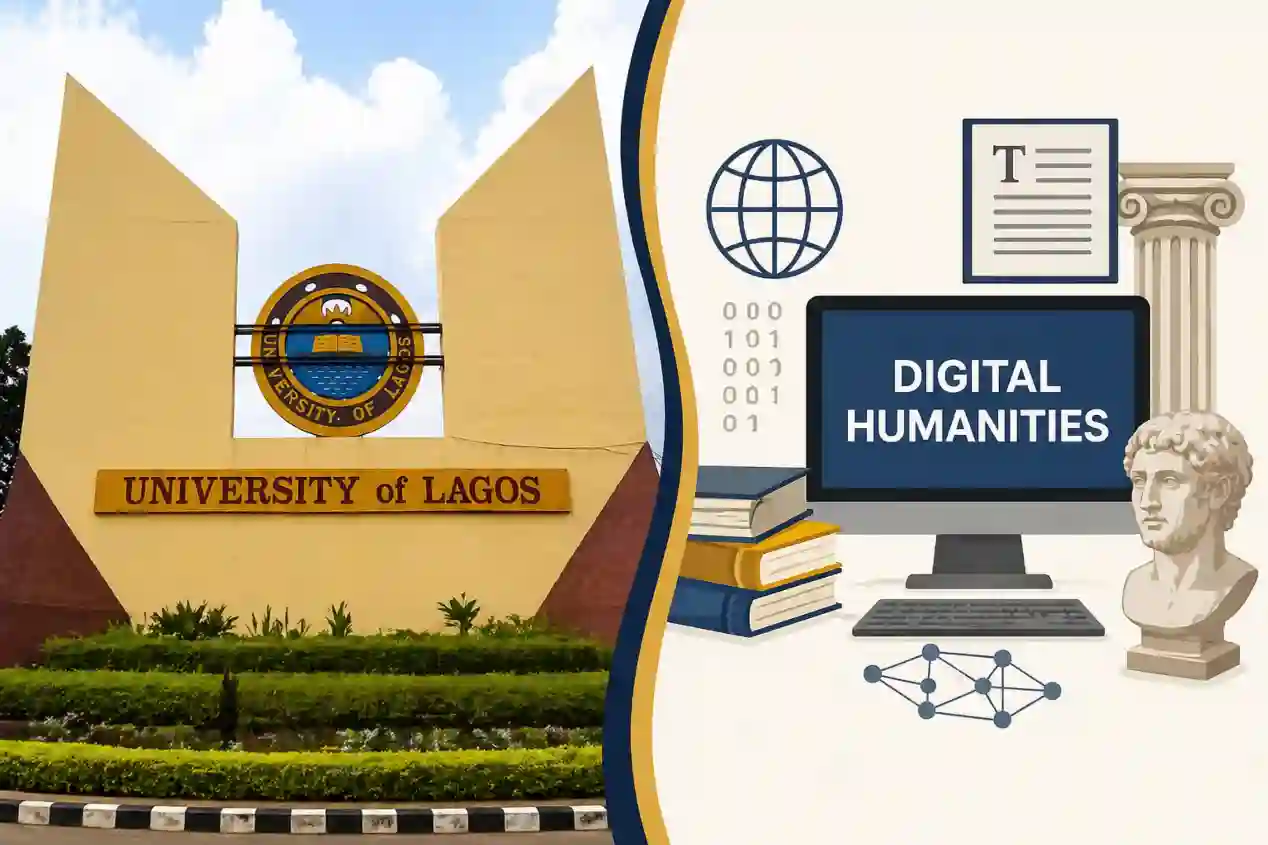
The University of Lagos has announced plans to commence a suite of postgraduate programmes in Digital Humanities, marking a significant step in the institution’s effort to reposition humanities education within a rapidly evolving digital landscape.
The programmes, to be delivered through its Centre for Digital Humanities (CEDHUL), are scheduled to begin in September 2026 and will span Postgraduate Diploma (PGD), Master of Arts (M.A.), Master of Philosophy (MPhil), and Doctor of Philosophy (PhD) levels.
Speaking on the development, the Founding Director of CEDHUL, Tunde Ope-Davies, described the initiative as both timely and necessary, noting that it challenges longstanding perceptions about the role of the humanities in a technology-driven era.
“For too long, the humanities in Africa have been treated as peripheral to the demands of the digital age. These programmes are our answer to that false narrative,” he said.
“We are equipping scholars, researchers, and practitioners with tools to interrogate, interpret, and shape our digital world through African eyes, African frameworks, and African voices. This is intentional. This is strategic. And this is the future we are building.”
Ope-Davies further linked the programme rollout to the “Future Ready Agenda” of the Vice-Chancellor, Folasade Ogunsola, noting that the initiative reflects the university’s broader strategy to prepare graduates for a technology-mediated global economy.
According to him, the structure of the programmes is designed to cater to varying academic and professional needs. The PGD will provide foundational training for professionals transitioning into the field, while the M.A. will offer a structured pathway for emerging researchers and practitioners. The MPhil is positioned as a research-intensive bridge to doctoral study, with the PhD focusing on advanced, original scholarship within the discipline.
He added that the programmes collectively form a comprehensive postgraduate ecosystem, which he described as unique within the region and aligned with international academic standards.
The Centre’s existing body of work also underpins the credibility of the new offering. Supported by institutions such as the Alexander von Humboldt Foundation, CEDHUL has facilitated research and training initiatives across areas including Afro-centred Digital Humanities, digital political discourse analysis, digital ecocriticism, and artificial intelligence ethics in developing economies.
Prospective applicants from fields such as linguistics, literary studies, history, cultural studies, communication, library and information science, education, and the broader social sciences are expected to access detailed admission guidelines when the university releases its full prospectus in the coming weeks.
What do you think about this?
Drop your opinion in the comment section.
FOLLOW US & Share this with someone who needs to see this.