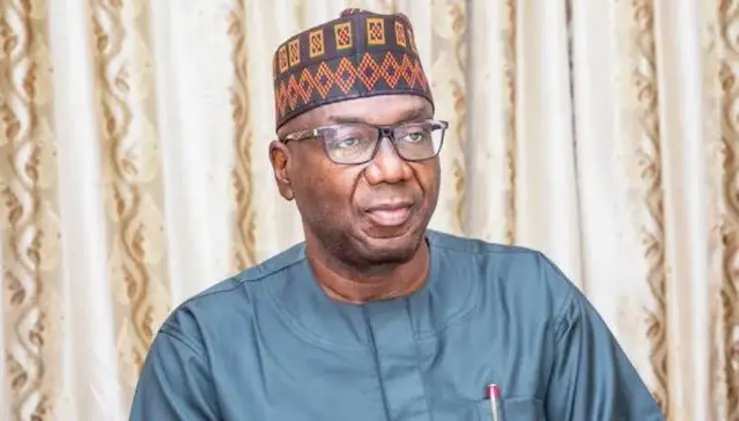
The vice chancellor of the University of Abuja, now Yakubu Gowon University, Prof. Hakeem Babatunde Fawehimi, Wednesday urged staff, students and the general public to prioritise their health by undergoing regular medical check-ups for early detection of diseases, including cancer.
Prof. Fawehimi stated this in his goodwill message on cancer awareness programme, Wednesday at the College of Health Sciences Auditorium, University of Abuja main campus, organised by University of Abuja Women’s Association (UAWA).
He called on government and non-governmental organisations to intensify efforts in health education and screening programmes.
The vice chancellor said, “Prevention is better than cure”, while urging people to take charge of their health before diseases manifest.
In his welcome address, the local organising chairperson and chairperson, Board of Trustees, UAWA, Professor Hauwa Imam, described cancer as a deadly disease that must be fought collectively.
She said UAWA is inspired by survivors, resilient families, and advocates who bridge the care gap, saying: “We are committed to dispelling myths and stigma and providing practical support.
In her welcome speech, the patroness UAWA, Dr. Hadeezat Omotayo Fawehimi said: “We gathered under the theme, ‘United by Unique – Know it, Check it, Act Early,’ which is a call that resonates deeply with the mission to empower community with knowledge, encourage its detection and inspire action against cancer.
Delivering the keynote lecture, Dr. Nandi Tokki, represented the director general of the National Institute of Cancer Research and Treatment (NICRAT), Professor Usman Malami Aliyu, highlighted the significance of the World Cancer Day, an initiative of the Union for International Cancer Control (UICC).
She stated the importance of understanding cancer risks, early detection, and treatment.
Dr. Tokki stated the key warning signs of cancer which includes unusual breast changes, fatigue, abnormal bleeding, persistent coughing, and non-healing sores or ulcers.