Former foreign secretary Shashank said the situation could turn unstable if diplomacy fails. He said any escalation, including a blockade in the Gulf region, would hit exports and disrupt supply chains, especially for Asian economies.
He added that India would be among the countries most affected due to its dependence on energy imports and a large diaspora presence in the region.
There are early indications that Iran and the US may resume talks soon, possibly with broader international participation. Shashank stressed that more countries should be involved to ensure better assurances to both sides and avoid breakdowns in negotiations.
For the entire discussion, watch the accompanying video
At the same time, questions remain over how much authority US Vice President JD Vance has in negotiations, given the need for alignment with the US President Donald Trump. Domestic political pressure in the US could also shape the outcome.
Where China comes in
Professor Madhav Nalapat said the crisis goes beyond oil and regional conflict. He described it as part of a larger global contest between the US and China.
He said that this is a currency war also, pointing to efforts by China to expand the use of the yuan in global trade, while the US seeks to protect the dollar’s dominance.
Also Read | EXCLUSIVE: West Asia crisis puts FY27 tax assumptions under pressure forcing govt to reassesses estimates
Nalapat noted that moves such as currency swaps and non-dollar trade by countries like Iran and Saudi Arabia signal a shift in global financial dynamics. He said the current tensions are part of a broader contest for primacy between the US and China.
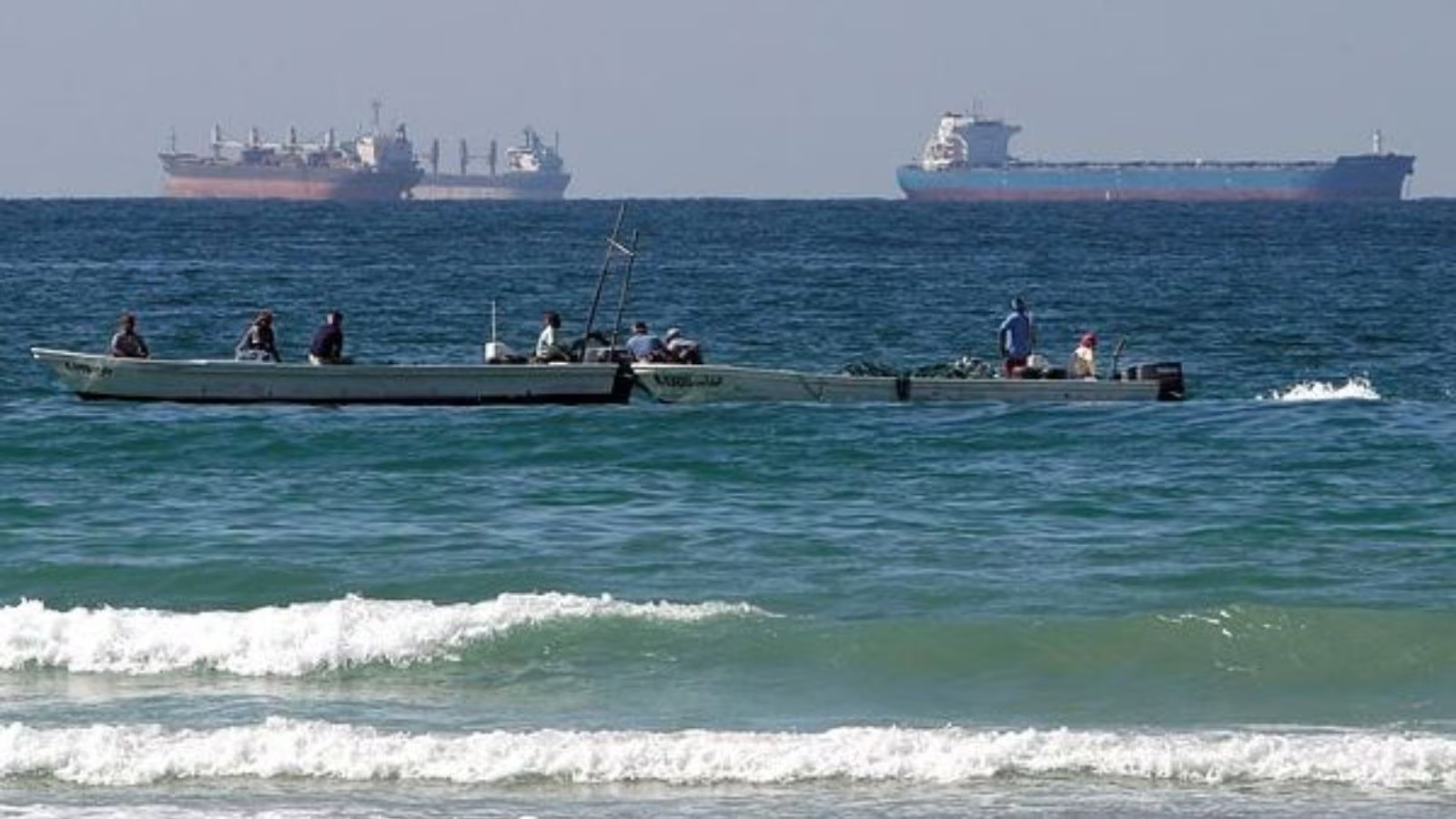
On the ground, the Strait of Hormuz remains a critical flashpoint. Iran has indicated it may impose charges on ships passing through, raising concerns about global trade flows.
Nalapat said, “you can’t have international waterways… run by any single country,” highlighting risks of fragmentation in global shipping routes if such controls expand.
Also Read | Car rules get tougher: Auto companies must boost fuel efficiency, shift to EVs as govt moves to flexible 3-year targets
India implications
For India, the stakes remain high. The country depends heavily on oil and gas supplies from the Gulf and has strategic investments and a large workforce in the region.
Shashank said India’s priority should be stability and energy access, adding that “we want peace to be there” while protecting economic and strategic interests.
Both experts said a diplomatic solution remains possible, but the situation remains sensitive, with risks of escalation if negotiations fail.
Catch all the latest updates from the West Asia crisis here