Speaking to CNBC-TV18, Awwad said the US President has the ability to bring the situation under control if he chooses to act decisively. “If he wants to stop this war, he can do so immediately. If he wants to sign a deal and even claim diplomatic success, he still can,” he said. However, he cautioned that the broader geopolitical dynamics complicate the path to peace, adding, “The problem is that there is an ‘elephant in the room,’ which is Israel, and it is not interested in ending the war without achieving its objectives.”
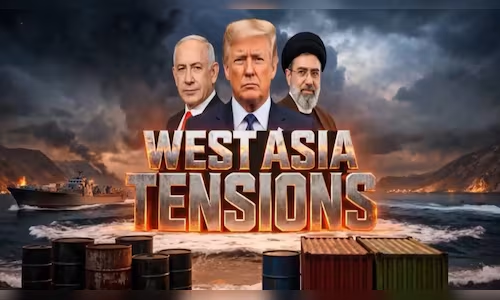
The comments come at a critical juncture, with just two days remaining before the ceasefire between the US and Iran is set to expire. The situation escalated after the US Navy attacked and seized an Iranian-flagged vessel in the Strait of Hormuz, accusing it of attempting to evade a naval blockade. In a social media post, Trump said the US had “stopped them right there in their tracks by blowing a hole in the engine room.”
Despite Washington signalling a willingness to negotiate and dispatching a high-level delegation to Islamabad, Tehran has refused to engage for now. Awwad said Iran has taken a firm position, making it clear that it will not negotiate under pressure. He described the US approach as coercive, noting that Iranian officials view the terms as “like putting a gun to their heads and telling them to accept it or there will be no deal.”
The escalation has already begun to ripple through global markets, with crude oil prices climbing above $92 per barrel amid fears of supply disruptions. The partial closure of the Strait of Hormuz — through which nearly 20 million barrels of oil pass daily — has added to concerns around energy security and shipping risks. Iran has imposed restrictions on vessel movement, requiring prior approval from its navy, even as maritime traffic remains volatile.
Awwad warned that the situation has evolved into a broader humanitarian and economic concern. “This is a humanitarian crisis — not just in terms of food and oil security, but also for the safety of the people onboard these ships,” he said, highlighting risks faced by commercial seafarers amid reports of mines and heightened military activity in the region.
The uncertainty has also affected India, with two Indian-flagged tankers recently coming under fire near the Strait, although both vessels returned safely without damage or casualties. New Delhi has conveyed its concerns to Tehran, underscoring the risks to commercial shipping in one of the world’s most critical energy corridors.
Also Read: West Asia war | Mixed US signals and ongoing attacks cloud Hormuz situation, hurt chances of peace: Experts
While Trump has warned of severe consequences if no agreement is reached once the ceasefire lapses, Awwad suggested that such rhetoric may be aimed more at stabilising markets than signalling imminent military escalation. He noted that the US President is navigating multiple pressures, including rising oil prices and domestic political challenges ahead of midterm elections.
With negotiations uncertain and military preparations reportedly underway if talks fail, Awwad said the coming days will be crucial. The direction taken by Washington — and its ability to balance regional alliances — will determine whether tensions ease or escalate further, with significant implications for global energy markets and trade flows.