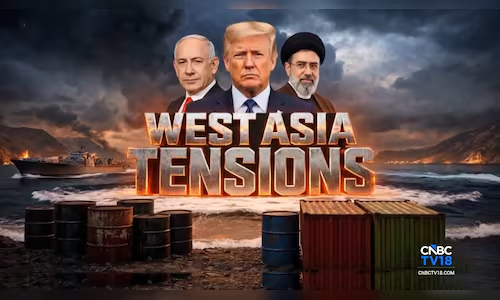
Speaking to CNBC-TV18 amid continuing uncertainty over US-Iran talks, Ahmad said both sides are seeking a way to enter negotiations without appearing weak, even as tensions remain elevated in the region. “We know that he (Trump) has no real interest in resuming bombing, because even if the United States were to restart military action, it would eventually have to return to the negotiating table,” he said, adding that “bombing would not serve any strategic purpose.”
His remarks come at a time when mixed signals from Trump have added to market and geopolitical uncertainty. While the US President initially suggested that a ceasefire extension was unlikely, he later announced an open-ended pause in hostilities, reportedly at Pakistan’s request, even as the US maintained its naval blockade in the Strait of Hormuz.
Ahmad said the current phase is marked more by posturing than substantive engagement, with both Washington and Tehran attempting to project strength before formal talks begin. “It is quite obvious that both Iran and the United States do not wish to continue the conflict. However, they want to enter negotiations while holding their heads high,” he noted.
The former diplomat also pointed to Trump’s negotiating style and unpredictability as complicating factors. “We are also dealing with the complication of Donald Trump’s unpredictability. He changes his mind frequently,” Ahmad said, highlighting concerns over the lack of a consistent US position.
The standoff over the Strait of Hormuz remains central to the dispute. Iran has insisted that the US lift its blockade of Iranian ports as a precondition for returning to talks, arguing that negotiations cannot take place under pressure. The US, however, appears unwilling to concede, seeking to demonstrate military and strategic leverage.
Ahmad said the extension of the ceasefire, despite its ambiguity, is a constructive step as it provides both sides time to reassess their positions. However, he cautioned that key issues remain unresolved and have yet to be formally addressed.
The risk of escalation also persists, particularly with reports of vessel seizures in the Gulf of Oman. Ahmad described the situation as “a dangerous trajectory”, warning that reciprocal actions at sea could spiral into a broader conflict. “When forces are in close confrontation, decisions can be made at the tactical level that trigger wider conflict,” he said.
The geopolitical tensions have already spilled over into energy markets. Crude oil prices surged past the $100 per barrel mark despite the ceasefire extension, reflecting investor concerns over supply disruptions through the Strait of Hormuz, a critical artery for global oil trade.
Also Read | Trump says US may repay $160 billion in tariffs after court ruling, slams decision
Iran has termed the US blockade an act of war, while signalling that lifting restrictions remains a key condition for rejoining negotiations. As both sides continue to harden their positions publicly, Ahmad suggested that a potential breakthrough could lie in a face-saving compromise over Hormuz, allowing each side to claim limited success while moving talks forward.
For now, however, the situation remains fluid, with diplomacy yet to meaningfully engage and markets reacting sharply to every development in the region.