Speaking to CNBC-TV18 as the war entered day 39 with less than 10 hours left before Trump’s Hormuz deadline, Anas said, “This is a time when the entire world should be worried about the nature of such messaging.” He warned that the fallout would not remain confined to Iran, adding that “it is not going to stop here… Iranians would also react with retaliations, maybe in the Gulf countries, especially against Dubai, Qatar, Kuwait”.
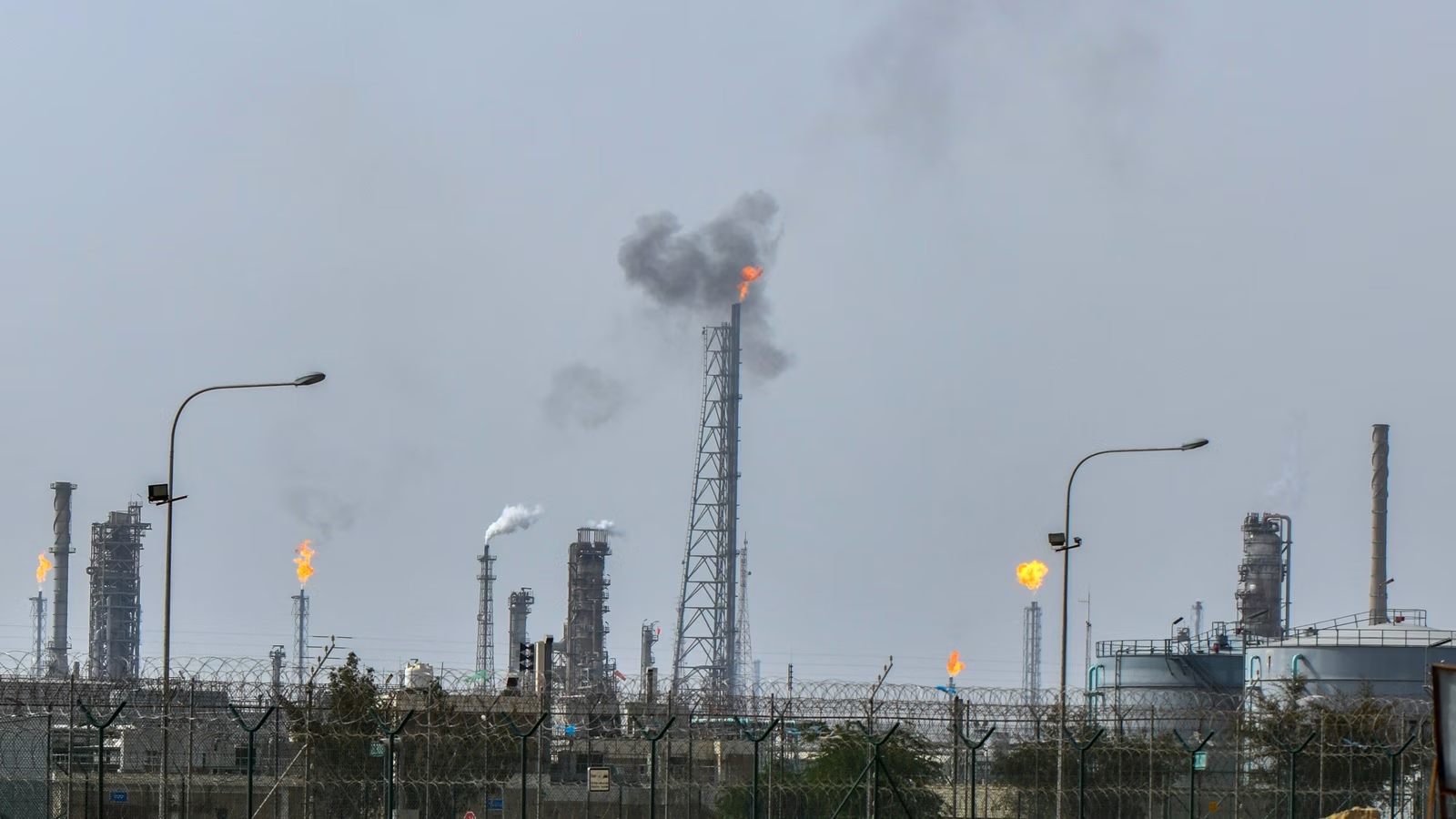
His comments come amid reports of strikes on Kharg Island, the hub of Iran’s oil infrastructure, and heightened risks around critical energy assets. Iran’s power network—largely gas-based and concentrated in the west and along the Gulf coast—has also come under threat, with repeated attacks reported near the Bushehr nuclear power plant. The International Atomic Energy Agency has cautioned that any strike in the vicinity could trigger a severe radiological incident with cross-border consequences.
Anas said both Washington and Tehran are engaged in “maximum pressure politics”, seeking leverage through hardline positions. While mediators are active, he noted that the situation remains volatile and unpredictable. “Trump is known for inflicting at least symbolic attacks… some severe attacks are going to take place tonight or in the coming days,” he said.
Also Read: West Asia war | Possible middle ground hinges on maritime guarantees in Hormuz, says Meera Shankar
On the ground, visuals of civilians forming human chains to guard infrastructure reflect the intensifying conflict. Anas described this as “one of the most unfortunate stages of this war”, pointing to attacks on civilian assets such as bridges and railways. At the same time, he noted that backchannel engagement continues, with “mixed messages” from both sides and some hope of a near-term agreement.
He was also critical of Israel’s conduct in the conflict, saying it requires “a completely different book of international relations” to understand its actions, which he argued are “out of sync with the civilised world”. Anas added that global institutions, including the United Nations, appear “completely helpless and ineffective” in responding to the crisis, even as the conflict threatens to widen across the region and disrupt key energy supplies.