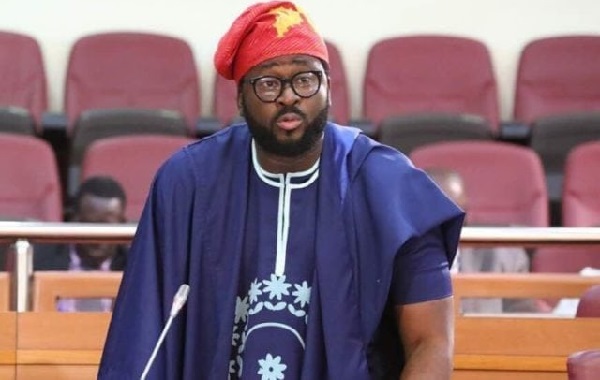
Lagos State House of Assembly member Desmond Elliot faces on Wednesday the toughest primary election he has faced since dumping acting for politics in 2015. The primary election may prove pivotal to his political future.
With the ruling All Progressive Congress (APC) set to hold its House of Assembly primaries on Wednesday (20 May), political tensions and intrigues are emerging in Surulere Constituency I, where actor-turned-politician Desmond Elliot is seeking a fourth consecutive term in the Lagos State House of Assembly amid growing scrutiny from some party leaders and residents.
Since emerging in the Lagos State House of Assembly in 2015, Mr Elliot has remained politically secure, winning three consecutive elections through a combination of celebrity visibility, grassroots alliances and support within the ruling APC establishment, particularly because of his political relationship with the Speaker of the 9th House of Representatives and incumbent Chief of Staff to President Bola Tinubu, Femi Gbajabiamila.
But recent political realignments within the APC family in the area and shaky support from the APC establishment, the bedrock of his political run since 2015, have changed the dynamics of the contest.
The emergence of other candidates and rival blocs will test Mr Elliot’s political resilience, internal party loyalty, and public perception. From field reporting, PREMIUM TIMES found that the debate around Mr Elliot is no longer only about celebrity influence or name recognition. It has become a broader argument about loyalty to party’s order, political succession struggles, internal democracy and whether longevity in office should automatically translate into continued representation.
Recently, many leaders in the Surulere area have been divided because some party members argue that after three terms, the constituency deserves fresh leadership and new ideas. Others insist that legislative experience and political continuity remain valuable, especially in a state assembly where ranking lawmakers often gain greater influence over committee leadership, budget negotiations and constituency projects.
In April, a coalition operating under the banner of the Surulere Accountability Forum openly rejected his bid for a fourth term, accusing the lawmaker of weak legislative impact and inadequate constituency development. The criticism reflects a growing sentiment among some residents and party stalwarts who believe Surulere needs a representative capable of bringing renewed energy to local governance, particularly in areas such as youth employment, infrastructure and primary healthcare.
The group’s spokesperson, Olanrewaju Badmus, said the constituency had not witnessed the level of measurable progress expected after more than a decade in office.
“We are not opposed to any individual on principle, but we refuse to endorse continued leadership that has not produced tangible improvements for our wards,” he said.
“Three terms should have produced clear, measurable progress. Instead, we have experienced stagnation, recycled ideas and little evidence of policy leadership that responds to Surulere’s evolving challenges.”
But Mr Elliot’s supporters rejected the narrative that his time in office has been ineffective. They argue that public expectations of lawmakers are often misunderstood, especially in Nigeria, where legislators are frequently judged on projects that executives should handle instead.
They insisted that the role of a legislator is measurable by the number of motions sponsored, participation in committee oversight duties, and constituency interventions. Supporters also highlighted his role in sponsoring or co-sponsoring bills, including legislation related to tourism promotion and public works in Lagos State.
For them, the current resistance is less about performance and more about internal political calculations.
The emergence of the former Special Adviser to the Lagos State Governor, Babajide Sanwo-Olu, on Housing, Barakat Odunuga-Bakare, has quickly gained momentum within sections of the Surulere APC structure.
Ms Odunuga-Bakare’s entry into the race has transformed what might have been routine internal opposition into a more serious political contest.
During a week-long tour across wards in Surulere, several APC stalwarts publicly endorsed her aspiration, portraying her candidacy as a symbol of generational change and grassroots leadership.
Among those who backed her was Khadijat Kareem, a political leader in Surulere, who described her as competent and experienced.
“When we talk about experience and competence, Barakat has both,” she said. “She served well as leader of the legislative council and special adviser to Governor Sanwo-Olu, and she will deliver as our representative.”
Other party leaders echoed similar sentiments, arguing that Mr Elliot had completed his political cycle in the constituency.
“Desmond Elliot has done his best for the constituency, but there is time for everything. He has served for three terms, and it is time to give another person the opportunity,” APC chieftain Sulaiman Yusuf said.
Supporters of Ms Odunuga-Bakare have also framed her candidacy as part of a broader effort to deepen female representation and strengthen grassroots mobilisation within the constituency.
But her growing support triggered accusations of political imposition after she tweeted on X that Mr Gbajabiamila, who is the Chief of Staff to President Bola Tinubu, endorsed her candidature.
‘’Gbajabiamila Endorses Laguda & Odunuga-Bakare: A Strategic Consolidation of Progressive Leadership in Surulere. In a defining moment for grassroots democracy and progressive politics in Surulere, the Chief of Staff to the President, @femigbaja, has thrown his full weight behind,” she tweeted.
Despite public endorsement of Ms Odunuga-Bakare, the incumbent picked up his nomination and expression of interest forms, as his supporters alleged that some influential political figures are attempting to force a preferred candidate on the constituency ahead of the primaries.
Mr Elliot’s supporters have hummed their objection.
One told PREMIUM TIMES, “Nobody should play God in Surulere politics. The arrogance of power must stop. Party members should be allowed to choose their candidate freely.”
“They are scaring and intimidating people, especially those holding public offices, that if you do not support this lady, your appointment can be removed,” he alleged.
They maintained that there was no genuine consensus arrangement within the Surulere APC, claiming that the political structure had, from the outset, been mobilised to secure the emergence of the female aspirant.
Some days ago, Ms Odunuga-Bakare said only Mr Elliot refused to withdraw from the race for her.
For many political observers, the political developments surrounding the crisis in the Lagos State House of Assembly that led to the removal of the Speaker Mudashiru Obasa in January 2025 may have further complicated Mr Elliot’s political calculations within influential APC circles.
This may be the toughest hurdle on Mr Elliot’s path to return to the Lagos State House of Assembly in 2027, based on a revealing comment from Mr Gbajabiamila.