3 min readUpdated: May 21, 2026 02:37 PM IST
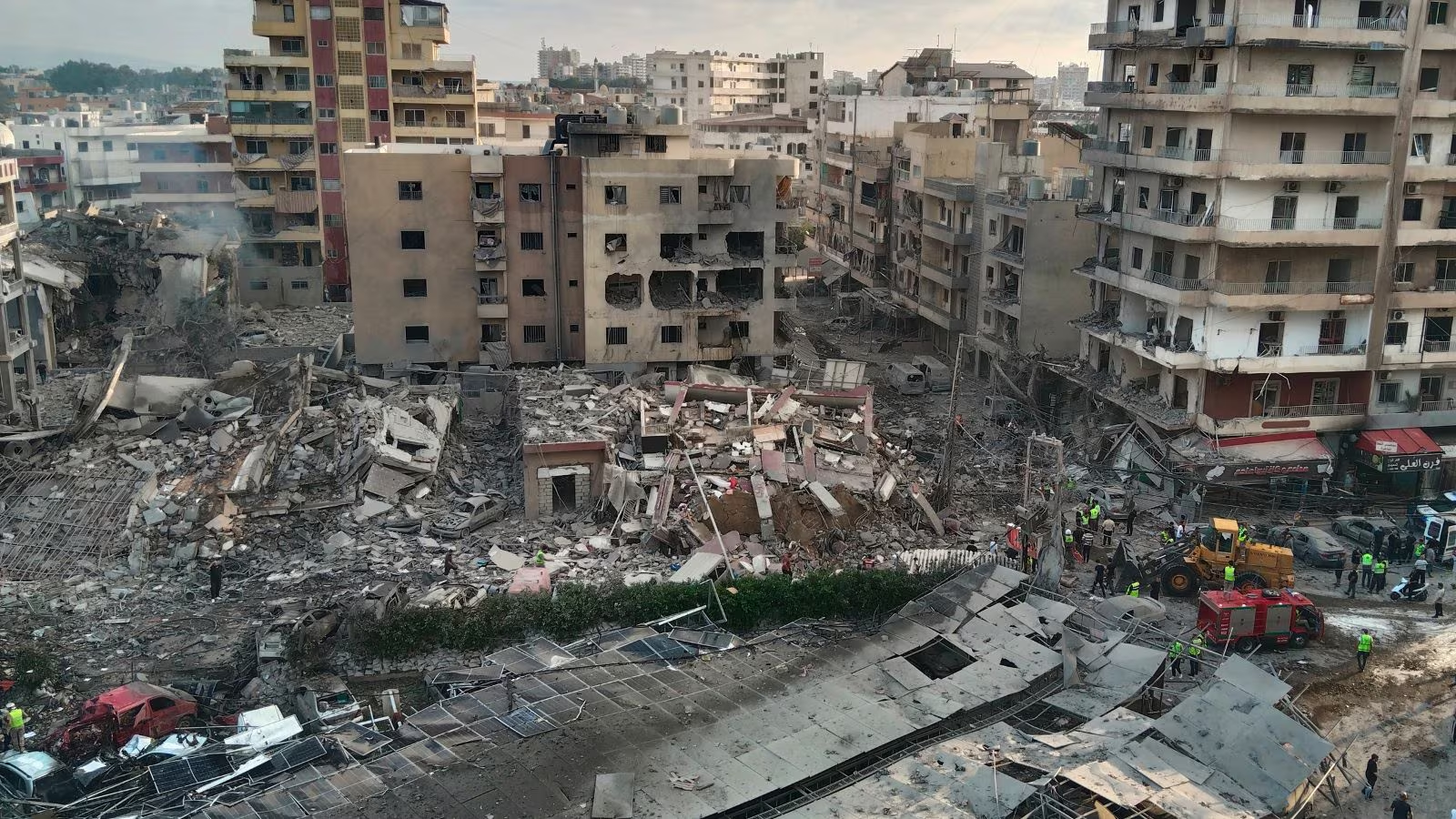
At least 42 American military aircraft were lost or damaged during the conflict with Iran under “Operation Epic Fury”, a new report prepared for the US Congress has claimed, raising fresh questions in Washington over the scale, cost and effectiveness of the campaign.
According to a report by Gulf News, the losses included fighter jets, drones, refuelling aircraft and surveillance planes during the February-April military operation carried out jointly by the United States and Israel.
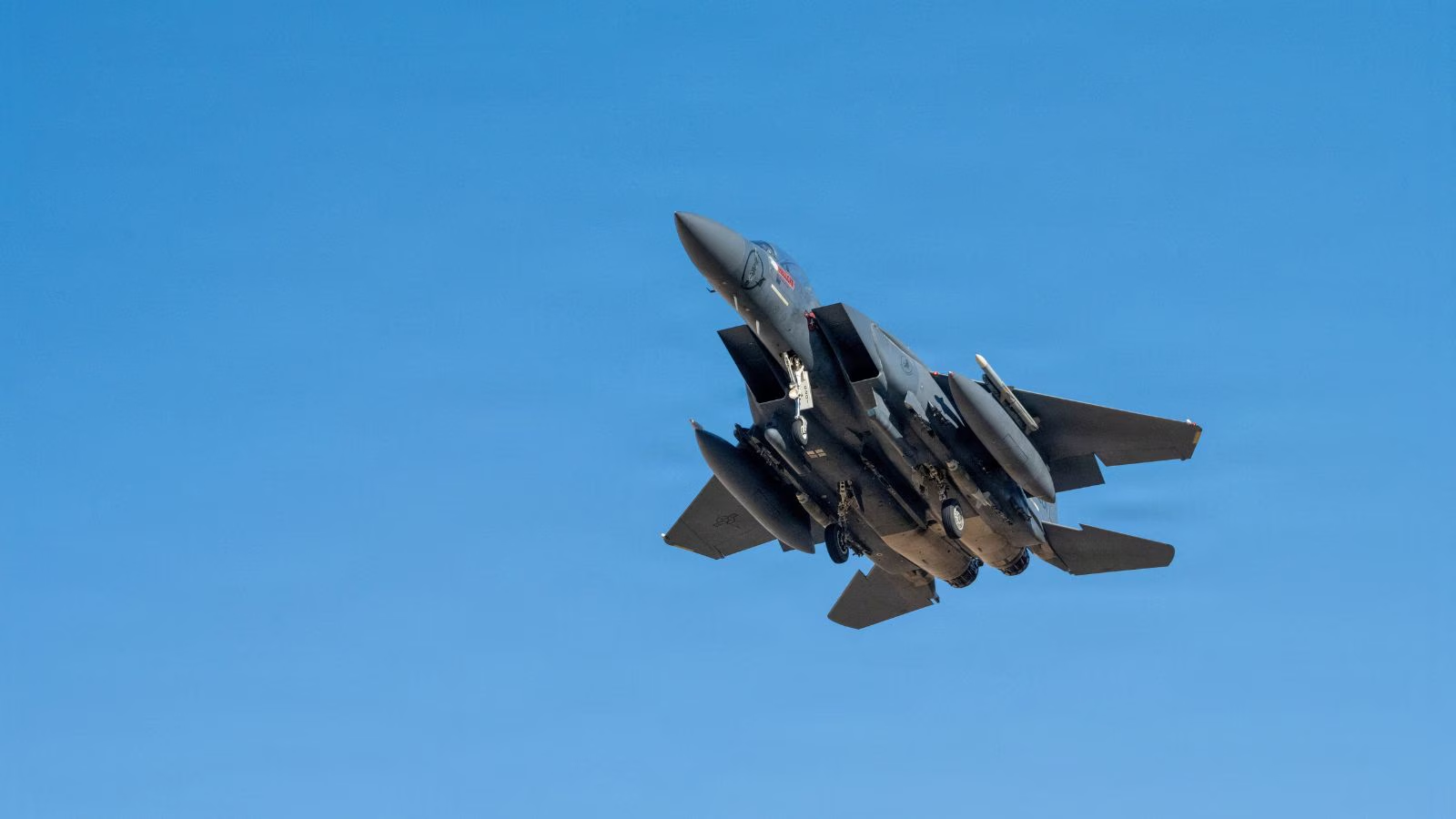
The Congressional Research Service (CRS) report said the aircraft losses ranged from advanced F-35 stealth fighters and F-15E Strike Eagles to MQ-9 Reaper drones and KC-135 aerial refuelling tankers. The report added that the overall financial cost of the damaged or destroyed aircraft could exceed $29 billion.
According to Stars and Stripes, the US military lost 24 MQ-9 Reaper drones alone during the conflict. The report also detailed the loss or damage of several manned aircraft, including an F-35A Lightning II reportedly hit by Iranian ground fire, three F-15E Strike Eagles shot down in a friendly fire incident over Kuwait, and multiple KC-135 tankers damaged during Iranian missile and drone strikes on bases in Saudi Arabia.
1
MQ-9 Reaper
Strike / surveillance
DRONE
2
KC-135 Stratotanker
Aerial refuelling
TANKER
3
F-15E Strike Eagle
Multi-role fighter
FIGHTER
4
MC-130J Commando II
Special ops transport
SPEC OPS
5
F-35A Lightning II
Stealth fighter
FIGHTER
6
A-10 Thunderbolt II
Ground-attack jet
ATTACK
7
E-3 Sentry
AWACS early warning
AWACS
8
HH-60W Jolly Green II
Combat search & rescue
CSAR
9
MQ-4C Triton
High-altitude surveillance
DRONE
| # | PLATFORM | ROLE | CATEGORY | COUNT |
|---|---|---|---|---|
| 1 | MQ-9 Reaper | Strike / surveillance | Drone | 24 |
| 2 | KC-135 Stratotanker | Aerial refuelling | Tanker | 7 |
| 3 | F-15E Strike Eagle | Multi-role fighter | Fighter | 4 |
| 4 | MC-130J Commando II | Special ops transport | Spec Ops | 2 |
| 5 | F-35A Lightning II | Stealth fighter | Fighter | 1 |
| 6 | A-10 Thunderbolt II | Ground-attack | Attack | 1 |
| 7 | E-3 Sentry | AWACS | AWACS | 1 |
| 8 | HH-60W Jolly Green II | Combat search & rescue | Spec Ops | 1 |
| 9 | MQ-4C Triton | High-altitude surveillance | Drone | 1 |
MQ-9 Reaper × 24 · MQ-4C Triton × 1
KC-135 Stratotanker × 7 · E-3 Sentry AWACS × 1
F-15E Strike Eagle × 4 · F-35A Lightning II × 1
MC-130J Commando II × 2 · HH-60W Jolly Green II × 1
Source: Congressional Research Service (CRS) report compiled from news reports and statements by the US Department of Defense and US Central Command · Pentagon cost estimate per testimony of Acting Pentagon Comptroller Jules W Hurst III, House Appropriations subcommittee, May 12, 2026 · Figures subject to revision.
Questions over transparency and military readiness
The findings have intensified debate in Washington over transparency surrounding the Iran campaign. Lawmakers have pressed the Pentagon for a clearer accounting of military losses and operational readiness after the campaign. The CRS report reportedly relied on Pentagon statements, CENTCOM disclosures and media reports, while cautioning that the numbers could still change because some damage assessments remain classified.
Rising tensions between Washington and Tehran
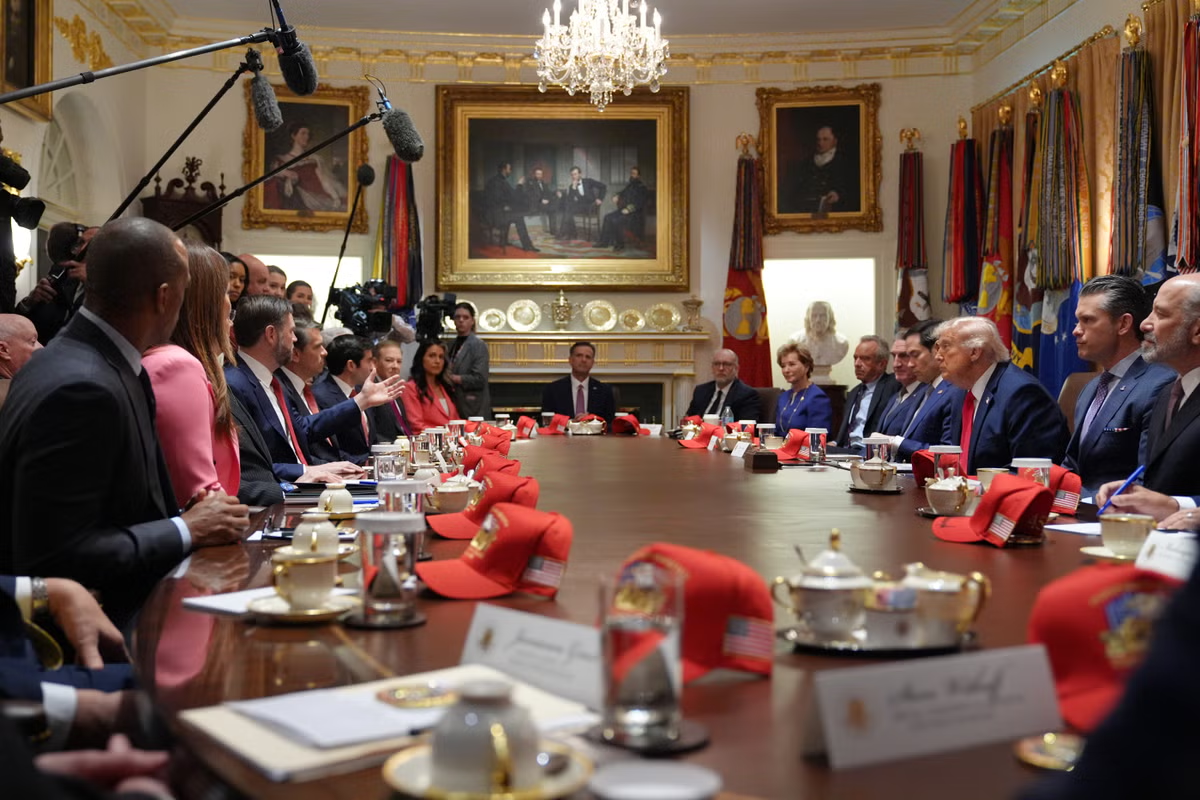
The controversy comes amid renewed tensions between Washington and Tehran. Iran warned that any fresh US military action could widen the conflict beyond the Middle East. At the same time, US President Donald Trump signalled that Washington was considering further military options if negotiations with Tehran collapsed.
Meanwhile, criticism has also emerged within the US Congress. The New York Post reported that the US Senate recently advanced a war powers resolution seeking to limit further military action against Iran without congressional approval, reflecting growing unease over Operation Epic Fury and its long-term consequences.
Stay updated with the latest – Click here to follow us on Instagram
© IE Online Media Services Pvt Ltd