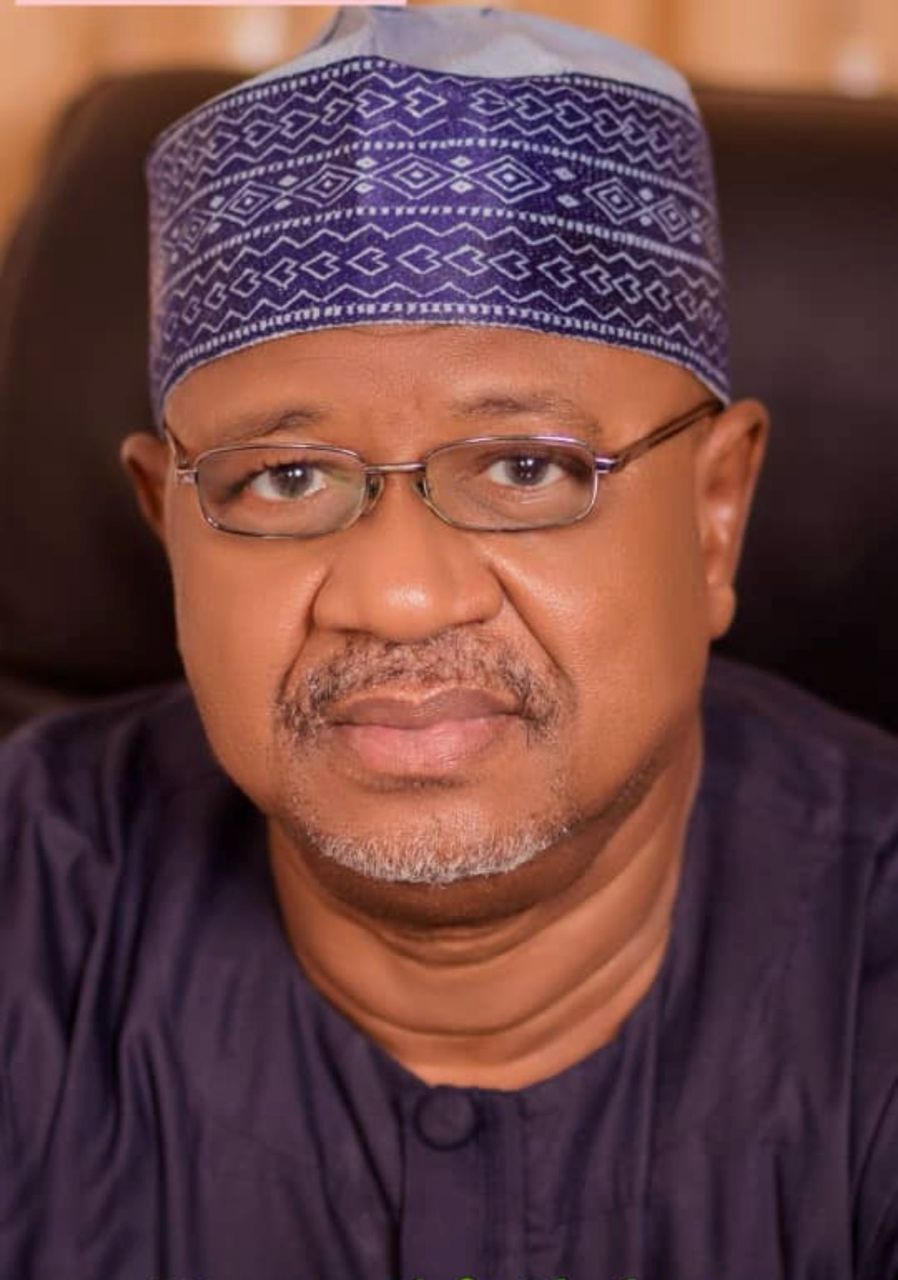
Political actor and promoter of the All Democratic Alliance (ADA), Dr. Umar Ardo, has warned that the ongoing restructuring within Nigeria’s opposition ranks, particularly the emergence of the Nigerian Democratic Congress (NDC) alongside the African Democratic Congress (ADC), is likely to strengthen the ruling All Progressives Congress (APC) ahead of the 2027 general elections.
Ardo stated this on Tuesday during an interview on Frontline, a current affairs programme on Eagle 102.5 FM, Ilese-Ijebu, Ogun State, where he argued that Nigeria’s electoral outcomes are increasingly shaped by opposition fragmentation rather than the intrinsic strength of the ruling party.
His comments followed the high-profile defection of former presidential candidates Peter Obi and Rabiu Kwankwaso to the NDC on May 3, 2026, after leaving the embattled ADC. The duo were received at the party’s national secretariat in Abuja by chairman Cleopas Moses Zuwoghe and national leader, Senator Seriake Dickson, and described the move as a strategic effort to secure a more stable and “litigation-free” platform ahead of 2027.
The development has since sparked controversy, with legal and political debates over the legitimacy and registration status of the NDC.
However, Ardo insisted that the creation of new political formations, rather than strengthening the opposition, ultimately consolidates electoral advantage for the APC.
“Who benefits from this fragmentation? It is the ruling party,” he said, arguing that divided opposition votes have historically weakened challengers at the polls.
He referenced the 2023 general elections, where split opposition support among parties contributed to the eventual outcome, warning that a similar scenario could repeat itself in 2027.
“In 2023, we had APC, PDP and Labour. Now we are moving into APC, ADC and NDC,” he said, adding that such dispersion of political forces consistently favours incumbents.
According to him, Nigeria is gradually drifting into a recurring three-bloc electoral structure that risks entrenching imbalance if opposition unity remains elusive.
Ardo also questioned the timing and procedural legitimacy of emerging political arrangements, stressing that institutional processes must not be compromised for political convenience. He maintained that his position is driven by concern for democratic stability rather than personal ambition.
Reiterating his stance, he said he had earlier challenged the Independent National Electoral Commission’s (INEC) recognition of the NDC through public commentary and legal action, insisting that due process must guide party formation and recognition.
“I objected from day one. I went through the courts and the media. This is about due process,” he said.
Ardo further disclosed that he had engaged key political actors involved in the new alignment, including Kwankwaso, advising caution and urging thorough due diligence before proceeding with the political merger.
He, however, alleged that despite initial assurances, the process continued without addressing the concerns he raised.
The ADA promoter warned that allowing such precedents to stand could weaken institutional safeguards governing political party formation and electoral competition.
He also raised concerns over what he described as inconsistencies in judicial handling of political disputes, warning that such perceptions could erode public trust in democratic institutions.
Ardo maintained that the core issue is the long-term integrity of Nigeria’s democratic system, not individual political ambition, cautioning that continued opposition fragmentation could deepen institutional vulnerability.
“If opposition continues to fragment while institutions appear inconsistent, then the system itself becomes vulnerable,” he warned.
He urged political stakeholders to critically examine emerging alliances and consider who stands to benefit most from ongoing realignments, insisting that democratic credibility depends on both legality and public confidence in fairness.
FOLLOW US