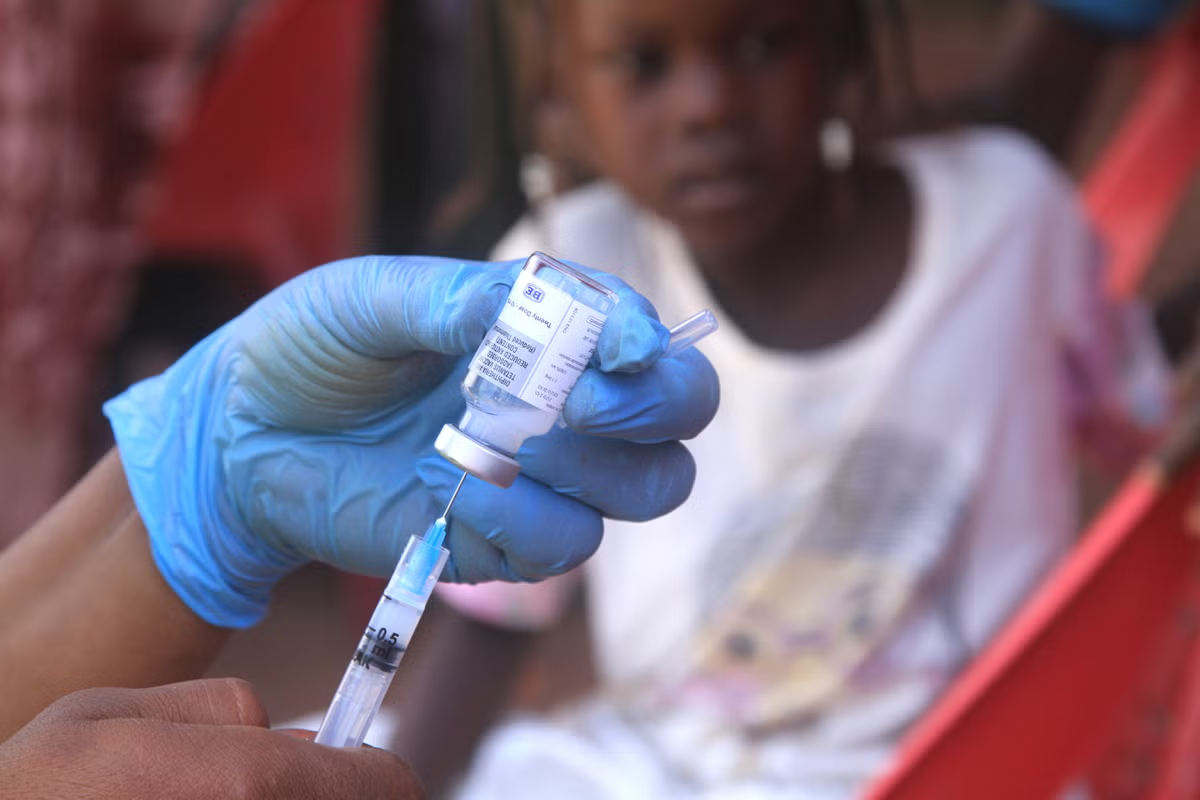
Australia is grappling with its “biggest diphtheria outbreak“ in decades as the bacterial infection continues to spread through Northern Territory.
The country’s top medical body is now urging all Australians to ensure they are fully vaccinated against diphtheria following a resurgence of the Victorian-era disease.
Most of the nearly 220 cases reported so far are in Northern Territory, Western Australia, South Australia, and Queensland.
Diphtheria can cause swollen glands, breathing problems and fever. The bacterial disease mostly affects children.
It was considered almost eradicated following a vaccination rollout that began in the 1930s.
The current outbreak is being blamed on a dip in vaccination rates. Cases began to rise in 2025, prompting the Northern Territory Centre for Disease Control to declare an outbreak in March.
Almost all cases have involved Indigenous Australians, which has pushed health authorities to work with Aboriginal agencies to improve immunisation.
Health authorities were awaiting the outcome of an investigation into a suspected diphtheria death, which could be the first fatality from the disease in almost a decade.
“We’ve been recording case numbers nationally for about 35 years and this, by a very big distance, is the biggest outbreak of diphtheria we’ve ever seen,” federal health minister Mark Butler said.
He said the government was drafting a support package as childhood vaccination rates, including for diphtheria, fell to a five-year low in 2025.
“More vaccines, a surge workforce is part of the package we’ll be finalising over the course of today, working closely with the Northern Territory government and with the Aboriginal-controlled sector, because this is overwhelmingly an outbreak being experienced by Indigenous Australians in Northern Territory,” Mr Butler said.
The majority of the cases were respiratory diphtheria, he said, which were “far more serious in terms of their potential.”
About 25 per cent of cases were being hospitalised, the minister said.
“So this is obviously a deep concern for people who are exposed to this disease, but it is also starting to place pressure on hospital systems in the Northern Territory as well,” he added.
At least 133 of the cases recorded are in Northern Territory and 79 in Western Australia, according to the National Notifiable Disease Surveillance System. Six are in South Australia and five in Queensland.
Immunisation expert Milena Dalton told the AAP news agency that the outbreak highlighted how quickly vaccine-preventable diseases could re-emerge because of gaps in immunisation. “Although diphtheria remains rare in Australia this outbreak shows it hasn’t disappeared,” she said.
Diphtheria typically spreads through contact with coughs and sneezes of the infected or their cups, cutlery, clothing or bedding.
The UK health service states that the symptoms usually begin to manifest between two to five days after infection and may include a thick grey-white coating covering the back of the throat, nose and tongue, along with fever, sore throat, swollen neck glands, and difficulty swallowing or breathing.
If cutaneous diphtheria is contracted, infecting the skin, a patient may get pus-filled blisters on their legs, feet or hands, along with large ulcers surrounded by red, sore-looking skin.