China’s Ambassador to Israel, Xiao Junzheng, has described last month’s summit between US President Donald Trump and Chinese President Xi Jinping as a “historic” and “landmark” moment, while insisting Beijing has been quietly urging Iran to moderate its behavior and avoid further escalation in the Middle East, as the US and Iran look to formalize a ceasefire agreement.
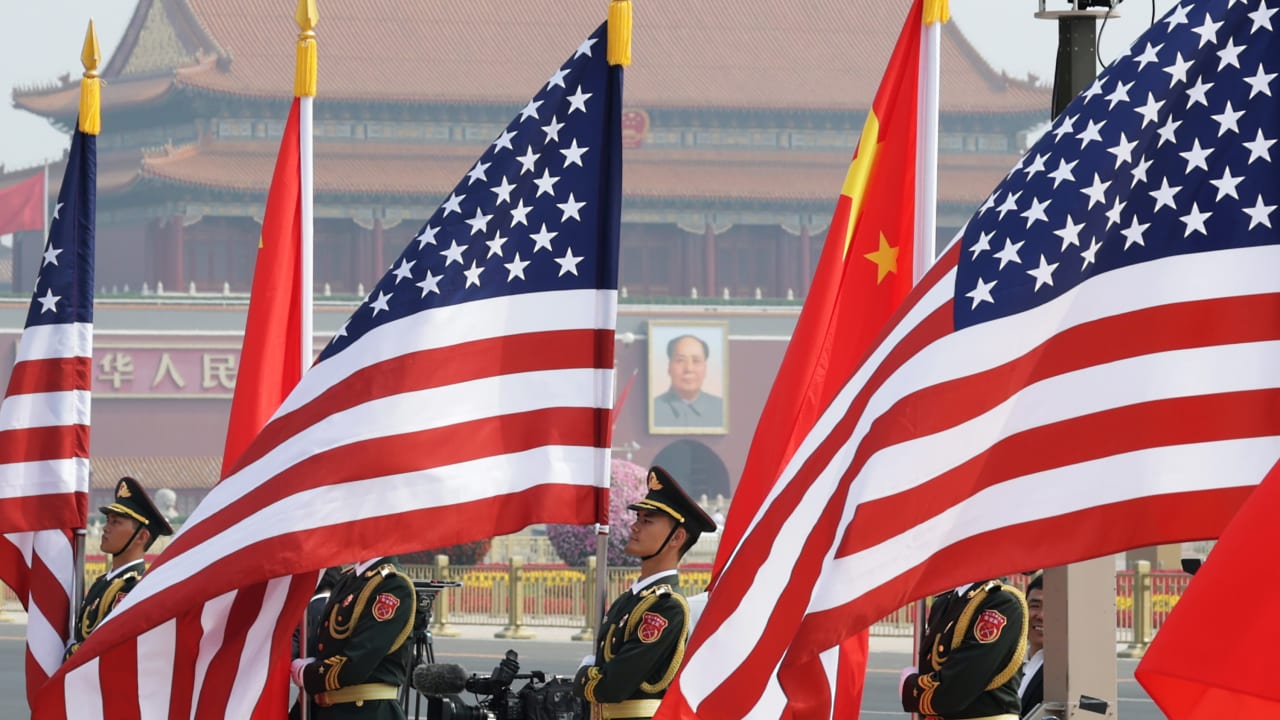
Speaking to The Jerusalem Post, Xiao said the summit in Beijing was designed to stabilize relations between the world’s two largest powers amid tensions over trade, technology, Taiwan, and the ongoing Iran crisis.
“It was a good and successful visit, and also a historic and landmark one,” Xiao said. “Both presidents agreed to build a constructive China-US relationship of strategic stability.”
The May 14-15 summit came at a time of heightened global instability. Global media reported ahead of the talks that Trump hoped to secure Chinese cooperation on reopening the Strait of Hormuz and restraining Iran, while Beijing sought stability in trade and Taiwan-related tensions.
Despite the positive rhetoric, it was later reported that Trump left Beijing with “few wins,” no major breakthroughs on trade, and little concrete assistance from China regarding the Iran war.
Xiao nevertheless argued that the summit’s significance lay in the broader framework agreed upon by the two leaders.
‘The slogan ‘wipe Israel from the map’ – It’s crazy. It sounds extremist’
“It will be a positive stability with cooperation as the mainstay,” he told the Post. “It will be a healthy stability with competition within proper limits, and also constant stability with manageable differences.”
The ambassador dismissed the idea that conflict between China and the United States is inevitable, pushing back against the “Thucydides Trap” theory often cited by Western strategists.
“From the Chinese point of view, there is no Thucydides Trap in this world, but if major powers repeatedly make miscalculations, then they will create one for themselves,” Xiao said, before adding that “Beijing believes China’s national ambitions and Trump’s ‘Make America Great Again’ vision can go hand in hand.”
“China and the US could help each other succeed and advance the well-being of the whole world,” he said.
Xiao repeatedly stressed the personal chemistry between Trump and Xi, pointing to Trump’s 2017 visit to China and Xi’s earlier trip to Mar-a-Lago.
“The two presidents do have very close chemistry,” he reiterated.
At the same time, the ambassador acknowledged that the relationship between the two global powers has suffered from major shocks in recent years, including the trade war, COVID-19, and the “spy balloon” controversy during the Biden administration.
“There were some twists and turns in the relationship,” Xiao said. “But on the whole, we always believe that this relationship is strong enough to get back to normality.”
Trump and Xi also discussed Iran extensively during the summit, including the issue of the Strait of Hormuz, which remains partially disrupted months after the US-Iran conflict erupted earlier this year.
The US leader later claimed Xi agreed Iran must keep the strait open, though Beijing gave no indication it was prepared to pressure Tehran publicly.
The recent war and fragile ceasefire have continued to destabilize global energy markets, and it was reported this week that the US and Iran exchanged fresh strikes near the Strait of Hormuz despite ongoing negotiations aimed at restoring commercial shipping through the waterway.
Since the temporary ceasefire was agreed in April, Iran has begun charging tolls for shipping to pass through the Strait.
Against that backdrop, Xiao insisted China has consistently opposed Iranian nuclear weapons while simultaneously supporting Tehran’s right to civilian nuclear energy under the Nuclear Non-Proliferation Treaty.
“From the point of view of the Chinese government, it is very clear that we are against Iran’s development of any nuclear bomb,” he said. “At the same time, because Iran is a member of the NPT, it has the legal right to peaceful use of nuclear energy.”
The ambassador also revealed that Chinese officials have repeatedly urged Iranian leaders to tone down anti-Israel rhetoric.
“We talked to the Iranians many times,” Xiao said. “The slogan ‘wipe Israel from the map’ – we say slogans like this, there is no need for them. It’s impossible. It’s crazy. It sounds extremist.”
China, however, remains Iran’s largest oil customer and maintains extensive economic ties with Tehran, leading some critics to argue that Beijing possesses more leverage over the Islamic Republic than it publicly admits. However, Xiao rejected the suggestion that China has remained passive.
“We have done this for quite a long time,” he said. “The Chinese foreign minister Wang Yi, when the war started, spoke with dozens of foreign ministers, including the foreign minister of Israel.
“We also pushed the Iranians to reopen the Strait of Hormuz,” Xiao added. “We said the free navigation of this strait should be respected.”
‘We always believe cooperation is possible’
Still, the ambassador admitted that influencing Tehran is not straightforward when the regime in power is adamant that Israel and the US are existential enemies.
“Iran is another ancient civilization in this region,” Xiao said. “They are very proud of their history. Sometimes it’s not easy to communicate.”
Throughout the interview, Xiao portrayed China as a stabilizing power seeking to avoid confrontation while preserving international order, arguing that coexistence with the US, rather than escalation, is a priority.
“We know very clearly that if major countries fight, smaller countries or the grass will be affected,” the ambassador told the Post. “We take into consideration the interests of other countries in the world. The Pacific Ocean is big enough to accommodate both countries.
“We always believe cooperation is possible.”