New Delhi:
The calls of birds and animals inside the deep jungles of Laos’ Xaysomboun province were interrupted by the setting up of tents, ropes, oxygen tanks and strategy discussions between some of the world’s most celebrated divers. Nothing about the rescue operation to retrieve the group of miners from a cave system was to be easy – the divers would have to pass through floodwaters with the visibility of coffee through tunnels barely as wide but not near as even as a refrigerator while avoiding getting trapped or buried in mud that was ready to fall off the passages, while emerging in between into pockets with toxic air.
Eight years after a dramatic 2018 Thai cave rescue operation inspired several heroic accounts, short films and web series, the coordinated effort to find and retrieve seven villagers on May 21, a day after they got trapped during their search of gold and valuable minerals, gained global attention.
Day 0: Descent And A Trap
Monsoon-triggered flash floods and landslides sealed the entrance, escape routes vanished and the cave became a doomed trap. What made all the difference was the escape by one of the miners, who then alerted authorites, saving the group from lying undetected in the cave and dying a slow death.
Days 1-5: Race Towards The Unknown
The questions outnumbered solutions. Were the miners safe, or even alive? Could they be reached? What happens when they have to regulators, gauges and oxygen tanks, diving equipment they probably would have never seen, let alone used?
A woman and her baby wait outside the Laos cave as her husband waits to be rescued from inside.
As toddlers, elderly and other family members of those trapped inside gathered near the cave entrance with prayers on their mouths, teams from Laos and Thailand began the four kilometre trek through the mountainous jungle to reach the spot. Later, experts from Japan, Malaysia, Indonesia, France and Australia joined the operation.
Among the team was Finnish diver Mikko Paasi, who had taken part in the Thai cave rescue. His experience brought some confidence, but he knew why this operation was to be far more perilous. This cave was muddy and structurally unstable, having been dug out by hands by miners over many year. In Thailand’s Tham Luang Nang Non cave, the width of passages allowed divers to buddy up with each of the 12 school children to bring them to safety. In this unnamed cave in Vietnam, the passages were barely wide enough to allow a single diver to wiggle through at a time, some just 60 centimetres wide, giving divers like Paasi an advantage with their slender build but still posing a challenge. For perspective, a large pizza is around 50 centimetres in diameter.
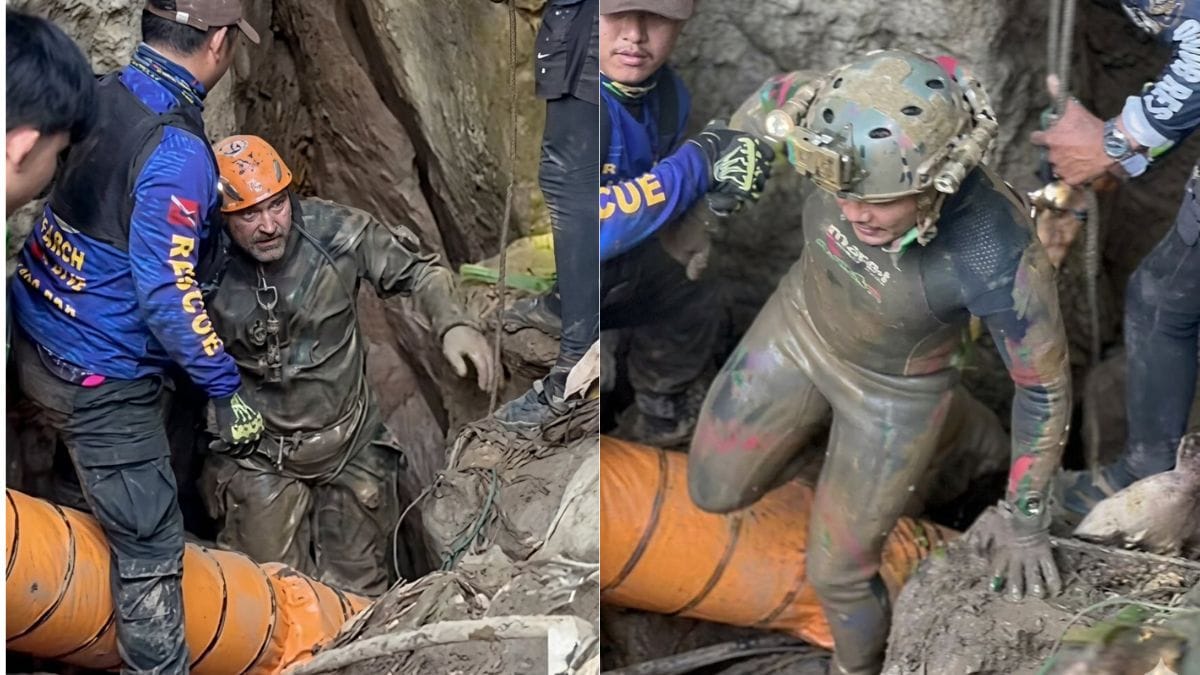
Celebrated divers Mikko Paaso and Norased Palanising joined the rescue ops.
The divers were able to reach a depth of 100 metres into the cave, but could only estimate that the group was only 30 metres beyond reach. Parallel strategies were considered – pumping out water, exploring air shafts above the cave and breaking through sand.
Day 6-7: A Breakthrough
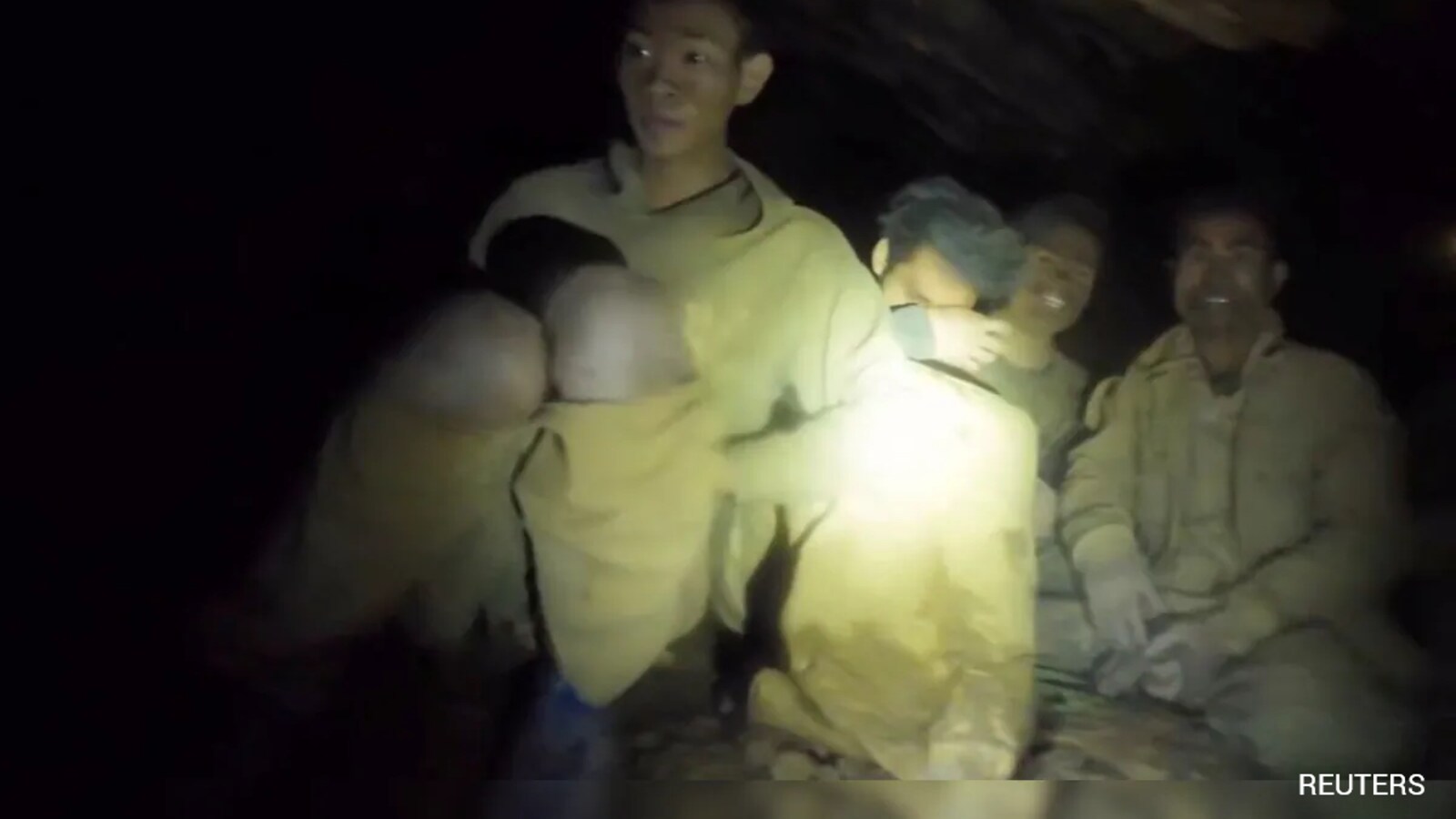
Tears, smiles and hugs followed inside and outside the cave on May 27 when five exhausted, dehydrated, starving but mentally responsive miners were found huddled on a rock around 300 meters from the entrance on May 27. “Don’t worry mom, dad. I’m still strong, I’m still healthy. Tomorrow I will be home. I love you mom and dad,” said one of the men, who introduced himself as Mued.
“There are people here to help now,” said Norased Palasing, a Thai specialist cave diver.
Two miners were still missing. The next steps – revive the miners’ health, get them out and look for the missing. Electrolytes, food, water and thermal blankets brought some relief to the men, but extraction was far from guaranteed.
The “coffee-coloured” water would require navigation based entirely on touch and instinct, the narrowest parts would require the removal of oxygen tanks while submerged and full exhalation to allow the body to squeeze through as it is pushed ahead in coordinated moves, while also battling panic. All through this, no supports at any part of the cave would be available, and breathing the hydrogen sulfide from bat dropping could cause the miners or crew to faint. Should it rain again, the cave could get further flooded and more muddy sections could collapse, requiring recollabration of escape paths, if any are left.
Day 8-9: One Life At A Time
Over 30 minutes, a survivor was guided through the cave’s tunnels on Friday. Applause broke out as he emerged from the cave, struggling to breathe and stand. The rescuers were far from relaxing or celebrating. During the monsoon in the country, heavy rain and thunderstorms were predicted for the same day and the next, making the mission not a race but a fight against time and fate.
Pumping of water out of the cave continued.
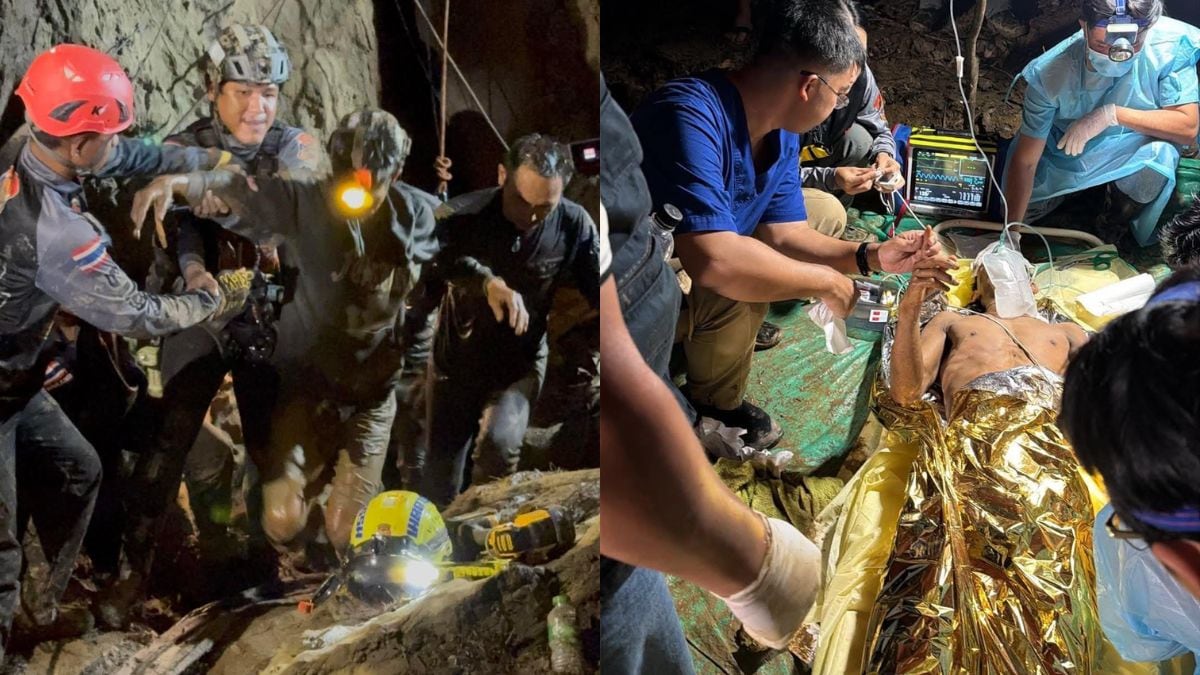
First miner emerges from cave.
Day 10: An Unplanned Ending
Paasi had said that the best scenario would be if water were pumped out of the cave system, allowing miners to make their way out with minimum assistance. As water levels dropped, four miners covered in mud emerged from the cave one by one and collapsed to the ground. Cue: More tears and hugs before they were administered oxygen and covered in thermal foil blankets.
The riskiest extraction scenarios were averted. “I was literally putting my wetsuit on to head in when they emerged on their own,” said Australian rescue diver Josh Richards, one of the expert divers.
Four more villagers trapped for 10 days in a flooded cave in Laos were safely rescued on Saturday, a day after the first survivor was extracted. Emotional scenes unfolded as the men emerged and reunited with their families. pic.twitter.com/EpwMBWRhgT
— NDTV WORLD (@NDTVWORLD) May 31, 2026
Day 11-Present: The Road Ahead
The rescuers remain on site planning the search and rescue of the two missing miners. Survivors indicate they may have gone 500 metres deeper, into areas described as heavily flooded and lethal. Kengkaj Bongkawong, head of the Thai rescue group Metta Tham Rescue Kalasin, said Friday that the team plans to explore an area deeper inside the cave, about 20 to 25 meters beyond where the survivors were found. However, he cautioned that the section is heavily flooded.
Key Differences Between The Two Missions
Laos
5 people found, two missing
Unstable gold mine with no supports
Parts as narrow as 60 centimetres
Toxic gases present
Pump-assisted, partial self-extraction
Survivors found 300 metres from entrance
Thailand
13, all rescued
Natural cave system
Tight passages, but comparatively larger
No major gas hazard noted
Fully diver-led extraction