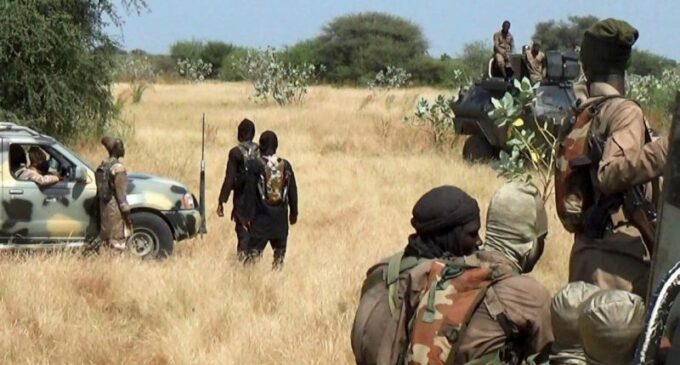
Fresh intelligence from Borno State indicates escalating clashes between Boko Haram and Islamic State West Africa Province (ISWAP), as both factions battle for dominance within the Sambisa Forest and surrounding areas.
Sources said the confrontations have intensified in recent days, highlighting growing tensions between the rival groups.
At about 8:43 p.m. on April 30, a reported exchange between suspected fighters offered insight into the ongoing conflict.
A Boko Haram member identified as Ba Musa, believed to be operating within the Sambisa axis of Bama Local Government Area, was said to have spoken with an associate, Ya Kazalla.
According to Zagagola Makama, the conversation reportedly reflected concerns over conflicting narratives about recent clashes.
According to the intelligence, Kazalla raised concerns about reports suggesting ISWAP had recorded significant victories.
However, Musa reportedly dismissed the claims, insisting that Boko Haram inflicted heavy losses on ISWAP.
He allegedly claimed that about 100 ISWAP fighters were killed during a confrontation on April 29 in the Sambisa Forest.
Musa was also said to have claimed that seven additional ISWAP fighters were killed in another clash around Molai in Konduga Local Government Area.
He added that Boko Haram suffered minimal losses, with only one fighter reportedly killed.
Security observers noted that such claims remain difficult to independently verify, as both groups often engage in propaganda to project strength.
Nevertheless, the reports underscore the intensity of the rivalry and the scale of violence within insurgent ranks.
The Sambisa Forest and surrounding areas, including the Lake Chad corridor, remain key strongholds for insurgent operations.
The region continues to witness both internal clashes and sustained counterterrorism pressure from security forces.
Analysts say the growing infighting presents both risks and opportunities.
While it introduces unpredictability, it may also weaken the operational cohesion of insurgent groups in the region.