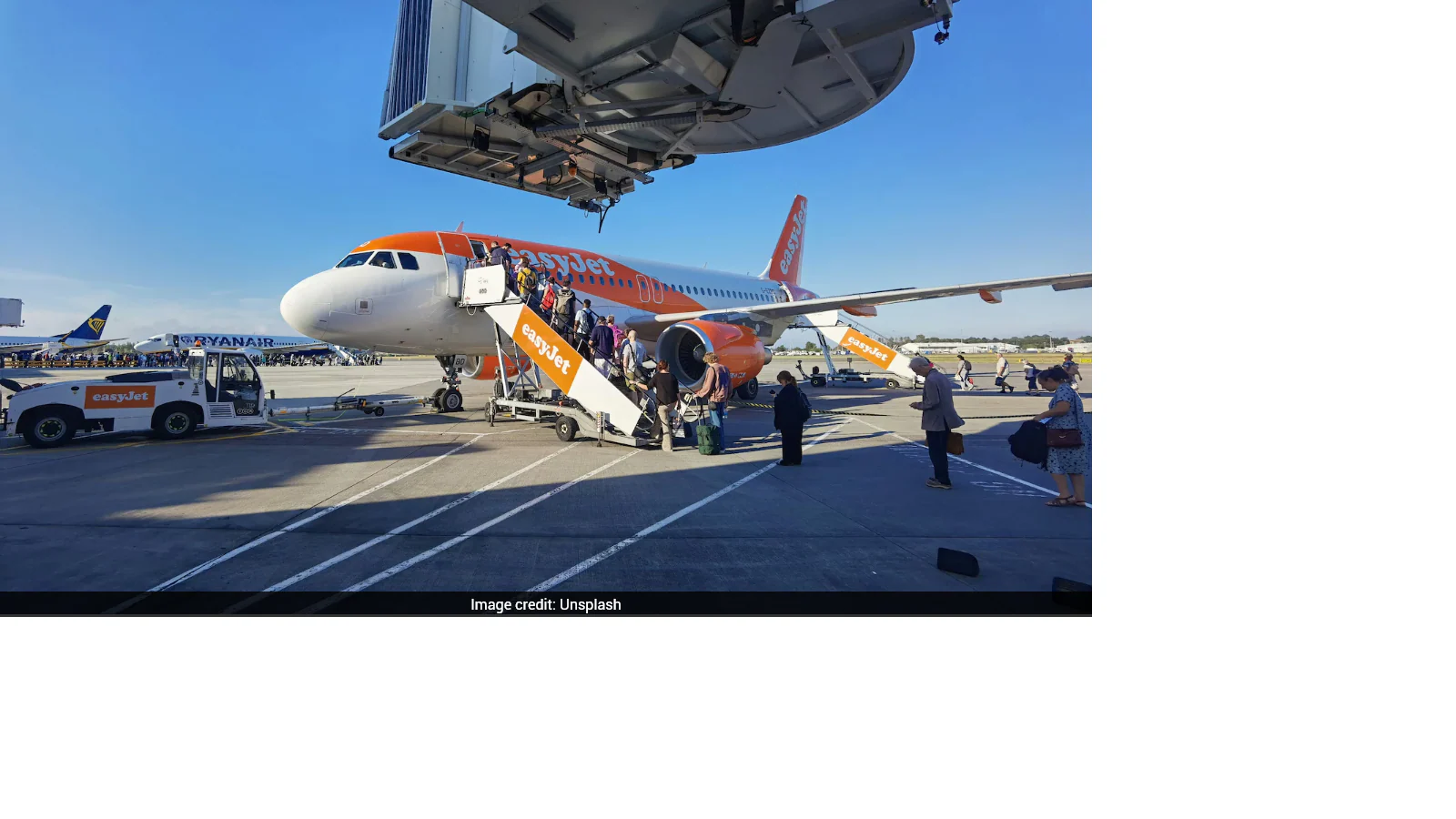
An EasyJet flight from Egypt to the United Kingdom was forced to divert to Rome this week after a passenger admitted to leaving a phone actively charging on a power bank inside checked baggage, Sky News reported. The incident occurred on Flight EZY2618, which departed Hurghada on Tuesday evening bound for Luton Airport. About mid-flight, the crew were informed that a power bank was charging in a passenger’s luggage. The airline then told the outlet that it diverted the plane as a “precaution”.
Lithium batteries and power banks are banned in checked luggage when connected to a device because they pose a fire risk that’s hard to detect or suppress in the cargo hold. In the cabin, crew can quickly spot smoke and douse a battery fire, but a blaze below deck could spread undetected.
Also read | NASA Explains Why Earth Appears Glowing Orange In Stunning Space Photo
“The captain then took the decision to divert as a precaution in line with safety regulations,” a spokesperson said as quoted by the media outlet.
As per the report, the aircraft landed safely, passengers disembarked normally, and the airline provided hotel rooms and meals while arranging onward travel. The next Rome-to-Luton service wasn’t until Wednesday afternoon, so some travellers rebooked on other carriers.
Also read | US Woman, 81, Reacts After Getting Swatted During Minecraft Livestream
Passenger reaction
Those onboard described initial anxiety as the plane changed course, fearing a bomb or serious mechanical issue. Relief set in once word spread about the charging device. “Thank goodness it wasn’t a bomb in the hold,” one passenger told The Sun. “It was quite an ordeal, but mostly relief that everyone was OK.”
EasyJet apologised for the delay and reiterated that safety is its top priority. “The safety of its passengers and crew is EasyJet’s highest priority and EasyJet operates its fleet of aircraft in strict compliance with all manufacturers’ guidelines,” the spokesperson added.
“We would like to apologise to all passengers for any inconvenience caused by the diversion and subsequent delay.”