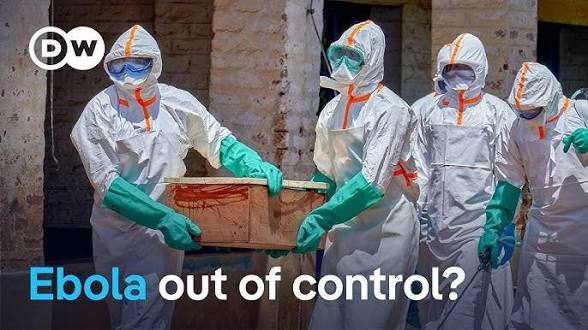
The Nigeria Centre for Disease Control and Prevention (NCDC) has placed Lagos, the Federal Capital Territory (FCT), Kano, Rivers and seven other states on high alert over the risk of Ebola Virus Disease importation, following a worsening outbreak of the deadly virus in parts of Central Africa.
The agency, in a national public health advisory issued on Thursday, classified Nigeria’s overall risk of importing the Bundibugyo strain of Ebola as “HIGH”, warning that urgent preparedness measures were required across all levels of government to prevent entry and possible community transmission.
The World Health Organisation (WHO) has already declared the outbreak a Public Health Emergency of International Concern (PHEIC), a designation the NCDC said underscores the gravity of the situation and the need for immediate national readiness.
Although Nigeria has not recorded any confirmed case, the NCDC said its Dynamic Risk Assessment shows heightened vulnerability due to increased regional transmission, cross-border movement, international travel, and porous land and sea entry points.
According to the agency, more than 1,077 suspected cases and 247 deaths have been reported in the Democratic Republic of Congo and Uganda, with a case fatality rate estimated at 24.6 per cent, raising fears of wider regional spread.
“The overall risk of importation into Nigeria has been assessed as HIGH due to ongoing regional transmission, international travel, population movement, and porous borders,” the agency stated.
The NCDC listed Lagos, FCT, Kano, Rivers, Enugu, Borno, Akwa Ibom, Cross River, Taraba and Adamawa as the highest-risk states due to their international airports, seaports, major highways, trade corridors, and frequent cross-border activities.
The agency warned that these states must immediately scale up surveillance, activate isolation facilities, and strengthen infection prevention and control systems in both public and private health facilities.
It stressed that all states remain at risk, but high-risk states must adopt “accelerated readiness measures” to ensure early detection and rapid response.
The NCDC further cautioned that the Bundibugyo strain of Ebola currently has no approved vaccine or specific treatment, noting that existing Ebola vaccines are primarily effective against the Zaire strain and may not provide adequate protection.
It added that survival depends heavily on early detection, strict isolation, and supportive medical care.
The agency urged health workers nationwide to maintain a high index of suspicion, warning that early symptoms of Ebola often resemble malaria, Lassa fever and other common febrile illnesses.
“Health workers must not wait for bleeding before suspecting Ebola in any patient with compatible symptoms and relevant travel or exposure history,” the advisory warned.
Symptoms listed include fever, severe fatigue, muscle pain, headache, vomiting, diarrhoea, abdominal pain, rash, hiccups, unexplained bleeding, and signs of shock.
The NCDC confirmed that its National Emergency Operations Centre has been placed on alert mode to coordinate preparedness activities across federal and state levels.
It said response priorities include surveillance, laboratory readiness, infection prevention and control, case management, safe sample handling, contact tracing, and risk communication.
State governments, it added, have been directed to immediately activate Ebola preparedness plans, including isolation centres and emergency response teams.
Reiterating its warning, the agency said Nigeria’s classification as a high-risk country should serve as an early warning signal rather than a cause for panic.
It, however, stressed that sustained vigilance, adequate funding, and rapid coordination between federal and state health authorities would determine the country’s ability to prevent importation or contain any potential outbreak.
“The immediate objective is to ensure every state can detect, contain and respond swiftly to any suspected case while protecting health workers and sustaining essential health services,” the NCDC said.
More details here...