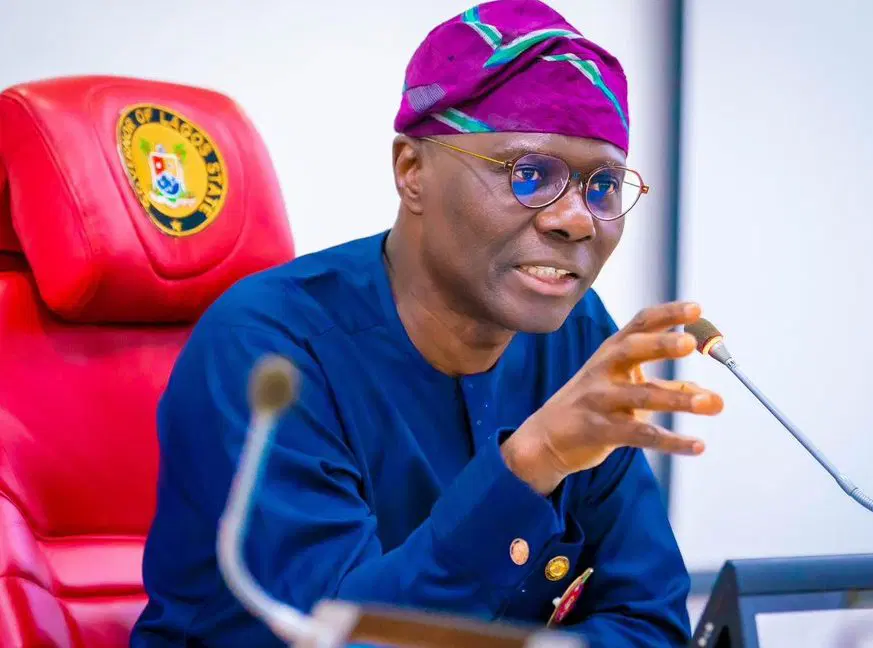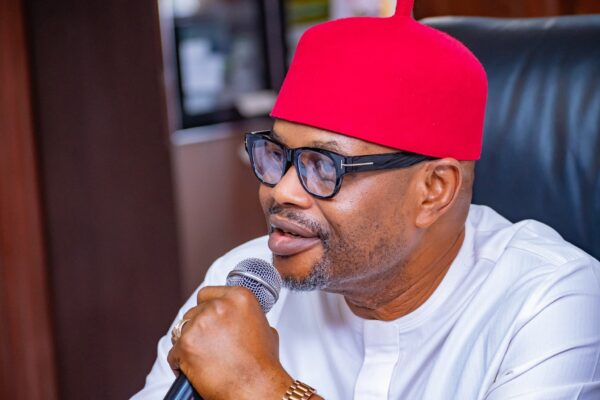
Mr Nnaji is pushing to be governor in Enugu State in 2027 despite being under investigation over certificate forgery by the Independent Corrupt Practices and Other Related Offences Commission.
Fresh facts have emerged about why a former Minister of Innovation, Science and Technology, Uche Nnaji, is desperate to become governor despite a certificate forgery scandal hanging on his neck, PREMIUM TIMES reports.
Recall that a two-year painstaking investigation published by PREMIUM TIMES in October 2025 uncovered how the then-minister forged his degree and National Youth Service Corps (NYSC) certificates which he submitted to President Bola Tinubu and the Nigerian Senate during his ministerial confirmation.
He had resigned from the position as minister three days after this newspaper published the investigation.
PREMIUM TIMES earlier reported how the former minister quietly moved to the Peoples Democratic Party (PDP) from the ruling All Progressives Congress (APC) under which he unsuccessfully contested in the 2023 governorship election in Enugu State.
On Monday, Mr Nnaji emerged as the governorship candidate of the Nyesom Wike-backed PDP faction ahead of the 2027 general election.
Mr Nnaji is pushing to be governor in Enugu State in 2027 despite being under investigation over certificate forgery by the Independent Corrupt Practices and Other Related Offences Commission (ICPC).
PREMIUM TIMES exclusively reported in February that the ICPC began an investigation into Mr Nnaji’s forgery scandal.
Insiders had told this newspaper that the former minister could be prosecuted if the investigation shows that he truly forged his credentials.
Meanwhile, in March, this newspaper also exclusively reported that an investigative panel set up by Nigeria’s Minister of Education, Tunji Alausa, found that Mr Nnaji indeed forged his degree and NYSC certificates.
Multiple reliable sources within the Ministry of Innovation, Science and Technology, Ministry of Education and even those close to Mr Nnaji have informed PREMIUM TIMES of the reasons why the former minister is desperate to become governor in 2027.
Some of the sources told this newspaper that Mr Nnaji, who is aware of ongoing ICPC investigation on his forgery scandal, is disturbed that the agency could prosecute and get him jailed which would ultimately stop him from occupying public office again.
Insiders informed PREMIUM TIMES that the former minister is desperate to become governor in order to enjoy the immunity against imminent prosecution by the ICPC.
The 1999 Nigerian Constitution as amended provides immunity for governors against prosecution.
Section 308 of the constitution grants immunity from civil and criminal proceedings to the serving president, vice-president, governors, and deputy governors.
Section 360 (1) (a – c) reads: “No civil or criminal proceedings shall be instituted or continued against a person to whom this section applies during his period of office;
“A person to whom this section applies shall not be arrested or imprisoned during that period either in pursuance of the process of any court or otherwise; and No process of any court requiring or compelling the appearance of a person to whom this section applies, shall be applied for or issued.”
Sources close to Mr Nnaji also told PREMIUM TIMES that the former minister is desperately seeking to be governor because he fears that the federal government might decide to follow up with the findings by the Ministry of Education which showed that he indeed forged his degree and NYSC certificates.
Mr Nnaji, according to his associates, is troubled that the federal government could pass the panel findings to the Director of Public Prosecution (DPP) to proceed against him.
“He (Mr Nnaji) feels that his future is uncertain with the certificate forgery scandal hanging on his neck.
“So he is thinking that if he becomes governor, at least for the first four years, he cannot be prosecuted because of the immunity he will enjoy,” one of the sources, who asked not to be named, said.
“And he becomes governor and does everything to get his second term, so by eight years, all the people investigating him or prosecuting him will be out of power.”
Insiders further informed PREMIUM TIMES that Mr Nnaji is also worried that the Enugu State Government may request a fiat to prosecute the former minister given that the offence of forgery was committed in UNN, a federal university in Enugu State.
This newspaper gathered that Mr Nnaji’s concern follows information that the DPP and the Enugu State Ministry of Justice are considering the possibility of asking for fiat to prosecute the former minister for the criminal behaviour.
Sources close to the former minister said these concerns have forced him to desperately seek to become governor of Enugu State in 2027.
For context, Section 211(1a-c), 2, and 3 of the Nigerian Constitution empowers any state’s attorney-general to institute, take over, or even discontinue already instituted criminal proceedings against any person in respect of any offence created by or under any law created by a state assembly.
There are many instances of Nigerian politicians whose fraud investigations and trials were withdrawn upon assuming political positions where they enjoyed constitutional immunity.
For instance, Bala Mohammed served as Nigeria’s Minister of Federal Capital Territory from April 2010 to May 2015.
In 2016, shortly after he exited office as minister, the Economic and Financial Crimes Commission (EFCC) arrested him for alleged financial crimes in excess of N1.6 trillion.
Mr Mohammed was subsequently arraigned for the alleged offences.
However, after he contested and won the Bauchi State governorship election in 2019 under the PDP platform, the EFCC dropped the fraud trial against him, succumbing to the constitutional provision that accords absolute immunity from criminal prosecution to an elected governor.
More details here...