• Seeks urgent referral over alleged systemic attacks
Wale Igbintade
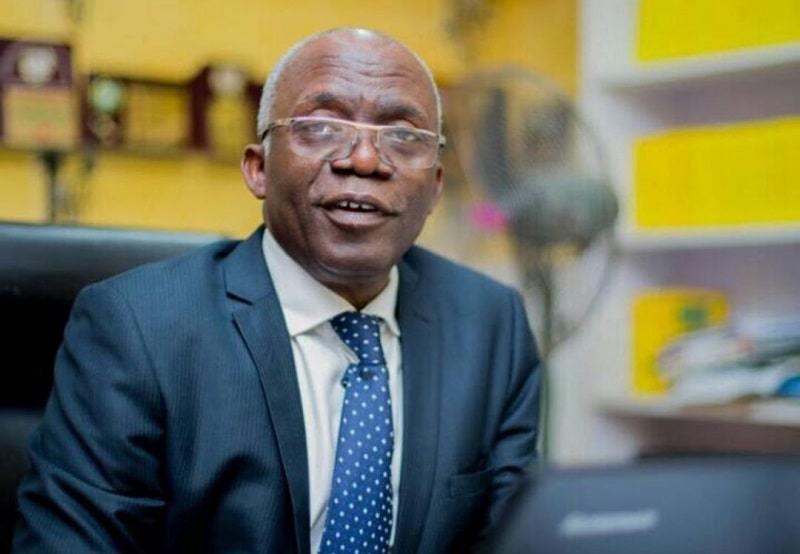
Human rights activist and lawyer, Femi Falana, SAN, has petitioned African Commission on Human and Peoples’ Rights over persistent xenophobic attacks, killings, and alleged human rights violations against Nigerians and other African nationals in South Africa.
In the petition filed pursuant to the African Charter on Human and Peoples’ Rights, Falana urged the commission to urgently intervene and refer the matter to the African Court on Human and Peoples’ Rights for binding adjudication.
The senior lawyer accused the South African government of failing to protect foreign nationals from recurring violence, intimidation, and discrimination.
According to him, the attacks are neither isolated nor sporadic, but reflect a “systemic failure” by South African authorities to safeguard the rights and lives of African migrants.
Falana said there remained “a persistent, widespread and well-documented pattern of xenophobic violence, intimidation and discrimination against Nigerians and other African nationals in the Republic of South Africa”.
He alleged that the attacks had resulted in killings, physical assaults, arbitrary arrests, torture, looting, destruction of businesses, forced displacement, and sustained threats to life and personal security.
The petition cited recent incidents involving two Nigerians, Amaramiro Emmanuel and Ekpenyong Andrew, who reportedly died in April 2026 in separate incidents, allegedly, involving personnel of the South African National Defence Force.
According to Falana, Andrew reportedly died after he was arrested in Pretoria following an altercation with law enforcement officials, while Emmanuel, allegedly, died from injuries inflicted by security personnel.
He said the incidents had shocked the Nigerian community and raised serious concerns over the conduct and accountability of South African security operatives.
Falana also drew attention to fresh mob attacks against African migrants, and said videos circulated in May 2026 showed groups of South Africans assaulting Black foreign nationals, threatening them and demanding they leave the country.
The petition stated that victims were beaten with sticks, harassed, and subjected to degrading treatment amid inflammatory anti-foreigner rhetoric.
Falana stated that attacks had been reported in Gauteng Province, Durban, Cape Town, East London, KwaZulu-Natal, and Eastern Cape.
He disclosed that diplomatic missions, including the Nigerian High Commission in South Africa, had issued security advisories warning of planned protests and violent demonstrations targeting foreign nationals.
He added that other African governments, including Ghana, had also raised concerns over the safety of their citizens in South Africa.
According to him, more than 130 Nigerians have requested evacuation from South Africa over fears for their safety.
The human rights activist said the violence was occurring against a backdrop of entrenched hostility towards foreign nationals, fuelled by public rhetoric, socio-economic tensions, and inadequate state response.
He added that women and children were disproportionately affected, making them more vulnerable to violence, exploitation, and displacement.
Recalling previous incidents, Falana said at least 127 Nigerians had been killed in xenophobic attacks in South Africa by 2019, leading to protests in Nigeria and diplomatic interventions between both countries.
He accused the South African government of consistently failing to prosecute perpetrators of xenophobic violence despite repeated attacks over the years.
Falana also criticised President Cyril Ramaphosa for, allegedly, downplaying the attacks after previously condemning similar incidents in public hospitals where foreign nationals were reportedly forced out by violent groups.
Falana stated that instead of taking decisive action against perpetrators, the South African government had continued to place responsibility on migrants to respect the country’s laws and customs.
The petition argued that South Africa had violated several provisions of the African Charter, including rights relating to life, dignity, liberty, movement, equality before the law, property ownership, and family protection.
Falana maintained that South Africa had failed in its duty to prevent, investigate, and remedy abuses committed by both state and non-state actors.
He said the government’s failure to act had created a climate of impunity that emboldened perpetrators and perpetuated cycles of violence.
The senior lawyer urged the African Commission to find South Africa in violation of its obligations under the charter and conduct an independent investigation into the attacks.
He also requested the commission to refer the matter to the African Court on Human and Peoples’ Rights pursuant to Rule 118 of its Rules of Procedure and Articles 5(1)(a) and 6(1) of the Court’s Protocol.
Falana asked the court to order compensation and reparations for victims, guarantees of non-repetition, and structural reforms aimed at protecting foreign nationals in South Africa.
He urged the commission to invoke Article 58 of the African Charter by bringing the matter before the Assembly of Heads of State and Government of the African Union on the grounds that it involved “serious or massive violations” of human rights.
The petition also called on the South African government to strengthen protection mechanisms for foreign nationals, ensure accountability for perpetrators, end incitement to xenophobic violence, and address the structural causes of discrimination and insecurity.
Falana said the case presented a critical opportunity for the African Commission to reinforce the credibility of regional human rights institutions through decisive intervention and binding judicial action.