By Luka Binniyat
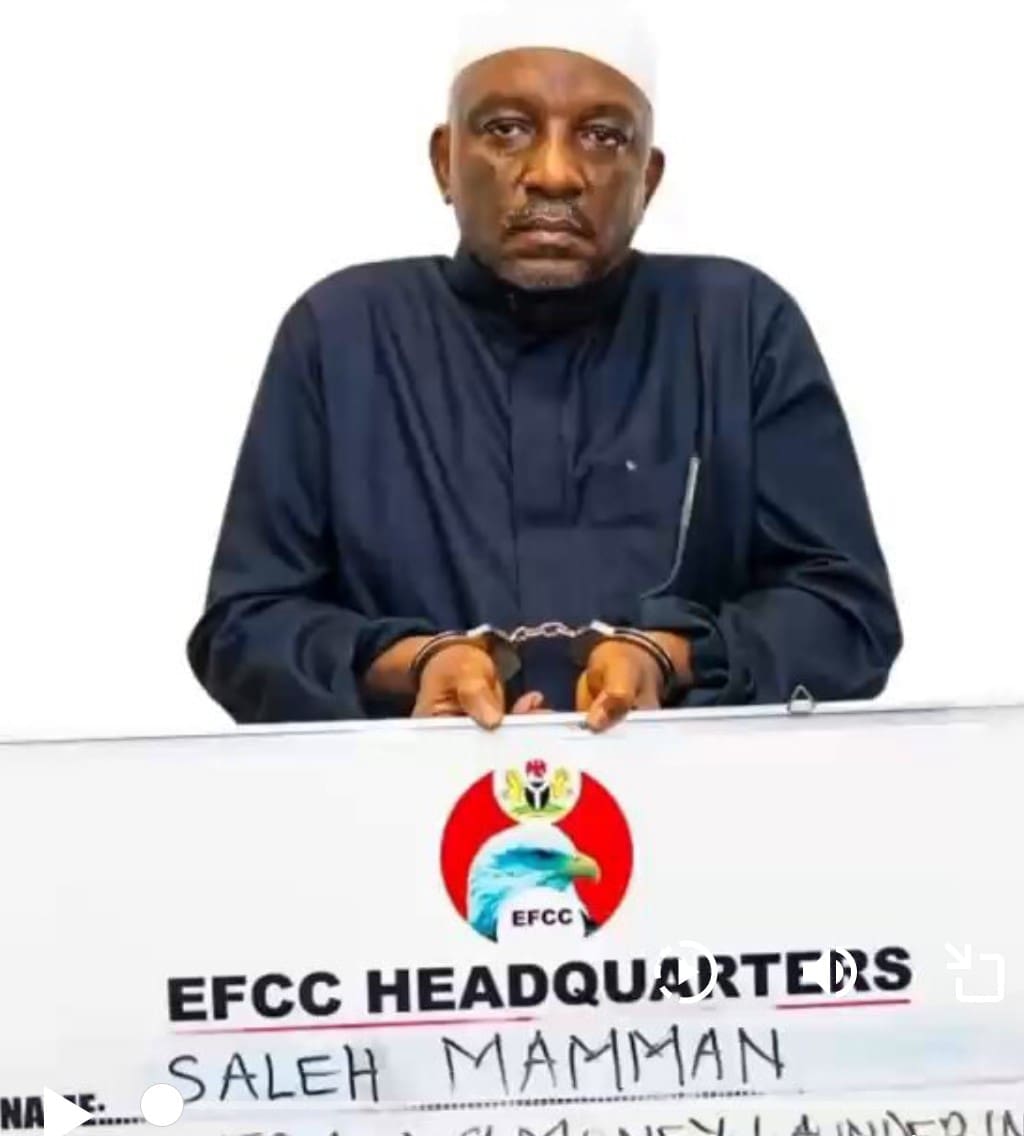
(Abuja) The long arm of Nigeria’s anti-corruption agency finally caught up with immediate past Nigeria Minister of Power, Saleh Mamman, after days on the run following his conviction in a ₦33.8 billion ($26 million dollars) fraud case.
In a dramatic midnight operation in Kaduna, operatives of the Economic and Financial Crimes Commission (EFCC) stormed a hideout where the former minister was allegedly being protected, several news outlets have reported.
The Punch has reported that Mamman had earlier been sentenced in absentia last week to 75 years imprisonment by a Federal High Court in Abuja over money laundering linked to major hydroelectric power projects.
“Maman’s crime and arrest has shocked many of us,” says Abiodun Kunle, a Financial Correspondent with Business Day newspaper to TruthNigeria in Kaduna Thursday, May 2026.
“This once again reopened painful conversations about corruption in our country which we brag to be Africa’s largest economy and democracy,” he added.
“This is how public funds meant for development are often diverted by powerful political office holders while millions of citizens remain trapped in darkness, poverty and insecurity,” he lamented.
Nigeria Global Corruption Ranking
According to the Transparency International (TI) Nigeria’s Global Corruption Ranking continues to rank poorly on the global corruption scale.
TI says that Nigeria scored 26 out of 100 in the 2025 Corruption Perceptions Index and ranked 142nd out of 182 countries surveyed. The ranking places Nigeria among the most corruption-challenged nations in the world despite repeated promises of reforms by successive governments.
Nigeria: Giant of Africa Burdened by Corruption
Nigeria is Africa’s most populous country with an estimated population of over 230 million people. The country covers about 923,768 square kilometres, making it slightly larger than the U.S. state of Texas,
Nigeria is home to more than 250 ethnic groups, with Hausa, Yoruba and Igbo being the largest. English is the official language, though hundreds of indigenous languages are spoken across the nation.
Nigeria possesses enormous economic potential. It is richly blessed with crude oil, gas, solid minerals and vast agricultural land.
According to Waldometer, Nigeria is ranked 16 among oil producing nations and has proven reserves of 37 billion barrels according to 2025 estimates.
“For decades, we have remained one of Africa’s largest economies with strong influence across Africa,” Dr. Yabagi Kafwai, Dean, Faculty of Business Studies, Kaduna Polytechnic, Kaduna State, said to TruthNigeria.
“Yet, despite these blessings, corruption has weakened our public institutions. It has also discouraged investors and slowed development in a way that is truly shameful” he observed.
“Huge sums meant for roads, hospitals, electricity, schools and security have disappeared through fraud, contract inflation and embezzlement,” he added.
Many Nigerians believe the country would have been far more prosperous if corruption had been seriously tackled years ago.
Major Arrests, Convictions and Asset Recoveries
In the last three years, Nigerian anti-graft agencies have intensified high-profile arrests and asset seizures. Several former governors, ministers and senior officials have faced investigations or court trials over alleged corruption.
Former Central Bank Governor Godwin Emefiele was arrested and investigated over alleged abuse of office, procurement fraud and financial misconduct. Billions of naira (Millions of dollars) and choice properties were reportedly linked to investigations around him, Reuters has reported.
Former Minister of Aviation Hadi Sirika also faced allegations concerning contract fraud tied to the failed Nigeria Air project. Several properties and funds have equally been traced to politically exposed persons across the country, it has been reported in several news media.
The EFCC and the Independent Corrupt Practices Commission (ICPC) say they recovered hundreds of billions of naira in cash, landed properties and luxury vehicles between 2023 and 2026. Some forfeited assets included mansions in Abuja, Lagos and Dubai, expensive jewelry, petrol stations and large bank accounts, according to Nigeria Federal Ministry of Information.
Despite these recoveries, many Nigerians remain skeptical because convictions are still relatively few compared to the scale of corruption allegations.
Critics argue that some corruption cases are escalated while others drag endlessly in court.
How Corruption Fuels Insecurity and Poverty
“Corruption has deeply worsened insecurity and poverty in Nigeria,” said Col. Aliyu Danbaba of SignWell Security Consult Abuja to TruthNigeria.
“This was a big problem even when I was in service,” he notes.
“Funds budgeted for weapons, military equipment, intelligence gathering and welfare of military personnel have been diverted over the years by top Generals, politicians and civil servants,” he said.
“This has weakened the fight against terrorism, banditry and kidnapping despite the fact that we have gallant troops,” he notes.
“In many rural communities, schools, hospitals and roads exist only on paper,” he went on, “because project funds have been stolen. Poor infrastructure has left millions unemployed and frustrated, creating fertile ground for criminal recruitment by armed groups,” he added.
Many analysts believe that insecurity in northern Nigeria, including terrorism and banditry, cannot be separated from years of corruption, weak governance and neglect of vulnerable communities.
How Much Has Nigeria Lost to Corruption?
Nigeria has lost trillions of naira (billions of dollars) to corruption over the past decade. Several anti-corruption experts and international organizations estimate that between $300 billion and $400 billion may have been stolen or lost through corruption, illicit financial flows and public sector fraud since Nigeria’s independence in 1960.
According to BudgeIT, in the last 10 years alone, estimates suggest losses running into tens of trillions of naira (billions of dollars) through oil theft, inflated contracts, illegal subsidies, tax evasion and embezzlement. The report added that using current exchange rates, this could amount to over ₦500 trillion Naira ( $370 billion dollars)
Luka Binniyat writes for TruthNigeria on economics, security and politics from Kaduna.