As signs emerged this week that Iran and the United States could be edging toward an agreement to end their standoff, a vocal group inside Iran has been working to stop it.
The opposition comes from a hard-line camp that includes some members of Parliament and representatives on the country’s Supreme National Security Council, according to a report by The New York Times. Though not believed to represent the majority view, the group has used public rallies, media platforms and political pressure to argue against any compromise with Washington.
Whether a deal will actually materialise remains uncertain. On Friday, US President Donald Trump spent two hours meeting cabinet officials in the White House Situation Room but delayed a final decision, according to a senior administration official.
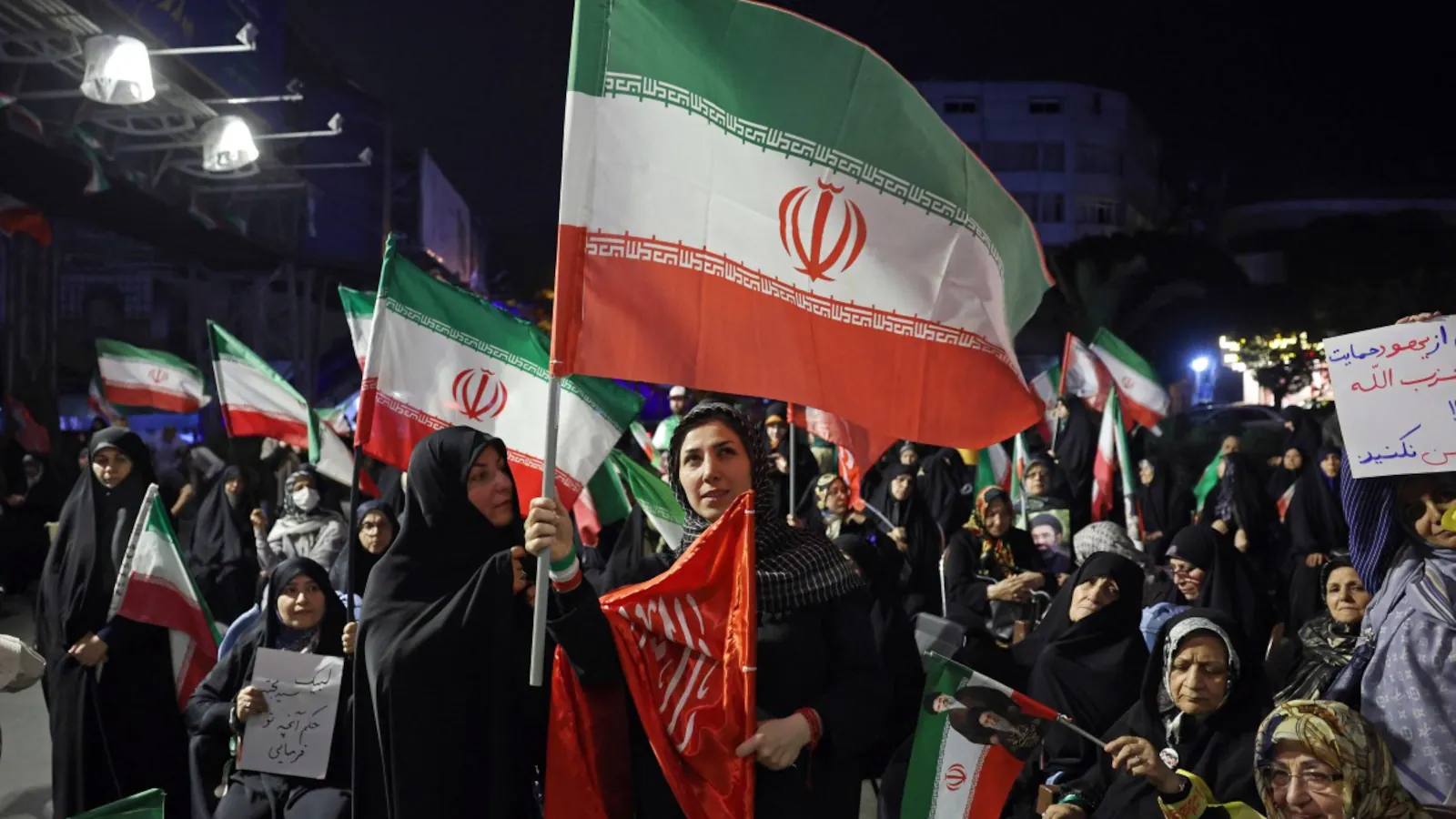
A woman holds an Iran’s national flag during an anti-US and Israel protest in Tehran
In Tehran, lead negotiator Mohammad Bagher Ghalibaf struck a cautious note, saying in a social media post that Iran did not trust the US and that no move would “be taken before the other side acts first”.
State TV Accused Of Fueling Divisions
Even before any agreement is announced, the debate inside Iran has become increasingly public.
State television, which is run by a hard-line management team, has repeatedly highlighted criticism of the negotiations and portrayed the talks as unsuccessful. President Masoud Pezeshkian recently confronted senior state TV officials over their coverage, urging them not to deepen political divisions.
Read | Netanyahu Worried Trump May Strike A “Bad Interim Deal” With Iran: Report
According to Pezeshkian, even Iran’s former supreme leader, Ayatollah Ali Khamenei, who was killed on the first day of the war, had “agreed that we must go to the negotiation table,” Pezeshkian said.
“But now,” he added, “we are advertising that we should not negotiate.”
Rally In Tehran Showcases Resistance to Talks
The hard-line opposition was on full display during a rally in Tehran on Friday, where supporters packed the streets carrying flags and calling for continued resistance.
A reporter from state television asked participants whether Iran should continue confronting the US and Israel.
“We want them to punish them good,” one woman attendee said.
“Stand firm, we are with you until our last drop of blood,” another supporter said.
Ebrahim Azizi, a conservative MP who heads Parliament’s national security and foreign policy committees, also rejected any suggestion of compromise.
“Trump must know that Iran, as the victor and conqueror of the field, sets the terms,” he wrote on social media.
New Supreme Leader Also Faces Criticism
The hard-line criticism has not been limited to the negotiating team.
Mojtaba Khamenei, who succeeded his father as supreme leader, also found himself targeted this week.
On Thursday, conservative cleric and lawmaker Hamid Rasaee posted a message titled “Who is worthy of the supreme leadership?” In it, he referred to the Prophet Noah’s son, writing that he had been “a nonbeliever and a rebellious black sheep”, adding that “familial relations don’t necessarily make for being righteous.”
Many political figures and media outlets interpreted the comments as an attack on the new supreme leader and accused Rasaee of trying to weaken his authority.
Read | UAE Struck Dozens Of Targets In Iran With US And Israel Help: Report
Facing backlash, Rasaee later claimed his remarks had been misunderstood and taken out of context.
Efforts To Undercut Negotiators
According to the report, Ali Bagheri Kani, a hard-line politician who serves as deputy secretary of the National Security Council, wrote to Khamenei earlier in the negotiations. In the letter, he argued that Iranian negotiators had been too accommodating during discussions with US Vice President JD Vance in Islamabad.
He reportedly urged the supreme leader to step in and impose limits on the negotiating team.
The move was widely viewed in political circles as an attempt to weaken both Ghalibaf and the negotiating team. Bagheri Kani, who previously served as a nuclear negotiator, was also the only member of the national security council who refused to sign a letter sent in April by Ghalibaf and Pezeshkian.
Read | As The War Rages In Iran, Tensions Brew In Other Parts Of The World
According to the officials, that letter warned that Iran was facing a severe economic crunch, a growing budget crisis and the possibility of widespread unrest if an agreement was not reached.
Not only did Bagheri Kani refuse to endorse the message, the officials said, he later shared details of it with hard-line lawmakers, helping bring internal disagreements into public view.
Despite the criticism, Khamenei continued backing the negotiating team both publicly and privately, according to the officials.
Call For Unity
With Parliament returning for the first time since the war began, the supreme leader issued a message on Thursday urging lawmakers to avoid deepening divisions.
He called on them to stay united and “refrain from nonsense political divisions and magnifying social divisions”.
According to Khamenei, internal infighting would only help Iran’s enemies pursue a strategy of dividing the country from within.