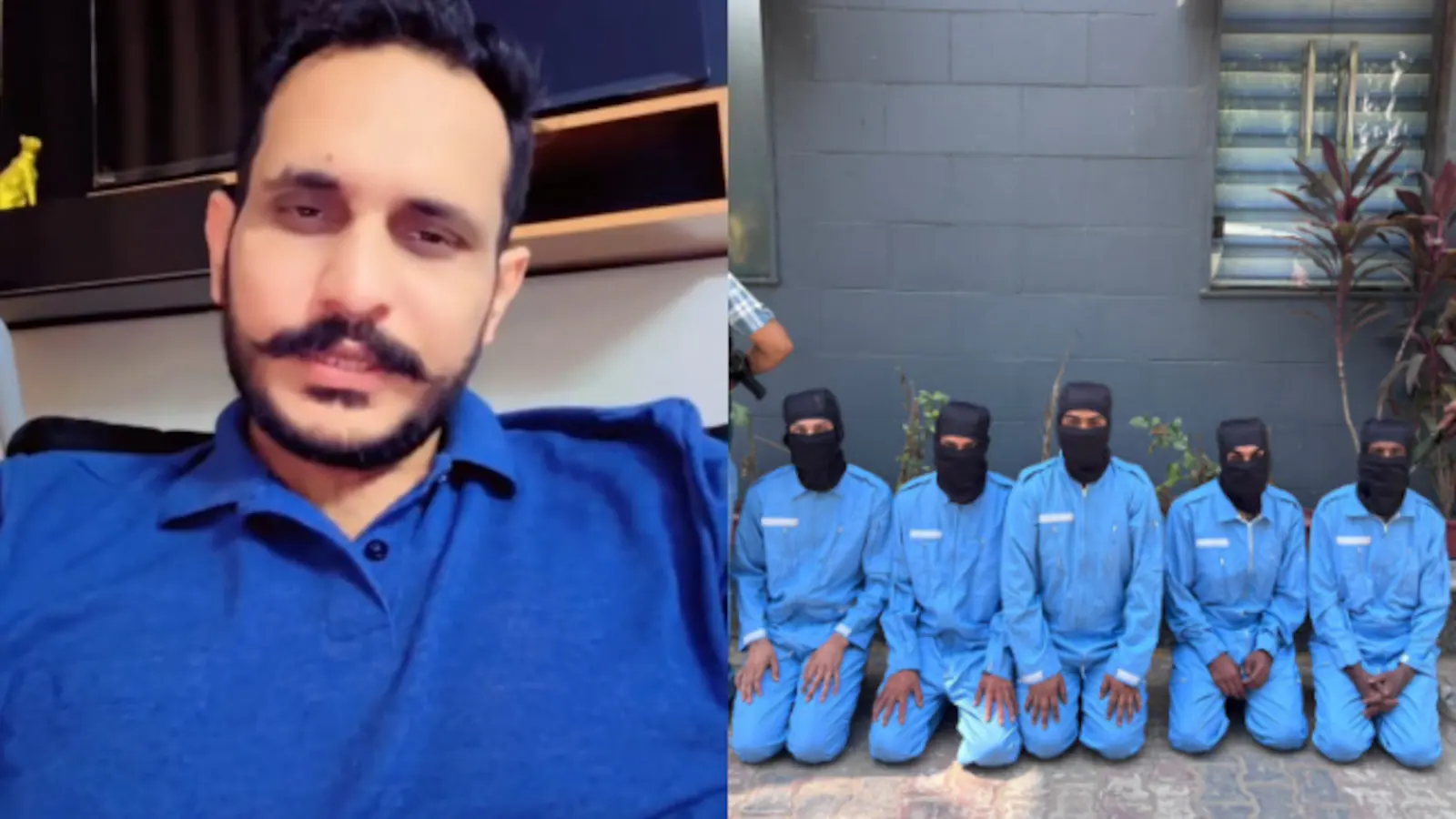
In recent months, one name has repeatedly surfaced in investigations by Indian security agencies, Shahzad Bhatti, alleged to be linked to the ISI. Once known as a social media influencer from Pakistan, Bhatti is now being described by agencies as the key figure behind a digital network allegedly linked to gangster modules, radicalisation of youth, weapons trafficking and conspiracy to create unrest in India.
On Saturday, the Delhi Police Special Cell arrested eight suspects linked to Bhatti’s module, who were allegedly planning major attacks across the country.
Special Commissioner of Police (Special Cell) Anil Shukla said at a press conference that four Pakistan-made hand grenades, two Glock pistols, 24 live cartridges, a stolen motorcycle and a stolen scooter were recovered from the accused.
The accused are Vijay alias Shooter (23) from Uttar Pradesh, Nitish Paswan (23) from Jharkhand, Taoqeer Rizwan Ahmad Shaikh (27) and Sajid Mehboob Shaikh alias Arbaz Khan (27) from Maharashtra, Harvinder Singh (28), Gagandeep Singh (28) and Manjeet Singh (23) from Punjab, and Nepali national Anag Kami Lama (66), news agency PTI reported.
Earlier this month, Uttar Pradesh Anti-Terrorism Squad (ATS) and Special Task Force (STF) also carried out a joint operation and arrested four operatives linked to the Bhatti-Abid Jatt module.
Read: Pak’s ISI Planned Attacks On Delhi Temple, Haryana Military Camp, UP Cops: Sources
Bhatti is currently among the top targets for multiple agencies, including the Delhi Police Special Cell, National Investigation Agency (NIA), Uttar Pradesh ATS, Uttarakhand STF and other central agencies.
Influencer To Criminal Network Figure
Shahzad Bhatti is originally from Pakistan’s Punjab province. While he presents himself on social media as a businessman, social worker and a commentator on religious issues, agencies say his criminal profile tells a different story.
According to Pakistani police records, multiple cases, including theft and robbery, were registered against him in 2013, followed by serious allegations such as rape. Around 2015, he fled Pakistan and moved to Dubai, where he started businesses in dairy.
During that time, he reportedly came into contact with the Farooq Khokhar gang from Balochistan and became one of its key members.
Bhatti also began building his online presence under the name “333”, creating videos on India-Pakistan relations, religious issues and disputes among influencers. He gained a large following, but agencies believe this popularity served as a cover for building a larger network.
Alleged ISI Links
Indian agencies claim Bhatti is not working alone and is linked to Pakistan’s ISI, with support from handlers such as Abid Jatt, Ajmal Gujjar and Yawar Khan.
Authorities say the network operates through social media platforms like Facebook, Instagram and YouTube. It allegedly identifies vulnerable youth in India, initiates conversations through private messaging and then connects them to Bhatti via video calls.
These individuals are reportedly lured with promises of money and social media fame through videos involving weapons, and opportunities to settle abroad. Initially assigned small tasks, such as sharing photos or videos of locations, they are gradually drawn deeper into the network.
Pan-India Crackdown Underway
After the network came to light, agencies launched a major nationwide operation in the first week of May. The 48-hour crackdown covered multiple states, including Delhi, Punjab, Haryana, Rajasthan, Uttar Pradesh, Madhya Pradesh and Maharashtra.
Security sources said agencies were tracking more than 500 mobile numbers and social media accounts. Over 40 suspects were rounded up in border districts of Punjab. Around 90 youths were detained and questioned by Haryana STF. More than 20 people were called in for questioning in Delhi, where some were counselled and asked to delete their social media accounts
In total, 481 suspects and criminals were detained as part of the operation.
Links To Tehreek-e-Taliban Hindustan
Investigations have also revealed Bhatti’s alleged links to a group called Tehreek-e-Taliban Hindustan (TTH). Those arrested told Delhi Police they were instructed to write “TTH” on walls in Delhi and Faridabad.
They were also directed to write the letter “S” below it, reportedly to signal Bhatti’s involvement. Agencies say the activity was backed by funding from Pakistan.
Plot To Target Police Personnel
One of the most serious findings relates to alleged plans to target police personnel. Arrested suspects told investigators that they were instructed to carry out attacks on police officers, record the incidents, and make the videos go viral on social media.
They were allegedly promised large sums of money in return.
In one case in Uttar Pradesh, a police officer was reportedly surveilled, but survived after the attacker’s weapon malfunctioned. Bhatti also claimed responsibility on social media for the killing of three police personnel in Punjab and released related videos.
Investigations by the UP ATS and Delhi Police had also revealed plans to target multiple sensitive locations.
Operatives admitted to sending GPS locations and videos of crowded hospitals in Delhi and Punjab, as well as a major political party office, allegedly for planning blasts. There were also plans to assassinate a prominent individual associated with a school in Punjab.
Security details of a historical temple in Delhi and deployment of paramilitary forces were also reportedly shared. Additionally, a well-known roadside eatery on the Delhi-Sonipat highway was allegedly identified as a potential target for a grenade attack.
In Haryana’s Hisar, videos of a military establishment were recorded and sent to Bhatti.
Role In Punjab Attacks Under Probe
Bhatti’s name has surfaced in connection with several attacks in Punjab. The grenade attack at a YouTuber Roger Sandhu’s house in Jalandhar’s Raipur Rasulpur village on March 16, 2025, is currently being investigated by the NIA.
According to the NIA chargesheet, Bhatti is among the key conspirators and allegedly used encrypted apps like Signal and Telegram to direct local operatives.
Fallout With Lawrence Bishnoi Gang
Bhatti was once known to have friendly ties with gangster Lawrence Bishnoi, with past video calls between them going viral.
However, the relationship broke down after the Pahalgam terror attack last year.
Bishnoi publicly supported India and criticised Pakistan, following which Bhatti allegedly issued threats against him and his associate Anmol Bishnoi.
Members of the Bishnoi gang, including Harry Boxer and Randeep Malik, later issued open challenges to Bhatti. In February 2026, Malik claimed that an attack on Bhatti in Portugal was carried out by the Bishnoi gang.
Links To High-Profile Cases And Threats
Bhatti’s name has also been linked to other high-profile cases in India. A shooter involved in the killing of NCP leader Baba Siddique claimed in a video that Bhatti’s network helped him flee the country.
Bhatti has also been accused of issuing threats to former Bihar Chief Minister Nitish Kumar and actor Mithun Chakraborty. Over the past two years, hundreds of operatives linked to Bhatti have been arrested across different states.
What began as a social media presence built on online videos has evolved into a sprawling network involved in radicalisation, targeted violence and attempts to spread fear.
With multiple agencies now working to dismantle this network, Shahzad Bhatti has emerged as a key figure on India’s security radar.