Iran possesses domestically produced “modern weapons” that have not yet been used or tested in battle against the United States and Israel, an Iranian military source told Russian state media on Thursday.
“We have produced modern weapons domestically that have not yet been used on the battlefield and have not actually been tested,” the source told Russian state-owned outlet RIA Novosti, in comments framed as a response to Iran’s “readiness for a possible repeat attack by the United States.”
Tehran “does not lack” in ways to “repel attacks,” the source said. “In terms of equipment and defense capabilities, we don’t experience any shortages that would prevent us from defending our country. This time, we don’t intend to act with restraint.”
The claim, delivered through a Russian channel rather than Iranian state media, appears calibrated to maximize its reach to Western audiences while preserving deniability for Tehran. It also marks a notable escalation in rhetoric at a moment when diplomatic mediators across the Gulf are racing to lock in a framework that would formally end the war.
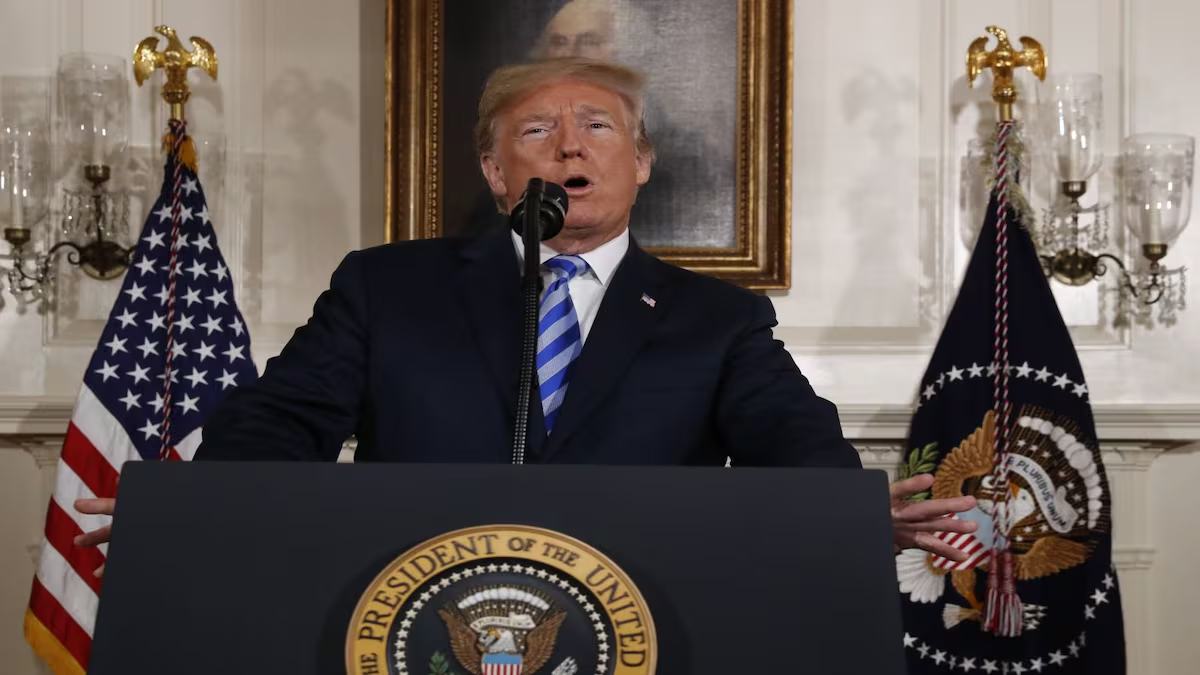
The Iranian threat lands against the backdrop of a frenetic week of brinkmanship and back-channel diplomacy. On Monday, President Trump wrote on Truth Social that the leaders of the United Arab Emirates, Qatar, and Saudi Arabia had called him to request that he postpone his plans to resume strikes on Iran. In the same post, Trump said he had planned to resume the strikes “tomorrow,” meaning Tuesday, and instructed the Pentagon and the U.S. military to cancel the planned attack.
By Wednesday, reports emerged of a tense phone call between Trump and Israeli Prime Minister Benjamin Netanyahu over the path forward. Trump reportedly called Netanyahu on Tuesday to inform him that mediators were working on a “letter of intent” to end the war and launch a month-long period of negotiations covering Iran’s nuclear program and the reopening of the Strait of Hormuz. Two Israeli sources said the two leaders were in clear disagreement about how to deal with Iran moving forward. One U.S. source briefed on the call told Axios that “Bibi’s hair was on fire after the call.”
Three regional sources told The Jerusalem Post on Wednesday that progress had been made in recent efforts to formulate a memorandum of understanding and principles between the United States and Iran, though significant gaps remain. According to the sources, the talks have focused on outlining a framework that could enable continued negotiations while temporarily reducing tensions between Tehran and Washington. Israeli officials, however, assess that even if understandings are reached at the diplomatic level, Iran’s supreme leadership is unlikely to approve concessions, a view reinforced Thursday by Supreme Leader Mojtaba Khamenei’s directive that Iran’s stockpile of near-weapons-grade uranium must remain in the country rather than be transferred abroad.
The threat of untested weaponry has long been a staple of Iranian military messaging, and Western analysts have historically treated such claims with caution. Iran’s annual military parades have frequently featured equipment that defense observers have dismissed as repurposed civilian vehicles, knockoffs of Western platforms, or showpieces of limited combat utility. Iran’s Shahed-285 attack helicopter, touted for two decades, has been characterized by military analysts as essentially a re-skinned Bell 206.
But the war that began in February has produced surprises in both directions. Iranian ballistic missile and drone capabilities have inflicted real damage on Israeli and American targets, and Tehran has demonstrated an ability to sustain operations longer than many Western intelligence assessments predicted. Whether the “modern weapons” referenced by the RIA Novosti source represent a genuine new capability, a deterrence bluff, or some combination of both is impossible to assess from the brief comments published Thursday.
The Islamic Revolutionary Guard Corps has reinforced the message in its own statements. In a recent statement reacting to U.S. threats, the IRGC warned that the United States and Israel “have failed to learn from their repeated strategic defeats against the Islamic Republic,” adding that “although they attacked us using all the capabilities of two of the world’s most expensive armies, we did not employ all the capacities of the Islamic Revolution against them. But now, if aggression against Iran is repeated, the regional war that had been promised will this time extend beyond the region, and our crushing blows will cast you into ruin in places you cannot imagine.”
The “this time, we don’t intend to act with restraint” framing closely tracks that IRGC language, suggesting the RIA Novosti comments are part of a coordinated effort by Tehran to set expectations for any renewed conflict and to deter Washington from acting on Trump’s “nasty” threat.
(YWN World Headquarters – NYC)